Title: Analysis of "丈人观谒先帝御容" - Classical Chinese Poetry
Introduction
- "丈人观谒先帝御容" (Zhàngrén Guān Yè Xiāndì Yùróng) is attributed to 徐氏 (Xú Shì), often identified with the Former Shu court during the Five Dynasties period.
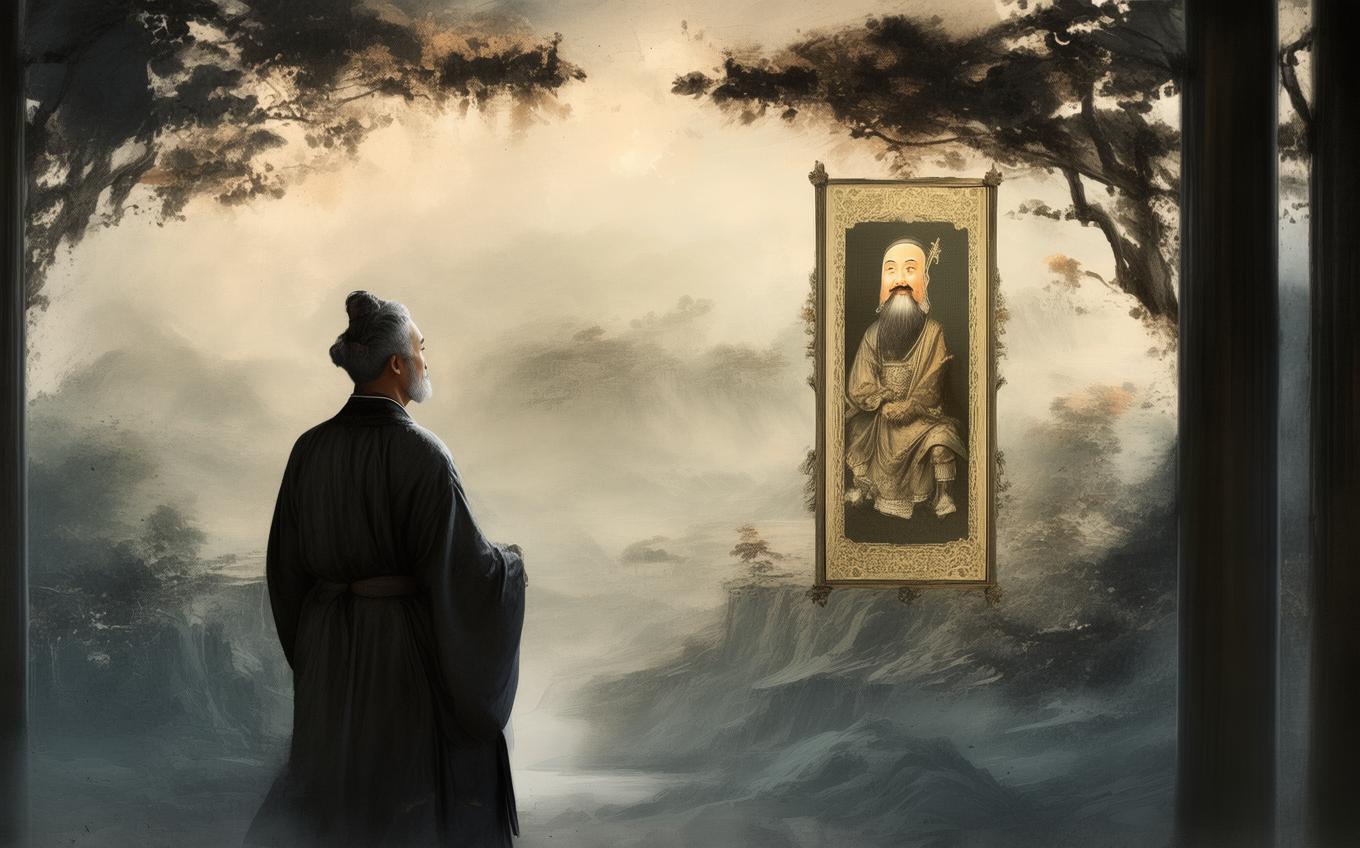
- The poem is set at 丈人观 (Zhàngrén Guān), a Daoist temple associated with the sacred mountains of Sichuan, where the speaker pays homage to the portrait of a deceased emperor.
- Its significance lies in the way it blends court ritual, personal grief, Daoist sacred space, and classical allusion into a compact and emotionally powerful poem.
The Poem: Full Text and Translation
共谒御容仪
Gòng yè yùróng yí
Together we pay homage to the imperial portrait.
还同在禁闱
Hái tóng zài jìn wéi
It feels as though we are again within the palace chambers.
笙歌喧宝殿
Shēnggē xuān bǎo diàn
Flutes and songs resound through the jeweled hall.
彩仗耀金徽
Cǎi zhàng yào jīn huī
Colorful ceremonial staffs shine with golden splendor.
清泪沾罗袂
Qīng lèi zhān luó mèi
Clear tears wet the silk sleeves.
红霞拂绣衣
Hóng xiá fú xiù yī
Rosy clouds brush against embroidered robes.
九疑山水远
Jiǔyí shān shuǐ yuǎn
The mountains and waters of Jiuyi are far away.
无路继湘妃
Wú lù jì Xiāng Fēi
There is no path by which I may follow the Xiang consorts.
Line-by-Line Analysis
- The opening line, “共谒御容仪,” presents a formal act of reverence. The word “御容” refers to an imperial image or portrait, not merely as decoration but as an object of ritual memory. The speaker is not casually viewing a picture; she is participating in a solemn courtly homage.
- “还同在禁闱” shifts the poem from public ceremony to private memory. “禁闱” refers to the inner palace, a restricted and intimate space. The portrait makes the past feel present again, as if the deceased emperor still inhabits the palace world.
- “笙歌喧宝殿” introduces sound and splendor. The “笙” is a traditional reed instrument often associated with ritual music and refined celebration. Yet the liveliness of music contrasts with the speaker’s grief, creating emotional tension.
- “彩仗耀金徽” continues the imagery of ceremony. The shining staffs and golden ornaments evoke imperial dignity. But this brilliance surrounds an absence: the emperor is present only through his portrait.
- “清泪沾罗袂” is the emotional center of the poem. The refined silk sleeve, “罗袂,” suggests courtly elegance, while the tears reveal human vulnerability beneath ritual decorum.
- “红霞拂绣衣” blends the natural and the ceremonial. Rosy clouds may suggest the sacred atmosphere of a mountain temple, but they also soften the scene with a dreamlike beauty. The embroidered robes belong to courtly identity, while the clouds hint at transcendence.
- “九疑山水远” introduces a famous classical allusion. 九疑山 (Jiǔyí Shān) is associated with the legendary sage-emperor Shun, who died in the south. His wives, known as the Xiang consorts, mourned him deeply.
- “无路继湘妃” completes the allusion. The speaker compares herself to the grieving Xiang consorts but says she has no path to follow them. This expresses both loyalty and helplessness: she wishes to continue the ancient model of faithful mourning, yet history, distance, and death make such devotion impossible to fulfill completely.
Themes and Symbolism
- Grief and remembrance: The poem centers on mourning a deceased ruler. The portrait becomes a bridge between memory and ritual.
- Courtly splendor versus private sorrow: Music, jeweled halls, golden ornaments, and embroidered robes create a magnificent setting, but the speaker’s tears reveal the sadness beneath the spectacle.
- Loyalty and devotion: By invoking the Xiang consorts, the poem places personal grief within a long Chinese tradition of faithful mourning.
- Sacred space: 丈人观, as a Daoist site, gives the poem a spiritual atmosphere. The temple setting suggests that remembrance is not only political but also religious and cosmic.
- Distance and impossibility: The “far mountains and waters” of Jiuyi symbolize the distance between the living and the dead, between present grief and legendary devotion.
Cultural Context
- The poem likely belongs to the Five Dynasties period, an era of political fragmentation after the Tang dynasty. Regional courts such as Former Shu cultivated refined literary and artistic traditions despite political instability.
- In Chinese culture, portraits of rulers or ancestors could serve as ritual objects, allowing descendants and subjects to express reverence, loyalty, and remembrance.
- The allusion to the Xiang consorts reflects the importance of classical memory in Chinese poetry. A single reference to 九疑山 and 湘妃 brings with it an entire emotional world of legendary mourning.
- The poem also reflects Confucian and Daoist values at once. Confucian elements appear in loyalty, ritual, and reverence for the ruler; Daoist elements appear in the mountain temple setting, clouds, and the sense of spiritual distance.
- For English-speaking readers, the poem offers a glimpse into how Chinese poetry often compresses personal emotion, political history, sacred geography, and literary allusion into only a few lines.
Conclusion
- "丈人观谒先帝御容" is a brief but moving poem about memory, ritual, and grief.
- Its beauty lies in the contrast between dazzling ceremony and quiet tears: the palace world seems to return, yet the person at its center is gone.
- Through the allusion to the Xiang consorts, the poem connects one woman’s mourning to a much older tradition of loyalty and loss.
- Its message remains relevant today because it speaks to a universal human experience: standing before an image of someone lost, feeling both the nearness of memory and the final distance of death.


Comments (0)
No comments yet. Be the first to comment!