Title: Analysis of "三学山夜看圣灯" - Classical Chinese Poetry
Introduction
"三学山夜看圣灯" is a poem by Su Shi (苏轼, Sū Shì), one of the greatest writer-poets of the Northern Song dynasty. Su Shi is famous not only for his poetry, but also for his prose, calligraphy, and deeply humane view of life. He wrote in a period when literati culture flourished, and his works often combine philosophical reflection with vivid observation of the natural world.
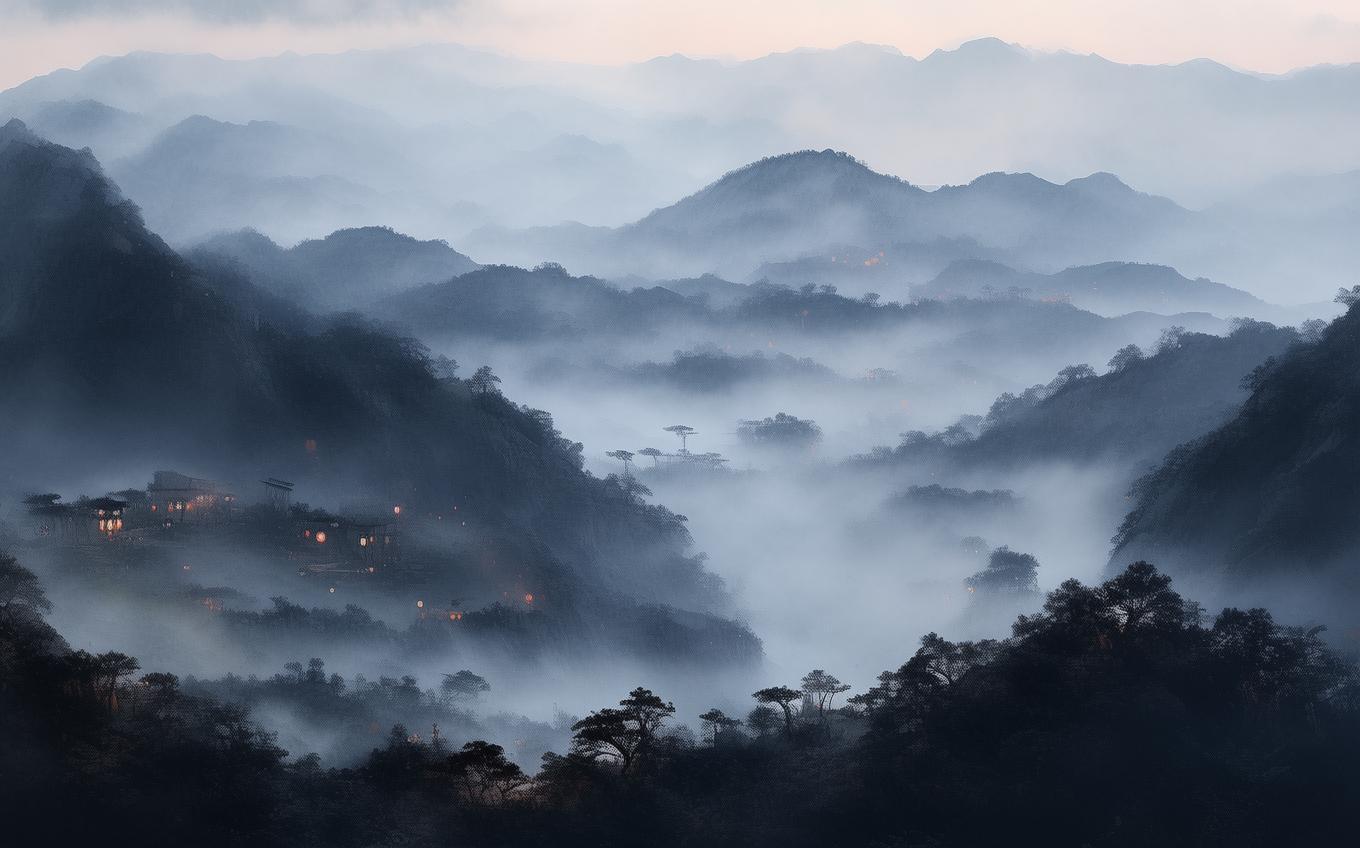
This poem is admired for its mysterious atmosphere and its blending of landscape, religion, and inner feeling. The title refers to Sanxue Mountain and the sight of the "holy lamps" (圣灯, shèng dēng) seen at night—a phenomenon that can be understood both as a physical spectacle and as a spiritually suggestive image. In Chinese literary tradition, such poems are important because they show how a poet transforms a moment of seeing into an experience of wonder, meditation, and cultural meaning.
The Poem: Full Text and Translation
三学山中看圣灯
Sānxué shān zhōng kàn shèng dēng
In Sanxue Mountain I gaze upon the holy lamps.
万炬如星出上方
Wàn jù rú xīng chū shàng fāng
Ten thousand flames, like stars, appear from the heights above.
此景只应天上有
Cǐ jǐng zhǐ yīng tiān shàng yǒu
Such a sight should exist only in heaven.
人间能得几回望
Rén jiān néng dé jǐ huí wàng
How many times in the human world can one behold it?
Line-by-Line Analysis
The first line, "三学山中看圣灯", sets the scene with elegant directness. The poet places himself physically within Sanxue Mountain, a site associated with Buddhist culture and spiritual elevation. The act of "looking at the holy lamps" immediately creates a sense of expectation. This is not ordinary sightseeing; it is an encounter with something sacred. In Chinese poetry, mountains often represent transcendence, retreat from worldly life, and closeness to the divine or enlightened realm.
The second line, "万炬如星出上方", expands the vision dramatically. The lamps are described as "ten thousand torches" resembling stars emerging from above. The phrase joins earthly and celestial imagery: lamps are man-made and ritualistic, while stars belong to the cosmos. This blending gives the scene a supernatural quality. The poet does not simply say the lamps are bright; he imagines them as part of the night sky itself. The visual effect is one of radiance, multiplicity, and awe.
The third line, "此景只应天上有", introduces a familiar but powerful poetic move: the visible world seems too beautiful to belong to ordinary human life. The phrase "should exist only in heaven" suggests that the scene surpasses everyday experience. In Chinese literature, heaven (天上, tiān shàng) is not only a religious location but also a poetic symbol of perfection, purity, and distance from worldly dust. Su Shi elevates the spectacle into something nearly unearthly.
The fourth line, "人间能得几回望", turns from description to reflection. The question is rhetorical: such moments are exceedingly rare. The phrase "in the human world" contrasts with the earlier "heaven", reinforcing the gap between ideal beauty and ordinary life. Yet the line also carries emotional warmth. Precisely because such experiences are fleeting, they become precious. The poem ends not with explanation, but with wonder—an awareness of how seldom one truly sees something that transforms the heart.
Themes and Symbolism
One major theme of the poem is wonder before the extraordinary. Su Shi presents a brief visual experience, but he gives it emotional and spiritual depth. The holy lamps are not treated as mere objects; they become a gateway to reflection on beauty, transcendence, and rarity.
Another key theme is the meeting of the earthly and the heavenly. The mountain belongs to the physical world, and the lamps may be part of a religious ritual or local phenomenon. Yet through poetic imagination, they become indistinguishable from stars. This symbolic merging suggests that sacred experience can appear within ordinary human life, if one has the sensitivity to perceive it.
The poem also expresses the theme of ephemerality. The final line reminds us that moments of revelation do not happen often. This gives the poem a quiet emotional force. It values not possession, but encounter: one cannot keep such a vision, only witness it.
As for symbolism, the mountain suggests spiritual ascent; the lamps symbolize illumination, holiness, and insight; and the stars/heavenly imagery suggest transcendence and cosmic order. Together, these images create a layered world in which nature, religion, and human feeling are inseparable.
Cultural Context
This poem reflects the cultural richness of the Song dynasty, a period when poetry often became more reflective, personal, and intellectually subtle. Song poets like Su Shi were deeply influenced by Confucianism, Buddhism, and Daoism, and their works often show these traditions interacting rather than competing.
The setting of Sanxue Mountain and the mention of holy lamps strongly evoke Buddhist culture. In Buddhist practice, lamps can symbolize wisdom, awakening, and the dispelling of ignorance. For a Song dynasty reader, the sight of sacred lights on a mountain at night would not be merely picturesque; it would resonate with religious meaning and the possibility of spiritual insight.
At the same time, the poem reflects an important Chinese aesthetic value: the belief that the outer landscape can awaken inner understanding. Chinese poetry often links scenery with emotion, not through abstract argument, but through suggestion. Here, the vision of lights in the night sky leads naturally to a meditation on rarity, beauty, and the human condition.
The poem also shows the Chinese literary habit of treating a specific occasion as a doorway into universal thought. A single evening scene becomes a reflection on how human beings experience the sublime. This is one reason classical Chinese poetry remains so powerful to modern readers.
Conclusion
"三学山夜看圣灯" is a short poem, but its effect is expansive. In only a few lines, Su Shi turns a night view into a vision of celestial beauty, spiritual wonder, and human reflection. The poem’s language is simple, yet its imagery opens a space between earth and heaven, ritual and nature, fleeting sight and lasting memory.
Its enduring appeal lies in this combination of clarity and mystery. Readers today, whether Chinese or international, can still recognize the feeling it captures: the rare moment when the world suddenly appears more luminous than usual, and one senses something beyond the ordinary. That is the poem’s lasting message—that beauty, though brief, can lift the human spirit and make the earthly world feel close to heaven.
Comments (0)
No comments yet. Be the first to comment!