Title: Analysis of "游丈人观谒先帝御容" - Classical Chinese Poetry
Introduction
- “游丈人观谒先帝御容” (Yóu Zhàngrén Guān Yè Xiāndì Yùróng) is traditionally attributed to 徐氏 (Xú Shì), a woman poet connected with the Former Shu court during the Five Dynasties period.
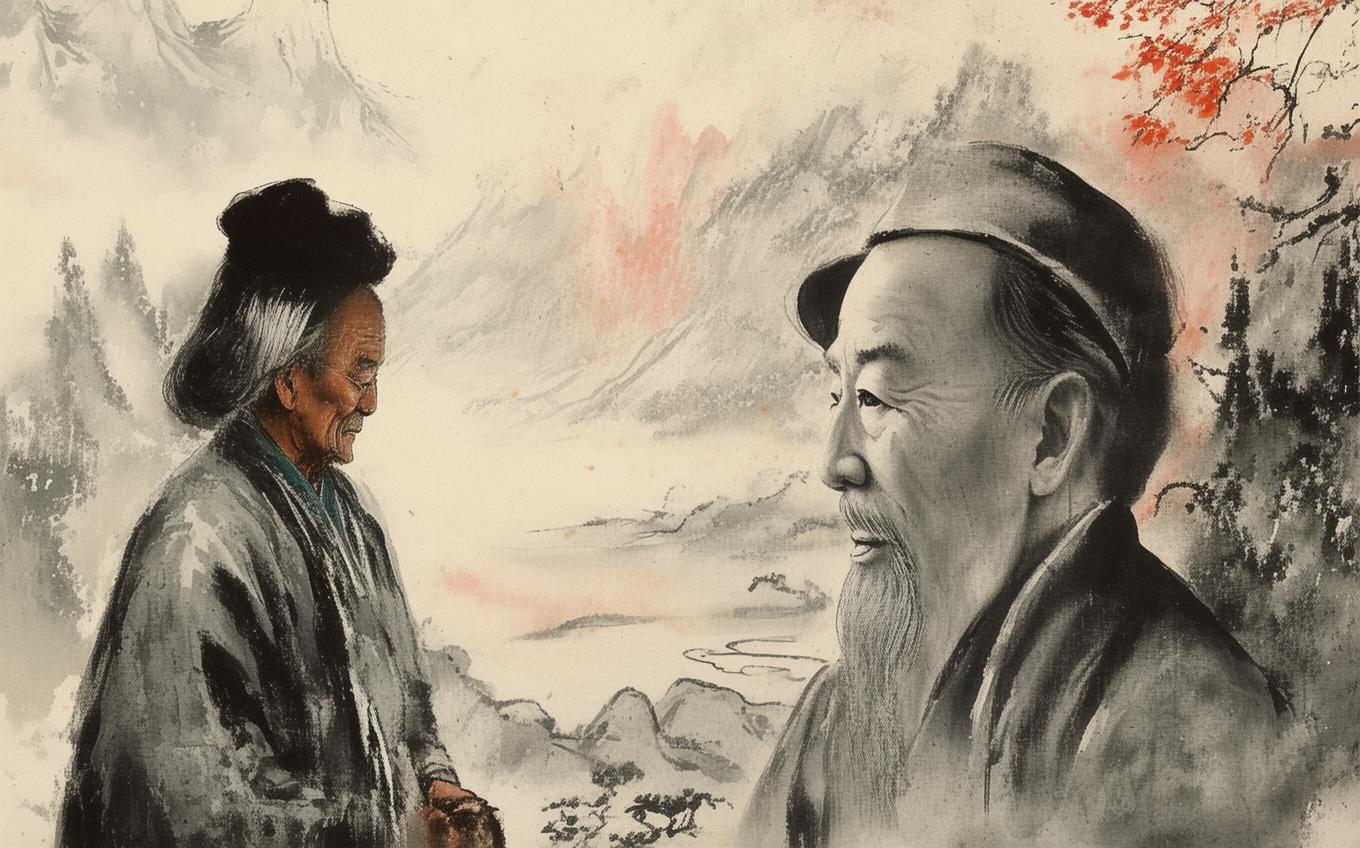
- The poem describes a visit to 丈人观 (Zhàngrén Guān), a Daoist temple, where the speaker pays respects before the imperial portrait of the deceased ruler, called 先帝 (xiāndì, “the late emperor”).
- Its significance lies in its rare combination of courtly elegance, personal grief, ritual memory, and female emotional voice. It gives English-speaking readers a glimpse into how poetry in classical China could preserve both political history and intimate mourning.
The Poem: Full Text and Translation
共谒御容仪
Gòng yè yù róng yí
Together we pay homage before the imperial portrait.
还同在禁闱
Hái tóng zài jìn wéi
It feels again as though we are within the palace chambers.
笙歌喧宝殿
Shēng gē xuān bǎo diàn
Reed pipes and songs resound through the jeweled hall.
彩仗耀金徽
Cǎi zhàng yào jīn huī
Colorful ceremonial staffs shine with golden emblems.
清泪沾罗袂
Qīng lèi zhān luó mèi
Clear tears soak my silk sleeves.
红霞拂绣衣
Hóng xiá fú xiù yī
Rosy clouds brush against embroidered robes.
九疑山水远
Jiǔyí shān shuǐ yuǎn
The mountains and waters of Jiuyi are far away.
无路继湘妃
Wú lù jì Xiāng fēi
There is no path by which I may follow the Xiang consorts.
Line-by-Line Analysis
-
“共谒御容仪 / Together we pay homage before the imperial portrait.”
The poem begins with a formal act of reverence. 御容 (yùróng) refers to the imperial image or portrait of a deceased ruler. The word 谒 (yè) means to pay respectful audience, suggesting that even after death, the emperor remains ritually present. -
“还同在禁闱 / It feels again as though we are within the palace chambers.”
禁闱 (jìn wéi) refers to the inner palace, a restricted and intimate space. The speaker’s visit to the temple becomes emotionally charged: seeing the portrait makes the past return. The line blurs memory and reality, public ritual and private feeling. -
“笙歌喧宝殿 / Reed pipes and songs resound through the jeweled hall.”
笙 (shēng) is a traditional reed-pipe instrument often associated with courtly and ritual music. 宝殿 (bǎo diàn, “jeweled hall”) gives the temple a splendid, almost palace-like atmosphere. Yet the music’s brightness contrasts with the speaker’s grief. -
“彩仗耀金徽 / Colorful ceremonial staffs shine with golden emblems.”
This line presents the visual magnificence of imperial ceremony: banners, staffs, colors, and gold. The setting is beautiful, but it is also haunted. These symbols of power now surround only an image, reminding us that worldly glory is fragile. -
“清泪沾罗袂 / Clear tears soak my silk sleeves.”
The poem turns inward. 罗袂 (luó mèi) means silk sleeves, a refined image associated with court women. Tears on silk suggest restrained but profound sorrow. The grief is not shouted; it is made visible through delicate material detail. -
“红霞拂绣衣 / Rosy clouds brush against embroidered robes.”
红霞 (hóng xiá, “red clouds”) may describe evening light, temple atmosphere, or the colorful garments of attendants. The image is beautiful but fleeting. The embroidered robes evoke court luxury, while the passing clouds suggest impermanence. -
“九疑山水远 / The mountains and waters of Jiuyi are far away.”
九疑 (Jiǔyí) refers to Jiuyi Mountain, traditionally associated with Emperor Shun, one of China’s legendary sage-rulers. In classical poetry, it often evokes ancient mourning and the distance between the living and the dead. -
“无路继湘妃 / There is no path by which I may follow the Xiang consorts.”
湘妃 (Xiāng fēi) refers to the two legendary consorts of Emperor Shun, Ehuang and Nüying, who mourned him after his death. According to tradition, their tears stained bamboo, creating the famous “spotted bamboo” of the Xiang River. By invoking them, the speaker compares her grief to theirs, but also says she cannot follow them. Her sorrow is trapped in the human world.
Themes and Symbolism
- Memory and mourning: The poem centers on the emotional shock of seeing the late emperor’s portrait. The image becomes a bridge between past and present.
- Imperial splendor and impermanence: Music, jeweled halls, golden emblems, and embroidered clothing all suggest courtly grandeur, yet the emperor is gone. Beauty intensifies the sense of loss.
- Female grief in classical tradition: By referring to the Xiang consorts, the poet places her own sorrow within a long Chinese literary tradition of loyal and grieving women.
- Ritual and emotion: The visit is an official act of homage, but the poem reveals the deeply personal feelings beneath ritual performance.
- Distance from the dead: The faraway Jiuyi Mountains symbolize the unreachable realm of the departed. The speaker longs for reunion but recognizes its impossibility.
Cultural Context
- The poem comes from a world in which poetry, ritual, and politics were closely connected. A portrait of a deceased ruler was not merely a picture; it was an object of reverence and remembrance.
- 丈人观 (Zhàngrén Guān) was a Daoist temple, and Daoist spaces often served as places where court culture, religious ritual, and ideas of immortality met.
- The reference to Emperor Shun and the Xiang consorts shows how classical Chinese poets used ancient legends to express present emotions. A personal loss becomes meaningful by being connected to cultural memory.
- The poem reflects important Chinese values such as loyalty, remembrance of the dead, ritual propriety, and emotional restraint. Rather than directly stating “I am devastated,” the poet conveys grief through images: tears, sleeves, clouds, distant mountains, and legendary women.
Conclusion
“游丈人观谒先帝御容” is a short but deeply layered poem. Its beauty lies in the contrast between magnificent ceremonial imagery and quiet personal sorrow. For English-speaking readers, it offers a powerful example of how classical Chinese poetry often communicates emotion indirectly, through allusion, setting, and symbolic detail.
The poem’s enduring appeal comes from its universal feeling: the past can suddenly return through an image, a place, or a ritual. In that moment, public history becomes private grief, and memory becomes poetry.

Comments (0)
No comments yet. Be the first to comment!