Introduction
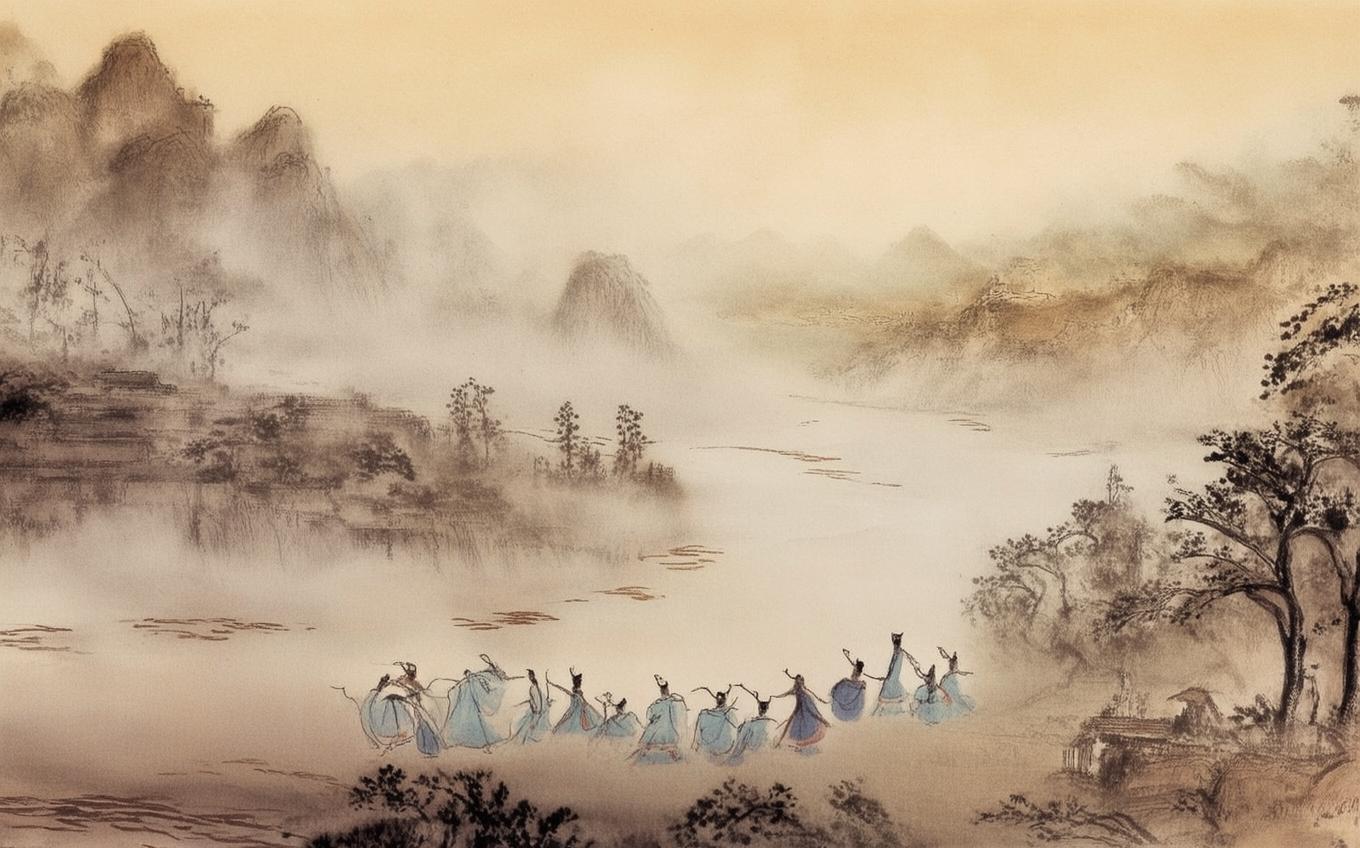
- “破阵乐” (Pòzhèn Yuè, “Music for Breaking the Battle Formation”) is a Tang-dynasty court song and dance piece associated with victory, order, and the end of war.
- It is usually linked to Emperor Taizong of Tang (Táng Tàizōng, 李世民), one of the most admired rulers in Chinese history, though the piece belongs to the broader tradition of yuefu (乐府), or Music Bureau poetry.
- Unlike intimate lyric poems about nature or personal feeling, this poem is ceremonial and political: it celebrates the restoration of peace after military conquest.
- Its significance in Chinese literature lies in how it turns imperial triumph into a compact, dignified expression of moral legitimacy and historical closure.
The Poem: Full Text and Translation
四海皇风被
Sìhǎi huáng fēng bèi
The imperial virtue spreads across the four seas.
千年德水清
Qiān nián dé shuǐ qīng
For a thousand years, the river of virtue remains clear.
戎衣更不著
Róng yī gèng bù zhuó
War armor will no longer be worn.
今日告功成
Jīnrì gào gōng chéng
Today we announce that the great work is complete.
Line-by-Line Analysis
-
四海皇风被 (Sìhǎi huáng fēng bèi)
This opening line uses the classical phrase “四海” (sìhǎi, “the four seas”) to mean the whole known world. “皇风” (huáng fēng) refers to the emperor’s moral influence, not merely political power. The verb “被” suggests being covered or permeated. The line presents rule as a gentle, all-encompassing force rather than brute domination. -
千年德水清 (Qiān nián dé shuǐ qīng)
The image here is more symbolic than literal. “德” (dé, virtue) is imagined as a clear, flowing water that remains pure over time. This is a Confucian political ideal: good rule should be transparent, enduring, and morally clean. The phrase “千年” (qiān nián, “a thousand years”) gives the poem a timeless, almost utopian tone. -
戎衣更不著 (Róng yī gèng bù zhuó)
“戎衣” (róng yī) means military clothing or armor. The line states that such garments will no longer be worn. This is a powerful image of demilitarization: once the realm is unified and stable, war becomes unnecessary. The emotional effect is relief after conflict, and the cultural ideal is peace after violence. -
今日告功成 (Jīnrì gào gōng chéng)
The final line sounds ceremonial and official. “告” means to announce or proclaim, and “功成” means the achievement is completed. Rather than personal self-praise, the line frames victory as a public historical event. It closes the poem with a sense of order restored and a mandate fulfilled.
Themes and Symbolism
- Peace after war: The central theme is the transformation from military struggle to stable rule.
- Imperial legitimacy: The emperor’s authority is presented as moral and benevolent, not only martial.
- Confucian governance: Words like “德” (dé, virtue) reflect the belief that good rule depends on moral cultivation.
- Symbolism of water: Water often symbolizes clarity, purity, and continuity in Chinese literature.
- Armor as a symbol of conflict: The absence of armor suggests the end of chaos and the beginning of civil order.
Cultural Context
- “破阵乐” (Pòzhèn Yuè) belongs to the tradition of court dance and ceremonial music in the Tang dynasty. These pieces were performed to commemorate military success and reinforce the image of a harmonious empire.
- The poem reflects a key Chinese political ideal: the highest victory is not endless conquest, but lasting peace.
- In Tang culture, rulers were expected to combine military strength with moral authority. This poem expresses that balance in highly compressed form.
- For modern readers, it also shows how classical Chinese poetry often served public and political purposes, not just private emotion.
Conclusion
- “破阵乐” is brief, but its language is rich with political vision and symbolic force.
- In only four lines, it turns military triumph into a vision of peace, virtue, and historical completion.
- Its enduring appeal lies in this transformation: war ends, order returns, and the ruler’s achievement is measured not by destruction, but by the possibility of a stable world.
- For English readers, the poem offers a clear example of how Chinese classical poetry can be both elegant and deeply tied to cultural ideals of governance and harmony.
Comments (0)
No comments yet. Be the first to comment!