Analysis of "鼓吹曲辞将进酒" - Classical Chinese Poetry
Introduction
Li Bai (701–762), also known as Li Po, is one of the most celebrated poets in Chinese history, often hailed as the "Immortal Poet." His work epitomizes the romantic, free-spirited ethos of the Tang Dynasty, a golden age of Chinese culture. "将进酒" (Qiang Jin Jiu – often translated as "Bringing in the Wine") is among his most famous and passionate compositions. Originally a yuefu poem title from the Han dynasty’s "Gu Chui Qu Ci" (Drum and Wind Songs), it was traditionally a drinking song urging guests to enjoy wine. Li Bai transformed it into a roaring anthem of carpe diem, defiance, and transcendent joy. This poem captures the poet’s roaring laughter in the face of life’s brevity, making it a masterpiece of Chinese literature and a timeless call to seize the moment.
The Poem: Full Text and Translation
君不见黄河之水天上来,奔流到海不复回。
Jūn bù jiàn Huáng Hé zhī shuǐ tiān shàng lái, bēn liú dào hǎi bù fù huí.
Have you not seen the Yellow River’s waters come from heaven, rushing to the sea never to return?
君不见高堂明镜悲白发,朝如青丝暮成雪。
Jūn bù jiàn gāo táng míng jìng bēi bái fà, zhāo rú qīng sī mù chéng xuě.
Have you not seen the bright mirror in the high hall grieve for white hair, at dawn like black silk, by dusk turned to snow?
人生得意须尽欢,莫使金樽空对月。
Rén shēng dé yì xū jìn huān, mò shǐ jīn zūn kōng duì yuè.
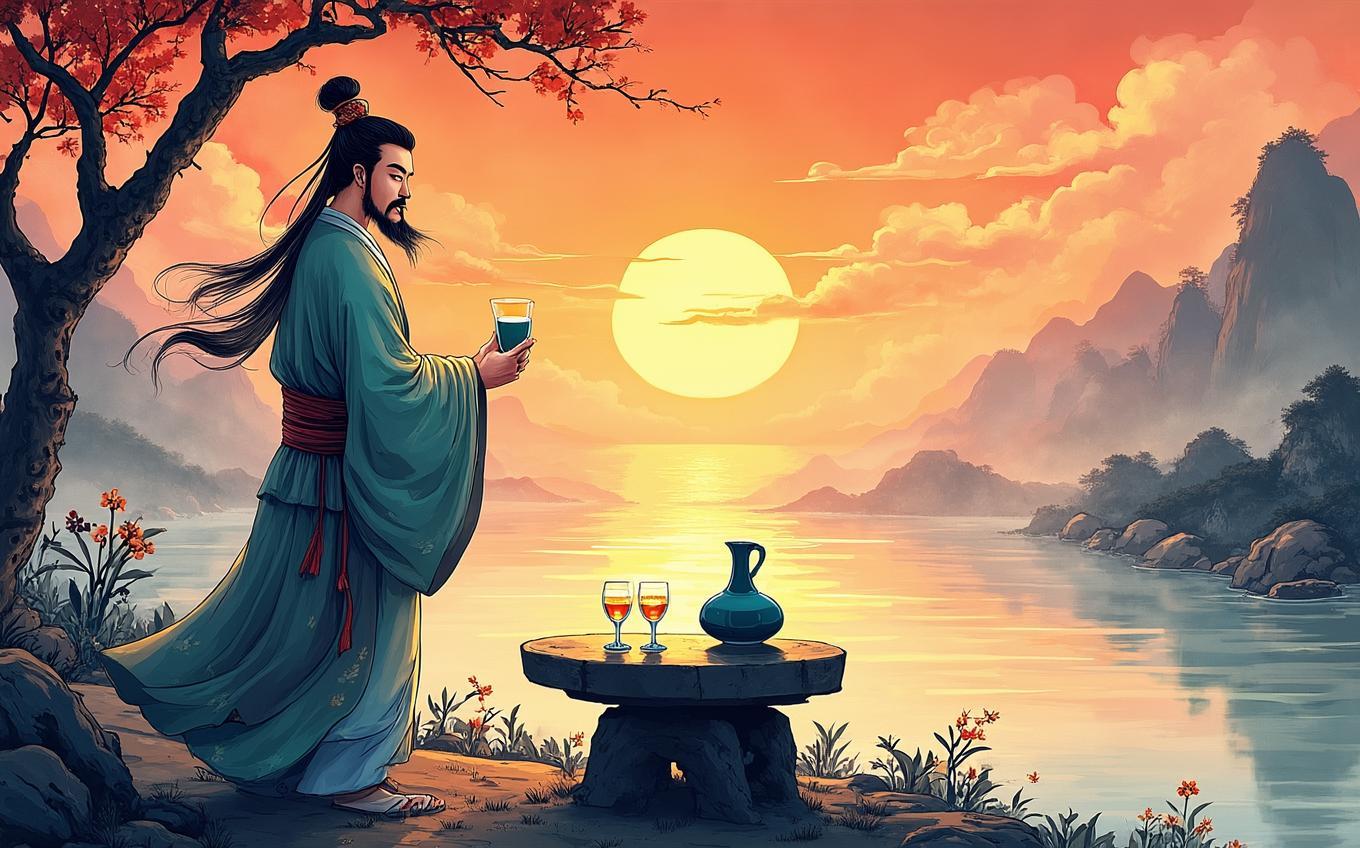
When life goes well, one must revel to the full; never let a golden goblet face the moon empty.
天生我材必有用,千金散尽还复来。
Tiān shēng wǒ cái bì yǒu yòng, qiān jīn sàn jìn huán fù lái.
Heaven gave me talents, surely they will be of use; a thousand gold coins spent, they will come back again.
烹羊宰牛且为乐,会须一饮三百杯。
Pēng yáng zǎi niú qiě wéi lè, huì xū yī yǐn sān bǎi bēi.
Boil a sheep, butcher an ox – for now, let’s make merry; we must down three hundred cups in one drinking bout.
岑夫子,丹丘生,将进酒,杯莫停。
Cén fūzǐ, Dān Qiū shēng, qiāng jìn jiǔ, bēi mò tíng.
Master Cen, dear Danqiu, bring in the wine! Don’t set your cups down!
与君歌一曲,请君为我倾耳听。
Yǔ jūn gē yī qǔ, qǐng jūn wèi wǒ qīng ěr tīng.
Let me sing you a song, I beg you lend me your ears.
钟鼓馔玉不足贵,但愿长醉不复醒。
Zhōng gǔ zhuàn yù bù zú guì, dàn yuàn cháng zuì bù fù xǐng.
Bell-drums, rare dishes, jade delicacies – not worth prizing; I only wish to stay drunk forever, never to wake sober.
古来圣贤皆寂寞,惟有饮者留其名。
Gǔ lái shèng xián jiē jì mò, wéi yǒu yǐn zhě liú qí míng.
Since ancient times, sages and worthies all pass into lonely oblivion; only great drinkers leave their names behind.
陈王昔时宴平乐,斗酒十千恣欢谑。
Chén wáng xī shí yàn Pínglè, dǒu jiǔ shí qiān zì huān xuè.
The Prince of Chen once feasted at Pingle Palace; ten thousand coins for a gallon of wine, wild with mirth and laughter.
主人何为言少钱,径须沽取对君酌。
Zhǔ rén hé wèi yán shǎo qián, jìng xū gū qǔ duì jūn zhuó.
Why would the host say he’s short on money? Just go straight and buy it – I’ll drink with you.
五花马,千金裘,呼儿将出换美酒,与尔同销万古愁。
Wǔ huā mǎ, qiān jīn qiú, hū ér jiāng chū huàn měi jiǔ, yǔ ěr tóng xiāo wàn gǔ chóu.
My dappled horse, my thousand-gold fur cloak, call the boy to take them out and trade for fine wine – together with you I’ll drown the sorrow of ten thousand ages.
Line-by-Line Analysis
The poem opens with a pair of roaring parallel questions using the anaphora “君不见” (Have you not seen), a rhetorical device that immediately grabs the listener. The Yellow River, mythically born from the Kunlun Mountains, cascades from the sky to the ocean – a colossal, irreversible flow. This is a metaphor for time itself, majestic yet relentless. The second image contrasts starkly: a mirror in a grand hall reflecting a person lamenting white hair. “Morning like black silk, evening like snow” compresses a lifetime into a single day, underscoring the sudden shock of aging. Together, these lines declare life’s inevitable decline.
Then the poet pivots to action: since life is fleeting, when fortune smiles one must drain every drop of joy. The golden goblet should never face the moon empty – the moon, often a companion of lonely contemplation, here becomes a silent witness to wasted opportunity. Li Bai then asserts his unshakable self-confidence: heaven-given talent will not be wasted; money, once spent, will return. This is not reckless arrogance but a bold affirmation of the romantic spirit – inner worth transcends material loss.
The next couplet explodes into exuberant feasting: boiling sheep, butchering oxen, three hundred cups. The numbers are hyperbolic, echoing the poem’s rapid, intoxicated rhythm. Then the poet directly addresses his drinking companions, Master Cen and Danqiu (likely real friends like Cen Xun and Yuan Danqiu), urging them to keep drinking without pause. The intimacy of naming friends brings the reader right to the banquet table.
Li Bai offers to sing. The song’s lyrics devalue worldly treasures: bells and drums (symbols of official rank), jade-like delicacies (wealth and luxury) are “not worth prizing.” Instead, he yearns for everlasting drunkenness, a state that frees him from the constraints of a society that failed to appreciate him. There is deep pain beneath the carousing: he sees himself among the “sages and worthies” who are lonely and forgotten, while famous drinkers like the Prince of Chen (Cao Zhi, a third-century poet from the Three Kingdoms era) are remembered precisely for their extravagant, wine-soaked gatherings. This is a deliberate inversion of Confucian values – Li Bai champions the life of passionate self-expression over stoic virtue.
The final movement bursts with abandon. When the host worries about the cost, Li Bai insists on selling even his most prized possessions – a dappled horse and a priceless fur coat – to buy more wine. The poem climaxes with the line “together with you I’ll drown the sorrow of ten thousand ages.” Here, “万古愁” (the sorrow of ten thousand ages) is not just personal melancholy; it is the accumulated existential grief of all humanity. Drinking becomes a defiant ritual to dissolve time and sadness in a shared, sublime moment.
Themes and Symbolism
Carpe Diem (Seize the Day). The entire poem is a passionate argument for embracing the present. The rushing river and the swift-changing hair are classic memento mori, urging the reader to celebrate life before it’s too late.
The Dual Nature of Wine. Wine is both literal and symbolic. It fuels joy, friendship, and artistic inspiration, but it also serves as an escape from a world that misunderstands the poet. The desire to “stay drunk forever” reveals Li Bai’s disillusionment with political life after being forced out of the imperial court.
Transience and Immortality. The river, the mirror, and historical figures all highlight impermanence. Yet, by drinking heroically and leaving a poetic legacy, Li Bai ironically achieves a kind of immortality. Great drinkers, he claims, are remembered more than sages – a provocative twist that celebrates the freedom of the individual spirit.
Defiance Against Convention. The poem rejects Confucian restraint and material prudence. Selling the horse and fur coat flouts status symbols; scorning bells and drums rejects official honors. It’s a declaration of personal values over societal expectations.
Cultural Context
“将进酒” was written around 752 AD, when Li Bai was in retreat yet still bitterly disappointed after his brief, rocky tenure at Emperor Xuanzong’s court. The Tang Dynasty was culturally open and hedonistic, but scholars were expected to serve the state. Li Bai’s Daoist leanings and unchecked personality clashed with bureaucratic life. In this poem, he channels the archetype of the drunken sage, drawing on the legacy of the Seven Sages of the Bamboo Grove and the tragic poet Cao Zhi, who also used wine to protest political suppression. The references to luxury – golden goblets, rare dishes, jade – evoke the extravagance of Tang high society, which Li Bai simultaneously enjoys and critiques. His claim that only drinkers are remembered resonates with the Chinese tradition of literary toasting, where poets became cultural heroes precisely because they lived intensely and left immortal verses.
Conclusion
Li Bai’s “将进酒” is a volcanic eruption of language, rhythm, and emotion that continues to captivate readers more than a millennium later. Its beauty lies in the collision of cosmic imagery and intimate friendship, of defiant laughter and profound sorrow. The poem is not just about drinking; it is about the human need to find meaning in transience, to transform grief into art, and to forge bonds that defy time. In today’s fast-paced world, its message remains startlingly fresh: celebrate your talents, share your joy with others, and never let the golden goblet of life face the moon empty.
Comments (0)
No comments yet. Be the first to comment!