Introduction
- “鼓吹曲辞临高台” (Gǔchuī qǔcí: Lín gāo tái) belongs to the Yuefu tradition, a body of ancient Chinese song-poems often connected with music, court performance, military ceremony, and public ritual.
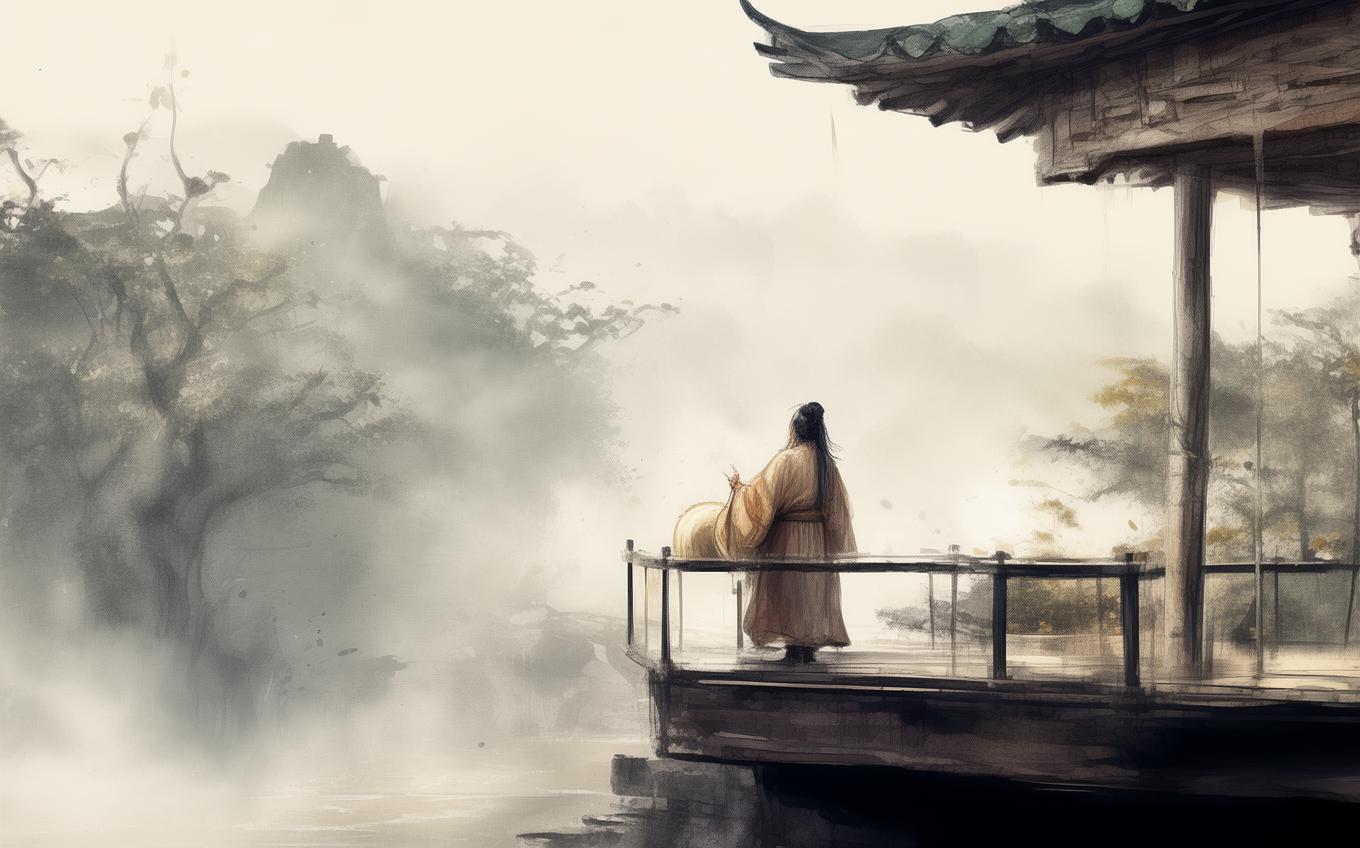
- The title “临高台” means “Ascending the High Terrace” or “Standing Before a High Tower.” In classical Chinese poetry, a high terrace is rarely just an architectural space: it is a place for looking outward, remembering the past, contemplating power, and sensing the impermanence of human life.
- Poems under this title were written by different poets across the Six Dynasties and Tang periods. This article focuses on a well-known version attributed to Wang Bo (王勃, Wáng Bó, 650–676), one of the “Four Paragons of the Early Tang.”
- The poem is significant because it combines the splendor of imperial architecture with a deeper meditation on transience. It begins with dazzling images of palaces, roads, music, and noble houses, but gradually turns toward a recognition that luxury and beauty cannot last forever.
The Poem: Full Text and Translation
临高台,高台迢递绝浮埃。
Lín gāo tái, gāo tái tiáo dì jué fú āi.
I stand before the high terrace; the high terrace rises far away, beyond the drifting dust.
瑶轩绮构何崔嵬,鸾歌凤吹清且哀。
Yáo xuān qǐ gòu hé cuī wéi, luán gē fèng chuī qīng qiě āi.
Jade-like halls and ornate structures tower magnificently; phoenix-like songs and music sound clear yet mournful.
俯瞰长安道,萋萋御沟草。
Fǔ kàn Cháng’ān dào, qī qī yù gōu cǎo.
Looking down, one sees the roads of Chang’an, and the lush grass along the imperial canals.
斜对甘泉路,苍苍茂陵树。
Xié duì Gānquán lù, cāng cāng Màolíng shù.
Obliquely it faces the road to Ganquan; in the distance stand the dark green trees of Maoling.
高台四望同,帝乡佳气郁葱葱。
Gāo tái sì wàng tóng, dì xiāng jiā qì yù cōng cōng.
From the high terrace, all four directions appear alike; the imperial city is filled with rich and auspicious vitality.
紫阁丹楼纷照耀,璧房锦殿相玲珑。
Zǐ gé dān lóu fēn zhào yào, bì fáng jǐn diàn xiāng líng lóng.
Purple pavilions and crimson towers shine everywhere; jade rooms and brocade halls glitter in delicate splendor.
东弥长乐观,西指未央宫。
Dōng mí Chánglè guān, xī zhǐ Wèiyāng gōng.
To the east extend the halls of Changle; to the west one points toward Weiyang Palace.
赤城映朝日,绿树摇春风。
Chì chéng yìng zhāo rì, lǜ shù yáo chūn fēng.
Red city walls reflect the morning sun; green trees sway in the spring wind.
旗亭百隧开新市,甲第千甍分戚里。
Qí tíng bǎi suì kāi xīn shì, jiǎ dì qiān méng fēn qī lǐ.
Market towers and countless lanes open into new districts; noble mansions with a thousand roofs divide the quarters of royal relatives.
朱轮翠盖不胜春,叠榭层楹相对起。
Zhū lún cuì gài bù shèng chūn, dié xiè céng yíng xiāng duì qǐ.
Vermilion wheels and green carriage canopies overflow with springtime splendor; layered terraces and pillared halls rise facing one another.
复有青楼大道中,绣户文窗雕绮栊。
Fù yǒu qīng lóu dà dào zhōng, xiù hù wén chuāng diāo qǐ lóng.
There are also painted mansions along the great avenues, with embroidered doors, patterned windows, and carved latticework.
锦衣昼不襞,罗帏夕未空。
Jǐn yī zhòu bù bì, luó wéi xī wèi kōng.
Brocade garments are not folded away by day; silk curtains are not empty by night.
歌屏朝掩翠,妆镜晚窥红。
Gē píng zhāo yǎn cuì, zhuāng jìng wǎn kuī hóng.
Singing screens conceal green ornaments in the morning; dressing mirrors at dusk reveal touches of rouge.
为君安宝髻,蛾眉罢花丛。
Wèi jūn ān bǎo jì, é méi bà huā cóng.
For you, she arranges her jeweled hair; her moth-like brows outshine the flowers.
尘间狭路黯将暮,云间月色明如素。
Chén jiān xiá lù àn jiāng mù, yún jiān yuè sè míng rú sù.
In the dusty world, the narrow roads darken toward evening; among the clouds, the moonlight is bright as plain silk.
鸳鸯池上两两飞,凤凰楼下双双度。
Yuān yāng chí shàng liǎng liǎng fēi, fèng huáng lóu xià shuāng shuāng dù.
Mandarin ducks fly in pairs above the pond; beneath the Phoenix Tower, lovers pass two by two.
物色正如此,佳期那不顾。
Wù sè zhèng rú cǐ, jiā qī nǎ bù gù.
When the scenery is just like this, how could one neglect a beautiful appointed time?
银鞍绣毂盛繁华,可怜今夜宿倡家。
Yín ān xiù gǔ shèng fán huá, kě lián jīn yè sù chāng jiā.
Silver saddles and embroidered carriage hubs display flourishing luxury; alas, tonight he lodges in a courtesan’s house.
倡家少妇不须颦,东园桃李片时春。
Chāng jiā shào fù bù xū pín, dōng yuán táo lǐ piàn shí chūn.
Young lady of the courtesan’s house, do not frown; the peach and plum blossoms of the eastern garden enjoy only a brief spring.
Line-by-Line Analysis
- The opening line, “临高台,” immediately places the speaker at a height. In Chinese poetry, height often creates emotional distance: the poet sees more, but also feels more deeply the vastness and fragility of the world.
- “高台迢递绝浮埃” separates the terrace from “floating dust.” Dust often symbolizes the ordinary world, political struggle, and human vanity. The terrace appears to rise above it, suggesting grandeur and purity.
- The “jade halls,” “ornate structures,” and “phoenix music” create an atmosphere of courtly elegance. Yet the music is “clear yet mournful,” introducing sadness into a scene of luxury.
- Chang’an, Ganquan, and Maoling are not random places. Chang’an was the great imperial capital; Ganquan was associated with imperial palaces; Maoling was the tomb of Emperor Wu of Han. These references connect the poem’s present splendor with earlier dynasties and with the memory of imperial power.
- The central section expands into a panoramic vision of the capital: palaces, towers, noble mansions, markets, roads, carriages, and spring trees. The city seems alive with prosperity.
- However, the abundance of color—purple pavilions, crimson towers, green trees, vermilion wheels—also creates a slightly overwhelming beauty. The poem is not simply praising luxury; it is showing how seductive and unstable worldly splendor can be.
- The poem then turns toward the private world of pleasure: painted mansions, embroidered doors, silk curtains, mirrors, rouge, and jeweled hairstyles. Public imperial grandeur becomes intimate sensual beauty.
- The paired images of mandarin ducks and lovers emphasize romance and desire. In Chinese tradition, mandarin ducks symbolize faithful couples, but here their beauty also intensifies the fleeting nature of the moment.
- The final couplet shifts the mood. The courtesan is told not to frown because “peach and plum blossoms” have only “a brief spring.” This is both consolation and warning: youth, beauty, pleasure, and status all pass quickly.
Themes and Symbolism
- Imperial Splendor: The poem presents the capital as a dazzling center of architecture, wealth, and ceremony. Chang’an becomes almost mythical, filled with auspicious energy and brilliant color.
- Transience: Beneath the surface beauty lies the awareness that all glory fades. The references to old imperial sites and tombs remind readers that even powerful dynasties become memory.
- Beauty and Desire: The poem moves from palaces to courtesans, from public power to private pleasure. This shift suggests that both political grandeur and romantic beauty are forms of attraction.
- Height and Vision: The high terrace symbolizes perspective. From above, the speaker can see the city’s magnificence, but also sense its impermanence.
- Spring Imagery: Spring represents youth, vitality, and love. Yet because spring is temporary, it also symbolizes the sadness of passing time.
- Paired Birds: Mandarin ducks and paired lovers suggest harmony and romance, but their appearance in a poem about fleeting pleasure gives the image a bittersweet tone.
Cultural Context
- The poem belongs to the Yuefu tradition, originally connected to songs collected or performed by the Han dynasty Music Bureau. Later poets used Yuefu titles to write new works that echoed older musical and literary forms.
- “鼓吹曲辞” refers to a category of ceremonial or military music involving drums and wind instruments. Even when later poems under these titles became literary compositions rather than actual songs, they retained a sense of public performance and grandeur.
- Wang Bo lived in the early Tang dynasty, a time when Chinese poetry was developing rapidly. His works often combine youthful brilliance with a strong awareness of fate, impermanence, and frustrated ambition.
- The poem reflects an important Chinese cultural idea: outward prosperity does not erase the truth of change. Palaces, noble families, beautiful women, and spring blossoms are all subject to time.
- It also reflects the classical Chinese habit of seeing history through landscape. A road, a palace, a tomb, or a terrace can become a vessel of memory, linking the present moment with centuries of rise and decline.
Conclusion
- “鼓吹曲辞临高台” is a poem of dazzling surfaces and quiet melancholy. It invites readers to look upon the imperial city from a high place, admire its brilliance, and then recognize the fragility hidden within that brilliance.
- Its beauty lies in contrast: height and dust, music and sorrow, palaces and tombs, springtime pleasure and the brevity of youth.
- For modern readers, the poem remains moving because it speaks to a universal human experience. We are drawn to beauty, success, love, and celebration, yet we know they cannot last forever.
- The poem’s final wisdom is gentle rather than harsh: enjoy the spring, but understand that it is brief. In that awareness, beauty becomes not less precious, but more deeply felt.
Comments (0)
No comments yet. Be the first to comment!