Introduction
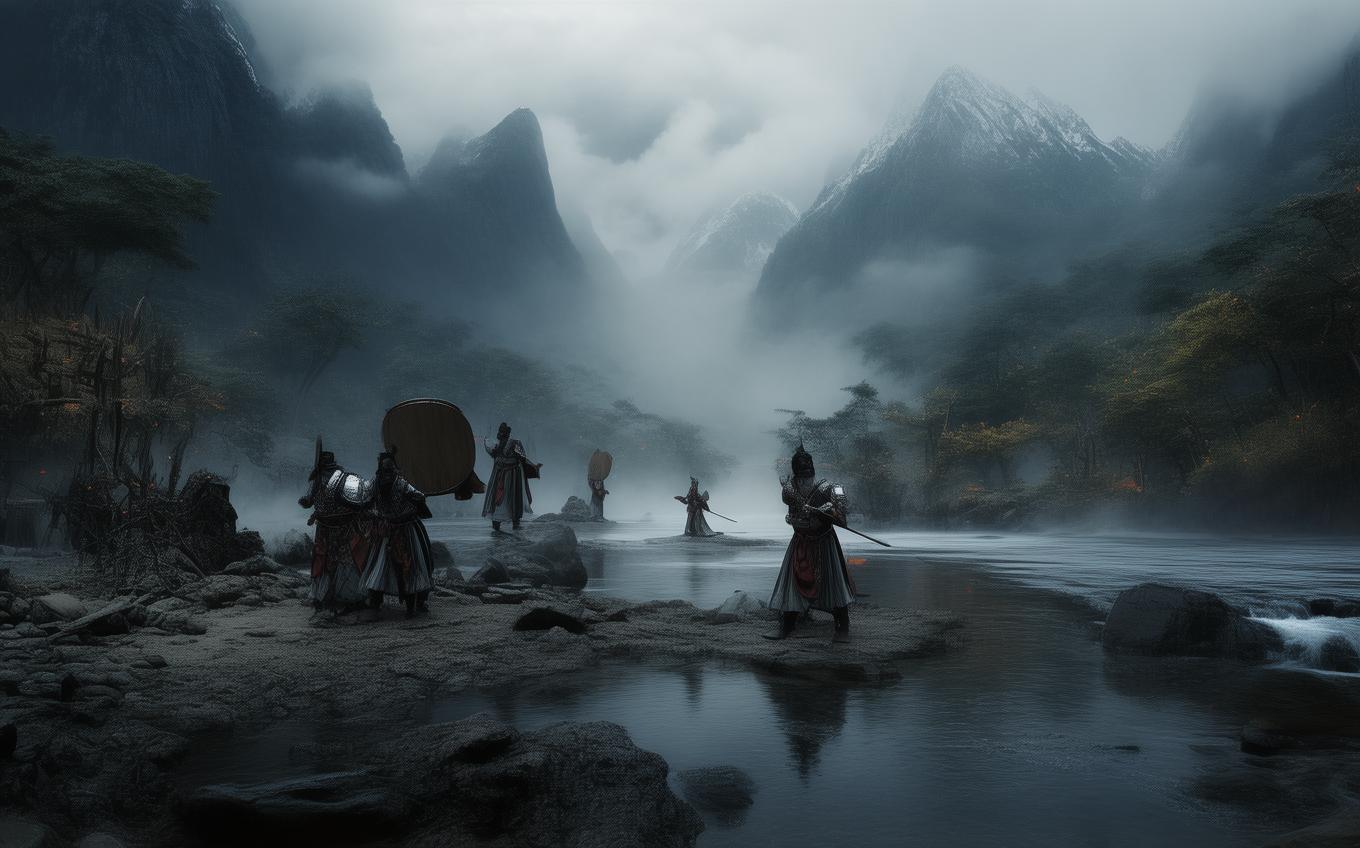
In the vast treasury of classical Chinese poetry, the yuefu 乐府 (Music Bureau) poems hold a special place, blending lyrical beauty with ritual and historical significance. Among them, the "Drum and Pipe Nao Songs" (鼓吹铙歌) were majestic pieces performed at court ceremonies, often celebrating military triumphs and the founding of dynasties. The poem "晋阳武" (Jìn Yáng Wǔ) — "The Martial Virtue of Jin" — belongs to the Jin Dynasty Drum and Pipe Songs (晋鼓吹铙歌) and was composed by Fu Xuan 傅玄 (217–278 AD), a prominent scholar-official and poet of the Western Jin. This poem is a stirring dynastic hymn written to glorify the rise of the Jin dynasty under Emperor Wu (Sima Yan), who unified China after the turbulent Three Kingdoms period. It weaves together cosmic imagery, Confucian ideals of sage rule, and the raw energy of battle, all in a compact yet powerful form. For readers curious about how poetry served statecraft in ancient China, "晋阳武" offers a vivid entry point.
The Poem: Full Text and Translation
Below is the complete text, presented line by line with pinyin and a faithful English translation.
晋阳武
Jìn yáng wǔ
Jin displays its martial virtue.
宣皇猷
xuān huáng yóu
It proclaims the imperial grand design.
宣皇猷
xuān huáng yóu
It proclaims the imperial grand design.
迈唐虞
mài Táng Yú
Surpassing the sage rulers Tang (Yao) and Yu (Shun).
兴言陟配
xīng yán zhì pèi
Rising, indeed, to the heavenly match,
受命于天
shòu mìng yú tiān
Receiving the mandate from Heaven.
天不俾
tiān bù bǐ
Heaven does not withhold —
纯假
chún gǔ
Pure and ample blessings.
民则怀
mín zé huái
The people therefore cherish them.
靡有戡
mǐ yǒu kān
There is no need for slaughter.
戡克定
kān kè dìng
Slaughter ceasing, all is pacified.
享祚万年
xiǎng zuò wàn nián
Enjoying the throne for ten thousand years.
於铄王师
wū shuò wáng shī
Oh, how splendid is the royal army!
遵养时晦
zūn yǎng shí huì
Patiently nurtured through times of obscurity.
时晦既平
shí huì jì píng
Now the dark times have been subdued.
龙战于野
lóng zhàn yú yě
Dragons battle in the wilderness.
龙战于野
lóng zhàn yú yě
Dragons battle in the wilderness.
其血玄黄
qí xuè xuán huáng
Their blood is black and yellow.
玄黄既洽
xuán huáng jì qià
When black and yellow are harmonized,
玉帛是来
yù bó shì lái
Jade and silk are brought as tribute.
来享来王
lái xiǎng lái wáng
They come to offer, they come to acknowledge the king.
靡有凶灾
mǐ yǒu xiōng zāi
No calamities remain.
於皇时晋
wū huáng shí Jìn
Oh, majestic is this Jin!
改物承天
gǎi wù chéng tiān
Changing the ritual objects, receiving Heaven’s will.
仪刑万邦
yí xíng wàn bāng
A model and pattern for all states.
受命来宣
shòu mìng lái xuān
Having received the mandate, it comes and proclaims.
Line-by-Line Analysis
The poem unfolds as a ceremonial narrative — a progression from the proclamation of Jin’s virtue, through the chaos of dynastic struggle, to the tranquil order of a unified empire. Let’s walk through it carefully.
“晋阳武” (Jìn yáng wǔ)
The opening phrase is the title itself, literally “Jin’s yang wu” — yang meaning “to display, bring forth,” and wu the classic Confucian concept of martial virtue. Unlike brute violence, wu implies righteous strength that pacifies and protects. Instantly, the poem frames Jin’s military rise as a moral force.
“宣皇猷 / 宣皇猷,迈唐虞”
The repetition of “宣皇猷” (proclaiming the imperial grand design) mimics the beat of ceremonial drums. The phrase “迈唐虞” asserts that Jin’s brilliance even surpasses the legendary sage-kings Yao (唐) and Shun (虞). In Chinese political theology, Yao and Shun were the golden standard — so this is a bold claim of divine favor.
“兴言陟配,受命于天”
“兴言” is a classical particle emphasizing action; “陟配” means ascending to the heavenly counterpart (the throne). Here the emperor is presented as heaven’s earthly mate, his authority sealed by the Mandate of Heaven (天命). The line is pure Confucian legitimation.
“天不俾,纯假”
“俾” means to give; “假” (read gǔ) means blessings. Heaven ungrudgingly bestows pure and abundant blessings — another sign of divine approval.
“民则怀,靡有戡”
The people’s hearts are won without need for massacre (戡 means slaughter or conquest). This softens the martial theme: Jin’s victory is so righteous that resistance melts away.
“戡克定,享祚万年”
“克” means to subdue. Once slaughter ceases and peace is established, the dynasty will enjoy the throne for ten thousand years — a standard wish for perpetual rule.
“於铄王师,遵养时晦”
“於铄” (wū shuò) is an exclamatory “Oh, how splendid!” The royal army is lauded not just for strength, but for strategic patience: “遵养时晦” means to abide and nurture oneself during obscure, difficult times, waiting for the right moment to strike — a reference to the Book of Changes hexagram “Mingyi” (明夷), advising the wise to hide their light in dark ages. Here, it elevates Jin’s rise as both prudent and heaven-timed.
“时晦既平,龙战于野 / 龙战于野,其血玄黄”
Now the dark times are pacified, we witness the climactic cosmic battle: “Dragons battle in the wilderness” is a direct quotation from the Yijing (Book of Changes), hexagram Kun (坤), top line: “龙战于野,其血玄黄” — dragons fighting, their blood black and yellow. In the Yijing, black (玄) represents Heaven and yellow (黄) Earth; their mingled blood symbolizes the primordial struggle of yin and yang out of which order emerges. By invoking this image, the poet frames Jin’s military
Comments (0)
No comments yet. Be the first to comment!