Analysis of "鼓吹曲辞鼓吹铙歌泾水黄" - Classical Chinese Poetry
Introduction
Liu Zongyuan (柳宗元, 773–819 CE) stands as one of the most celebrated literary masters of the Tang Dynasty, renowned for both his exquisite landscape writing and his profound philosophical essays. While most readers outside China know him for his introspective nature poems, Liu also composed a remarkable set of twelve martial odes known as the Tang Nao Song Gu Chui Qu (唐铙歌鼓吹曲), imperial ceremonial hymns that glorify the founding of the Tang Dynasty. Among these, the fourth poem, “泾水黄” (Jīng Shuǐ Huáng – “The Jing River Runs Yellow”), captures a decisive battle in which the young Li Shimin (the future Emperor Taizong) crushed a fierce rebellion. The poem transforms a bloody historical event into a cosmic drama, using vivid animal imagery and celestial symbolism to convey the chaos of war and the restoration of order. This piece offers English readers a rare window into the martial spirit of Tang court poetry and the deep interconnection between history, myth, and literary art in classical China.
The Poem: Full Text and Translation
泾水黄,陇野茫。
Jīng shuǐ huáng, lǒng yě máng.
The Jing River runs yellow, the Long plain stretches vast and hazy.
负太白,腾天狼。
Fù tài bái, téng tiān láng.
They bear the White Star on their backs, soaring like the Celestial Wolf.
有鸟鸷立,羽翼张。
Yǒu niǎo zhì lì, yǔ yì zhāng.
There is a bird of prey that stands fierce, its wings outspread.
钩喙决前,钜趯傍。
Gōu huì jué qián, jù tì bàng.
Its hooked beak strikes forward, its great talons clutch from the side.
怒飞饥啸,翾不可当。
Nù fēi jī xiào, xuān bù kě dāng.
In rage it flies, shrieking with hunger — low-gliding, nothing can stop it.
老雄死,子复良。
Lǎo xióng sǐ, zǐ fù liáng.
The old hero dies, yet his son proves equally fierce.
巢岐饮渭,肆翱翔。
Cháo Qí yǐn Wèi, sì áo xiáng.
They nest at Mount Qi, drink from the River Wei, and wildly wheel and soar.
顿地紘,提天纲。
Dùn dì hóng, tí tiān gāng.
They tug at the earth’s great ropes, they lift the very net of heaven.
列缺掉帜,招摇耀铓。
Liè quē diào zhì, zhāo yáo yào máng.
Lightning flashes like a waving banner, the handle of the Dipper glitters with blades.
鬼神来助,梦嘉祥。
Guǐ shén lái zhù, mèng jiā xiáng.
Ghosts and spirits come to their aid, and dreams foretell good omens.
脑涂原野,魄飞扬。
Nǎo tú yuán yě, pò fēi yáng.
Brains smear the plains, and souls scatter on the wind.
星辰复,恢一方。
Xīng chén fù, huī yī fāng.
The stars return to their courses — order is restored to this quarter of the world.
Line-by-Line Analysis
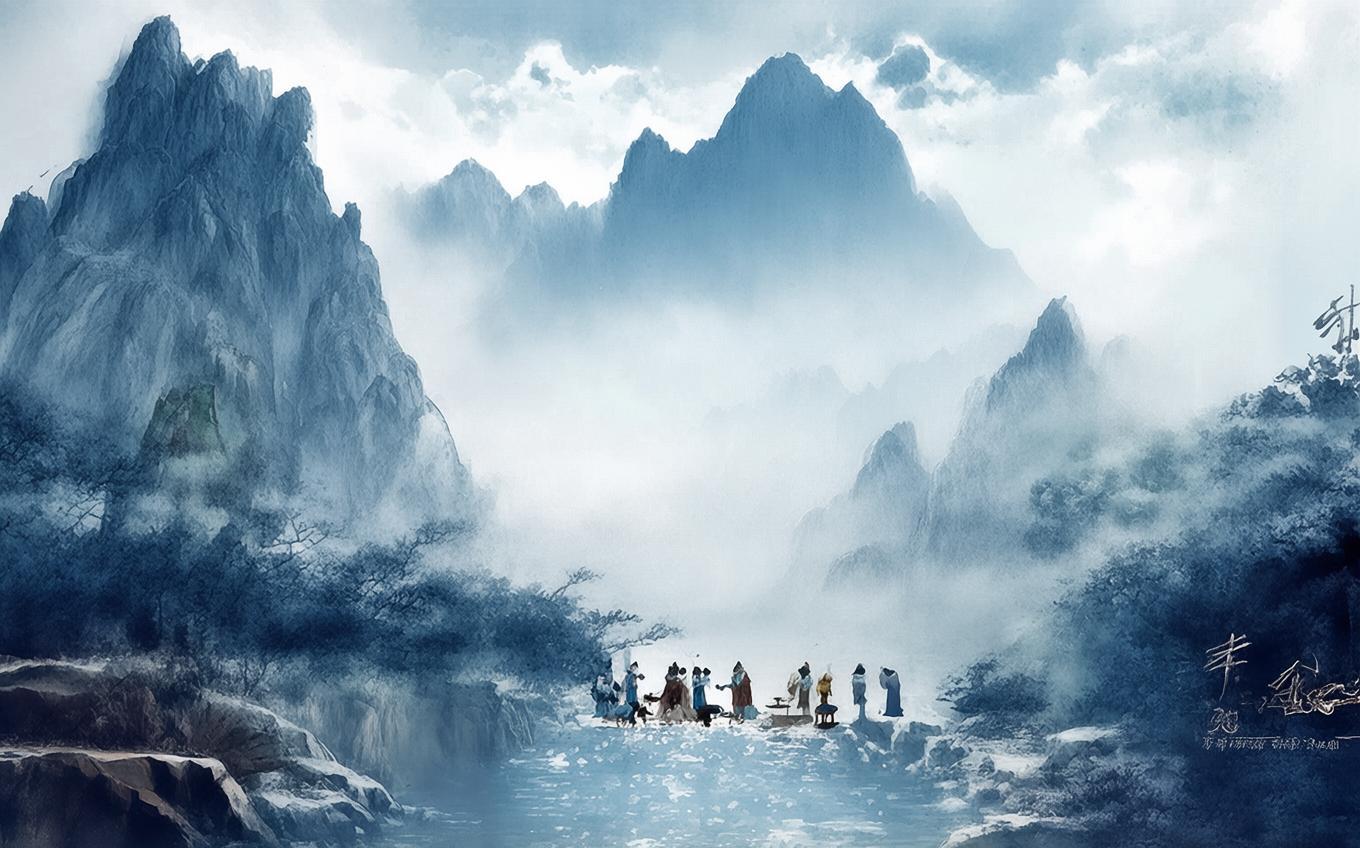
The poem opens with a desolate landscape: “泾水黄,陇野茫” — the Jing River runs yellow, stained by blood and disturbed earth, while the Long plain fades into a vast blur. The yellow river immediately signals unnatural violence, for in Chinese poetics a clear stream often symbolizes peace. The haziness of the plain suggests the confusion and turmoil of a realm thrown into chaos. Then the focus shifts to the rebel army: “负太白,腾天狼。” The “White Star” (太白, Venus) was associated with military might, and the “Celestial Wolf” (天狼, Sirius) with invasion and rapacity in Chinese astrology. By saying they “bear” and “soar like” these ominous celestial bodies, Liu paints the rebels not as mere men but as cosmic forces of destruction. The bird metaphor that follows intensifies this: “有鸟鸷立,羽翼张。” A bird of prey stands at the center of the poem — a vivid, terrifying avatar of the rebel leaders Xue Ju and his son Xue Rengao, who had seized the northwest and threatened the new Tang dynasty. Every detail of the bird is menacing: its hooked beak striking forward, its huge talons grasping sideways. It is an image of merciless aggression, a creature built to tear the world apart.
The bird’s motion is described with escalating urgency: “怒飞饥啸,翾不可当。” It flies in fury, shrieks with hunger — a ravenous, unstoppable force. The word xuān (翾) suggests a low, swooping flight, like a predator diving upon its prey. The poem then makes the historical core explicit: “老雄死,子复良。” The “old hero” is Xue Ju, who had proclaimed himself Western Qin Emperor and nearly defeated the Tang forces before dying suddenly. His son Xue Rengao, “fierce” or “capable,” inherited his father’s ambition and army. The next couplet, “巢岐饮渭,肆翱翔,” grounds the metaphor in real geography: Mount Qi and the River Wei are landmarks in the very region the rebels occupied. They made their lair there and “wantonly wheeled and soared” — a phrase that captures both the arrogance of the rebel court and their unrestrained plundering. The cosmic disorder then peaks with two powerful lines: “顿地紘,提天纲。” In ancient Chinese cosmology, the earth was bound by giant ropes and the heavens maintained by a great net. When rebels tug at these, they are literally unravelling the fabric of the universe. Liu does not simply describe a military threat; he portrays a metaphysical crisis.
The imagery then pivots from the rebels to the imperial response. “列缺掉帜,招摇耀铓。” Lie Que (Lightning Flash) is a mythical deity or force of celestial fire, here swinging like a battle flag. Zhao Yao is the handle of the Big Dipper / Northern Ladle, a crucial astral symbol for imperial authority and a celestial weapon. The shining blades in the sky announce the arrival of divine retribution. This divine support is reinforced by “鬼神来助,梦嘉祥” — ghosts and spirits (likely ancestral or protective) join the loyalist side, and auspicious dreams bless the campaign. Tang historical records note that Li Shimin was said to have received prophetic dreams before his victories, a motif Liu artfully weaves into the narrative. The climactic violence is stark: “脑涂原野,魄飞扬.” The rebel forces are utterly annihilated; their brains smear the plains and their souls (po, the earth-bound part of the spirit) scatter. It is deliberately graphic, evoking the ancient tradition of battlefield elegies where the gruesome end of the wicked is a testament to dynastic justice. The final line, “星辰复,恢一方,” brings resolution. The stars, which had been shaken out of place by rebellion, return to their proper courses. The cosmos heals, and order is restored to that quarter of the world. The poet thus frames the Tang army’s victory not as mere conquest but as a rebalancing of reality itself.
Themes and Symbolism
The poem’s central theme is the restoration of cosmic and political order through righteous violence. Liu Zongyuan draws heavily on the ancient Chinese concept of tianming (天命, the Mandate of Heaven): the Tang house holds the celestial mandate, and the rebel forces are a disruption of the natural order, symbolized by the yellow, bloodied river and the tugging at the earth’s ropes. The victory is inevitable and sanctioned by heaven. A secondary theme is the monstrous nature of rebellion. By transforming the enemy into a rapacious bird of prey, Liu dehumanizes them and aligns them with chaos. The bird symbolism — hooked beak, talons, hunger, unbridled flight — echoes traditional Chinese depictions of barbarian invaders and usurpers as beasts. The poem also touches on filial inheritance of conflict: the old hero dies, yet his son continues the violence. This reflects a historical pattern in Chinese dynastic struggles, where a rebellion outlives its founder and must be crushed with finality.
Key symbols include:
- The Yellow River (泾水黄): A perversion of nature; normally clear, the river is tainted by blood and upheaval, a physical stain on the land.
- The Bird of Prey:
Comments (0)
No comments yet. Be the first to comment!