Introduction
Wang Jian 王建 was a Tang dynasty poet, active in the late 8th and early 9th centuries. He is especially known for poems in the Yuefu 乐府 tradition—songs and ballads that often speak in the voices of common people, soldiers, women, and travelers.
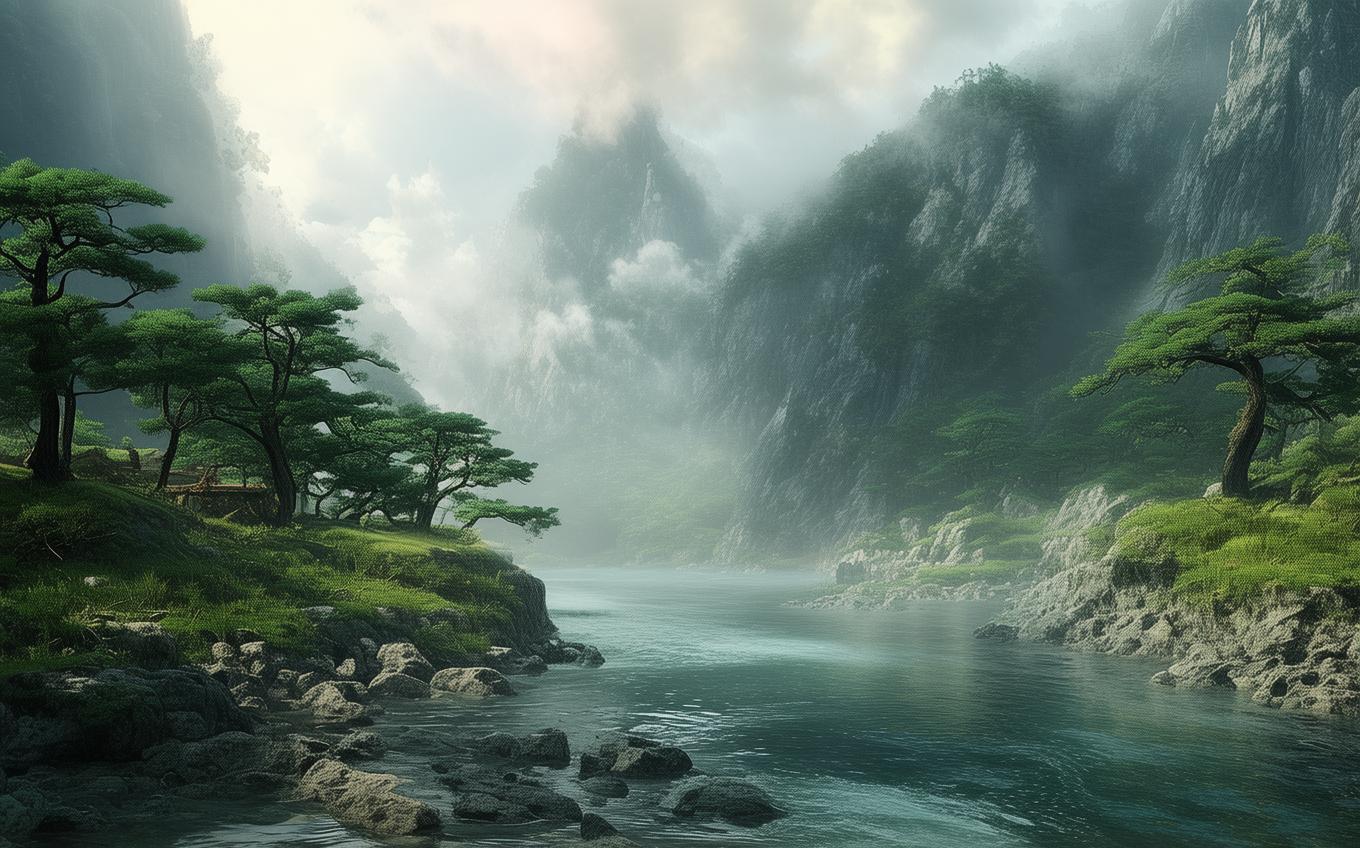
“横吹曲辞陇头水” belongs to the category of frontier poetry. The title refers to the waters of Longtou 陇头, a mountainous region in the northwest associated with military campaigns, harsh travel, and homesickness. In Chinese literary memory, the sound of water at Longtou often evokes sorrow, separation, and the suffering of soldiers stationed far from home.
Its significance lies in how it transforms a physical landscape into an emotional soundscape: the flowing water becomes the voice of grief, memory, and war.
The Poem: Full Text and Translation
陇水何年陇头别,
Lǒng shuǐ hé nián Lǒng tóu bié,
In what year did the Long waters part from Longtou?
不在山中亦呜咽。
Bù zài shān zhōng yì wū yè.
Even when no longer in the mountains, they still sob and choke.
征人塞耳马不行,
Zhēng rén sāi ěr mǎ bù xíng,
The campaign soldiers cover their ears; the horses refuse to move.
未到陇头闻水声。
Wèi dào Lǒng tóu wén shuǐ shēng.
Before reaching Longtou, they already hear the sound of water.
谓是西流入蒲海,
Wèi shì xī liú rù Pú hǎi,
Some say it flows westward into Puhai.
还闻北去绕龙城。
Hái wén běi qù rào Lóng chéng.
Others hear that it turns north and circles Dragon City.
陇东陇西多屈曲,
Lǒng dōng Lǒng xī duō qū qū,
East and west of Long, the land twists and winds.
野麋饮水长簇簇。
Yě mí yǐn shuǐ cháng cù cù.
Wild deer gather in clusters to drink the water.
胡兵夜回水傍住,
Hú bīng yè huí shuǐ bàng zhù,
The Hu soldiers return at night and camp beside the stream.
忆著来时磨剑处。
Yì zhe lái shí mó jiàn chù.
They remember the place where they sharpened their swords when they came.
向前无井复无泉,
Xiàng qián wú jǐng fù wú quán,
Ahead there are no wells, and no springs either.
放马回看陇头树。
Fàng mǎ huí kàn Lǒng tóu shù.
Letting the horses go, they turn back to look at the trees of Longtou.
Line-by-Line Analysis
The opening line, “陇水何年陇头别,” gives the river a mysterious origin. The poet asks when the Long waters separated from Longtou, as if the water itself has a history of exile. This is not merely geography; it is emotional personification. The river seems to have been “separated” just as soldiers are separated from home.
“不在山中亦呜咽” deepens this mood. The verb “呜咽” means to sob or choke with grief. In classical Chinese poetry, natural sounds often carry human feeling. Here, the water continues to “weep” even after leaving the mountains, suggesting that sorrow follows one beyond the place where it began.
“征人塞耳马不行” introduces the soldiers. They cover their ears, and even their horses refuse to advance. The sound of the water is not gentle or refreshing; it is psychologically overwhelming. It reminds the soldiers of danger, distance, and perhaps death.
“未到陇头闻水声” is especially powerful because the soldiers hear the water before they arrive. Longtou is anticipated through sound. The place becomes a symbol of fear and sorrow even before it is seen.
The next couplet, “谓是西流入蒲海, / 还闻北去绕龙城,” expands the poem’s geography. Puhai 蒲海 and Dragon City 龙城 evoke remote frontier regions. The uncertainty of the river’s direction reflects the uncertainty of military life. Soldiers are sent across vast spaces, often without control over their own fate.
“陇东陇西多屈曲” describes a twisted landscape. The winding terrain mirrors the tangled emotions of the poem: fear, homesickness, fatigue, and longing.
“野麋饮水长簇簇” briefly shifts to wildlife. Wild deer gather peacefully to drink, creating a contrast with human violence. Nature continues its rhythms, while soldiers march, fight, and suffer. This contrast is common in Chinese poetry: the natural world appears calm, while human life is troubled.
“胡兵夜回水傍住” brings in the enemy, referred to as “胡兵,” a traditional Chinese term for northern or northwestern non-Han forces. The scene occurs at night, increasing the feeling of danger. The frontier is a place where boundaries—between cultures, armies, and lives—are unstable.
“忆著来时磨剑处” is haunting. The soldiers remember where they sharpened their swords earlier. This memory suggests repeated conflict: they came prepared for war, and now they return to the same place with the burden of experience.
“向前无井复无泉” emphasizes hardship. Ahead lies a dry and hostile route. In frontier poetry, water often symbolizes survival, but here water is also sorrow. The lack of wells and springs means the soldiers face both physical thirst and emotional desolation.
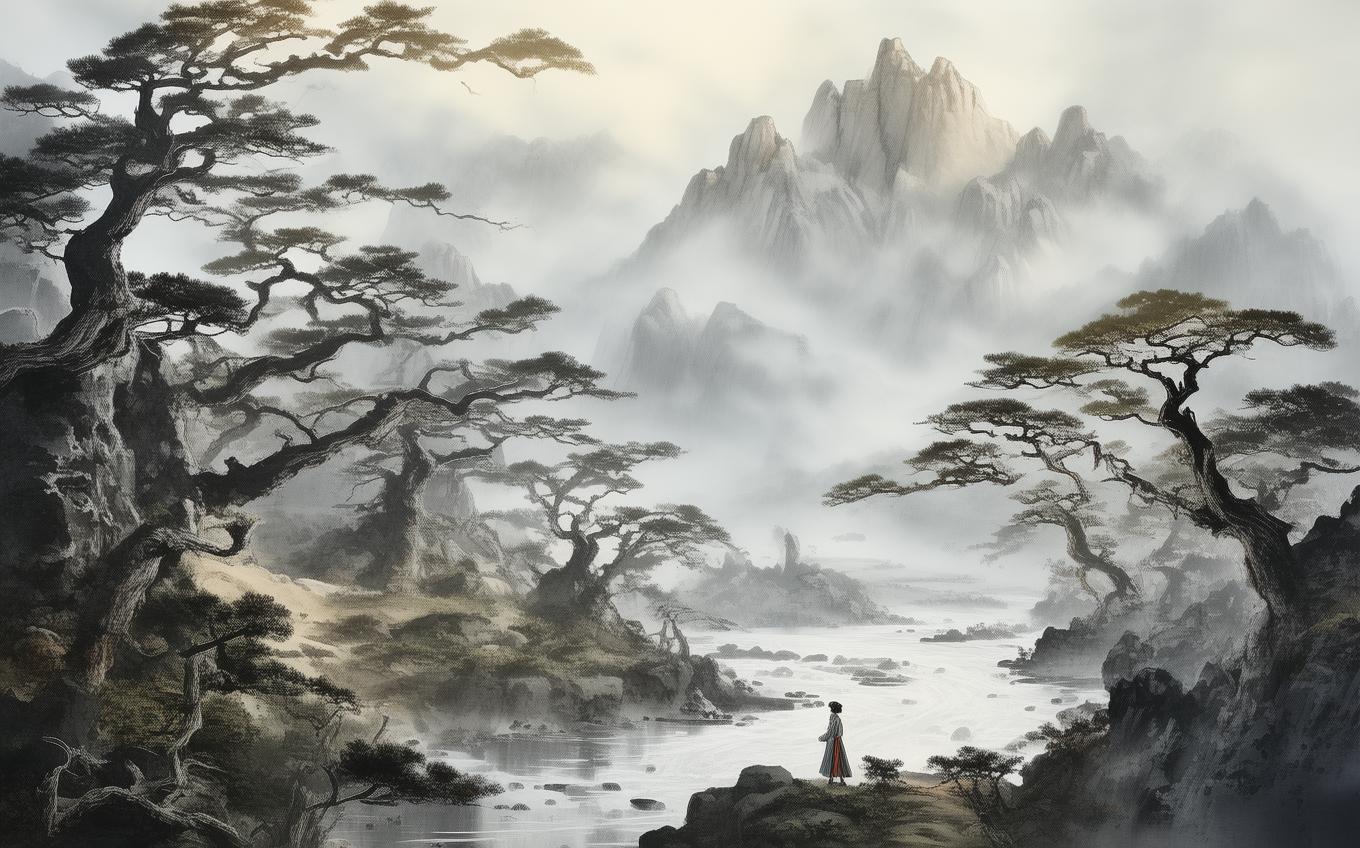
The final line, “放马回看陇头树,” ends with a backward glance. The soldiers let their horses move and turn to look back at the trees of Longtou. This image is quiet but deeply emotional. Looking back suggests reluctance, memory, and attachment. The trees become a last visible marker of a place filled with suffering, but also with the strange familiarity of survival.
Themes and Symbolism
One major theme is frontier hardship. The poem presents military life not as glorious conquest but as exhaustion, fear, and endless movement through difficult terrain.
Another important theme is sorrow expressed through nature. The water of Longtou is not neutral scenery; it “sobs.” Its sound becomes the emotional center of the poem, representing grief that cannot be silenced.
The poem also explores memory. The soldiers remember where swords were sharpened, and at the end they look back at the trees. These gestures show how landscapes absorb human experience. A river, a tree, or a mountain pass can become a container of trauma and longing.
Water is the key symbol. It usually suggests life, movement, and continuity, but here it also suggests lamentation. The flowing water connects different places—mountains, deserts, enemy camps, and military roads—just as sorrow flows through the lives of the soldiers.
Cultural Context
The Tang dynasty was a period of great cultural brilliance, but also frequent military conflict along the empire’s frontiers. Many poets wrote about the northwest borderlands, where soldiers endured cold, thirst, isolation, and the threat of battle.
“陇头水” is part of the Yuefu tradition. Yuefu poems often used older song titles and musical forms to express social realities. By writing under this title, Wang Jian connects his poem to a long tradition of songs about separation, war, and frontier sorrow.
The poem reflects a deeply Chinese poetic value: the unity of scene and emotion, known as 情景交融. Rather than directly saying “the soldiers are sad,” the poem lets readers hear sadness in the water, see it in the winding land, and feel it in the backward glance at the trees.
It also reflects a moral concern found in much Chinese literature: sympathy for ordinary people caught in historical forces larger than themselves. The soldiers are not heroic statues; they are weary human beings moving through a harsh world.
Conclusion
“横吹曲辞陇头水” is a beautiful and mournful frontier poem because it turns landscape into emotion. The river’s sound, the winding roads, the wild deer, the enemy camp, and the final look back all create a world of loneliness and endurance.
For modern readers, the poem remains powerful because it speaks to experiences that cross cultures and centuries: homesickness, fear, memory, and the human cost of war. Its message is quiet but lasting: even when history remembers battles, poetry remembers the people who had to walk toward them.
Comments (0)
No comments yet. Be the first to comment!