Introduction
"横吹曲辞" refers to a group of old yuefu-style frontier songs, originally associated with military wind music, and "入塞" means "Entering the Frontier" or "Going Beyond the Pass." Among the poems connected with this theme, one of the best-known is by 王昌龄 (Wáng Chānglíng, c. 698–756), a major Tang dynasty poet celebrated for his frontier verse. His poetry often turns scenes of border warfare into meditations on distance, duty, glory, and human cost.
This poem is significant in Chinese literature because it captures, in only a few lines, the vast emotional world of the Tang frontier imagination: the remoteness of the borderlands, the burden of war, and the unfulfilled hope that a truly great general might end the suffering. It is admired for its compressed power, historical resonance, and haunting grandeur.
The Poem: Full Text and Translation
秦时明月汉时关
Qín shí míng yuè Hàn shí guān
The bright moon of Qin times still shines on the passes of Han times.
万里长征人未还
Wàn lǐ cháng zhēng rén wèi huán
From these long campaigns stretching ten thousand li, the men have not returned.
但使龙城飞将在
Dàn shǐ Lóngchéng fēi jiàng zài
If only the Flying General of Longcheng were still here,
不教胡马度阴山
Bù jiào Hú mǎ dù Yīnshān
He would never let the northern horsemen cross the Yin Mountains.
Line-by-Line Analysis
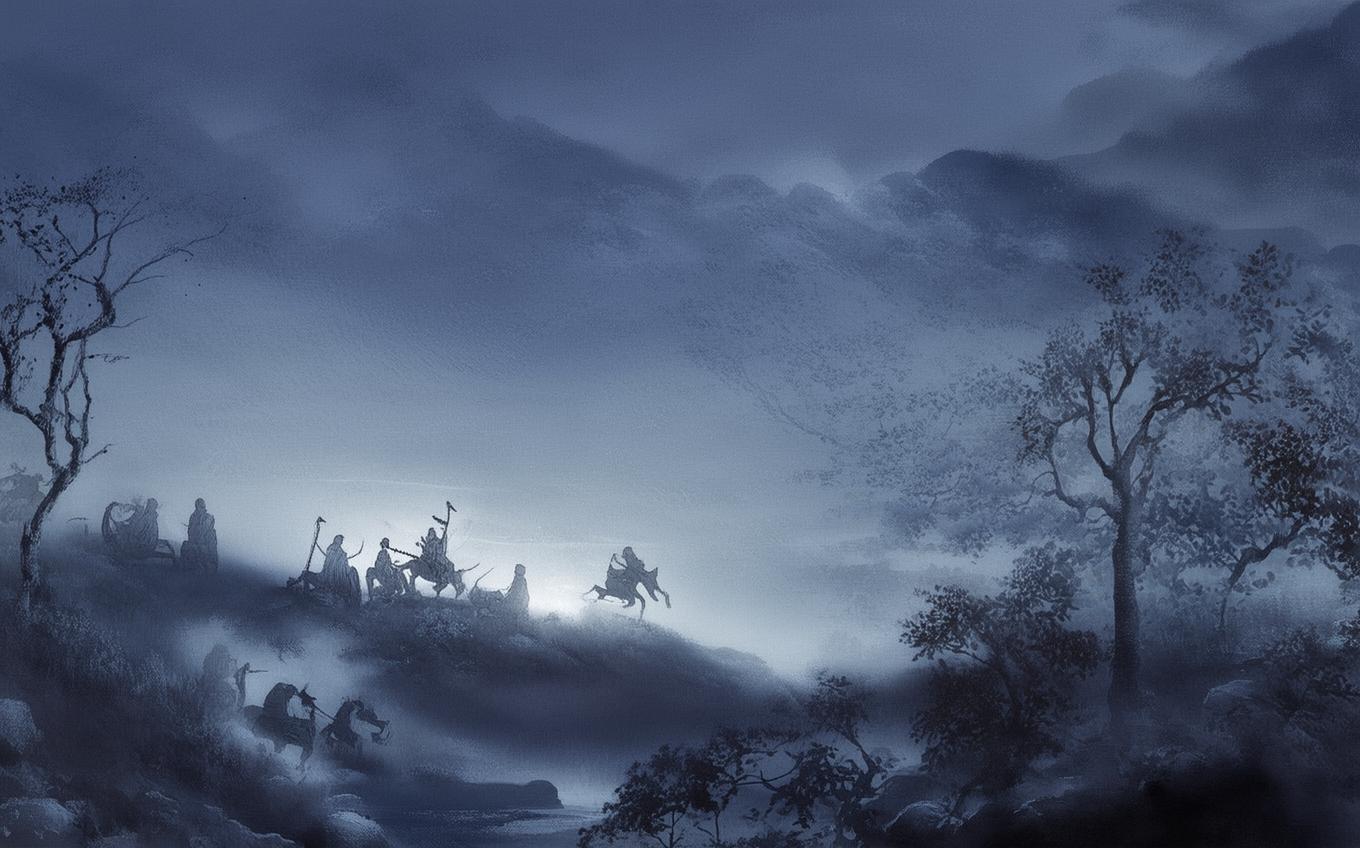
The opening line, “秦时明月汉时关”, is one of the most famous in all Tang poetry. Literally, it mentions the moon of the Qin dynasty and the frontier passes of the Han dynasty. The poet is not making a narrow historical statement; rather, he is collapsing centuries into a single image. The same moon shines over old border fortifications, suggesting that dynasties rise and fall, but frontier conflict remains painfully unchanged. The line immediately creates a feeling of vast time and unending history.
The second line, “万里长征人未还”, brings the poem from grand history to human suffering. “Ten thousand li” is both a real and symbolic measure of immense distance. Soldiers have gone far away on long expeditions, and they have not returned. The phrase is simple, but its emotional force is deep: behind imperial campaigns lies the grief of separation, death, and endless waiting. The line does not describe battle directly; instead, it emphasizes absence, which is often more haunting.
The third line, “但使龙城飞将在”, introduces a powerful historical allusion. The “Flying General” usually refers to Li Guang (Lǐ Guǎng), the famous Han dynasty general admired for courage and military brilliance. “Longcheng” is associated with frontier warfare and victory over nomadic enemies. By invoking this heroic figure, the poet shifts into a mode of lament mixed with wishful imagination: if only such a commander still existed.
The final line, “不教胡马度阴山”, completes that wish. “Hu horses” refers to the cavalry of non-Han northern peoples, a common expression in classical frontier poetry. “Yin Mountains” marks a strategic northern boundary. The line means that a truly capable defender would have kept invaders from crossing into Chinese territory. At one level, this is praise for the ideal general; at another, it is an implicit criticism of present military failure. The poet never states that criticism openly, but the contrast between past heroism and present hardship makes it unmistakable.
Themes and Symbolism
One major theme of the poem is the endlessness of war. The opening image of the ancient moon over ancient passes suggests that border conflict is not a temporary event but a recurring condition of history.
Another central theme is the human cost of military glory. The poem does not celebrate conquest in a straightforward way. Instead, it mourns the soldiers who marched great distances and never came home. In this sense, the poem balances heroic imagination with quiet sorrow.
A third theme is longing for capable leadership. The reference to the “Flying General” is not merely nostalgic. It expresses a political and moral desire: a just and competent leader should protect the realm and spare ordinary people prolonged suffering.
The poem’s symbols are especially powerful. The moon symbolizes continuity across time, but also emotional distance and loneliness, as it often does in Chinese poetry. The frontier pass symbolizes danger, separation, and the edge of civilization. The Yin Mountains represent the vulnerable boundary between settled agrarian empire and the steppe world beyond. Together, these images create a landscape that is both geographical and psychological.
Cultural Context
This poem is usually read within the tradition of frontier poetry (biānsāi shī), a major genre in the Tang dynasty. Tang China had frequent military contact and conflict with peoples of the northwest and north, so the frontier became a powerful poetic subject. Poets wrote about deserts, passes, garrisons, cavalry, flutes, moonlight, homesickness, and the uncertainty of war.
The title category “横吹曲辞” originally points to lyrics connected with military music played on transverse wind instruments. This background matters because such poems often preserve the emotional tone of songs sung or imagined in martial settings. Even when refined by literary poets, they retain a directness and starkness appropriate to frontier life.
The poem also reflects important Chinese cultural values. One is the tension between service to the state and compassion for human suffering. Another is the admiration for historical exemplars: the past is not dead history, but a moral mirror used to judge the present. Finally, the poem shows a characteristic feature of classical Chinese poetry: its ability to suggest political criticism indirectly, through image and allusion rather than explicit argument.
Conclusion
This poem’s beauty lies in its extraordinary compression. In just four lines, Wang Changling unites moonlight, history, warfare, political longing, and private grief. The result is not merely a frontier scene, but a meditation on the persistence of conflict and the fragile hope for peace.
Its enduring appeal today comes from that blend of grandeur and sorrow. Readers across cultures can recognize its questions: How long must ordinary people suffer because of distant wars? What kind of leadership can truly protect a nation? Under the same moon that shone on ancient passes, these questions still feel alive.
Comments (0)
No comments yet. Be the first to comment!