Introduction
Li Bai (李白, Lǐ Bái, 701–762) is one of the most celebrated poets of the Tang dynasty, often called the “Poet Immortal” for his dazzling imagination, musical language, and emotional intensity. His poem “折杨柳” (“Breaking Willow Branches”) belongs to the tradition of Yuefu (乐府) poetry—poems connected to old musical titles and folk-song patterns.
The title “横吹曲辞折杨柳” refers to a category of ancient songs played on wind instruments, often associated with frontier life, separation, and longing. In Chinese culture, the willow (柳, liǔ) became a powerful symbol of farewell because its pronunciation echoes 留 (liú), meaning “to stay.” To break off a willow branch and give it to someone was a gesture of parting, as if saying: “Please stay,” or “May you return.”
Li Bai’s version transforms this traditional farewell image into a moving poem about love, distance, and the emotional world of those separated by military service on the frontier.
The Poem: Full Text and Translation
垂杨拂绿水
Chuí yáng fú lǜ shuǐ
Drooping willows brush the green water.
摇艳东风年
Yáo yàn dōng fēng nián
They sway beautifully in the season of the east wind.
花明玉关雪
Huā míng Yùguān xuě
Their blossoms shine against the snow of Yumen Pass.
叶暖金窗烟
Yè nuǎn jīn chuāng yān
Their leaves seem warm in the mist by a golden window.
美人结长想
Měi rén jié cháng xiǎng
A beautiful woman is bound in endless longing.
对此心凄然
Duì cǐ xīn qī rán
Facing this scene, her heart grows sorrowful.
攀条折春色
Pān tiáo zhé chūn sè
She climbs to grasp a branch and breaks off spring’s color.
远寄龙庭前
Yuǎn jì Lóngtíng qián
Sending it far away, before the northern royal court.
Line-by-Line Analysis
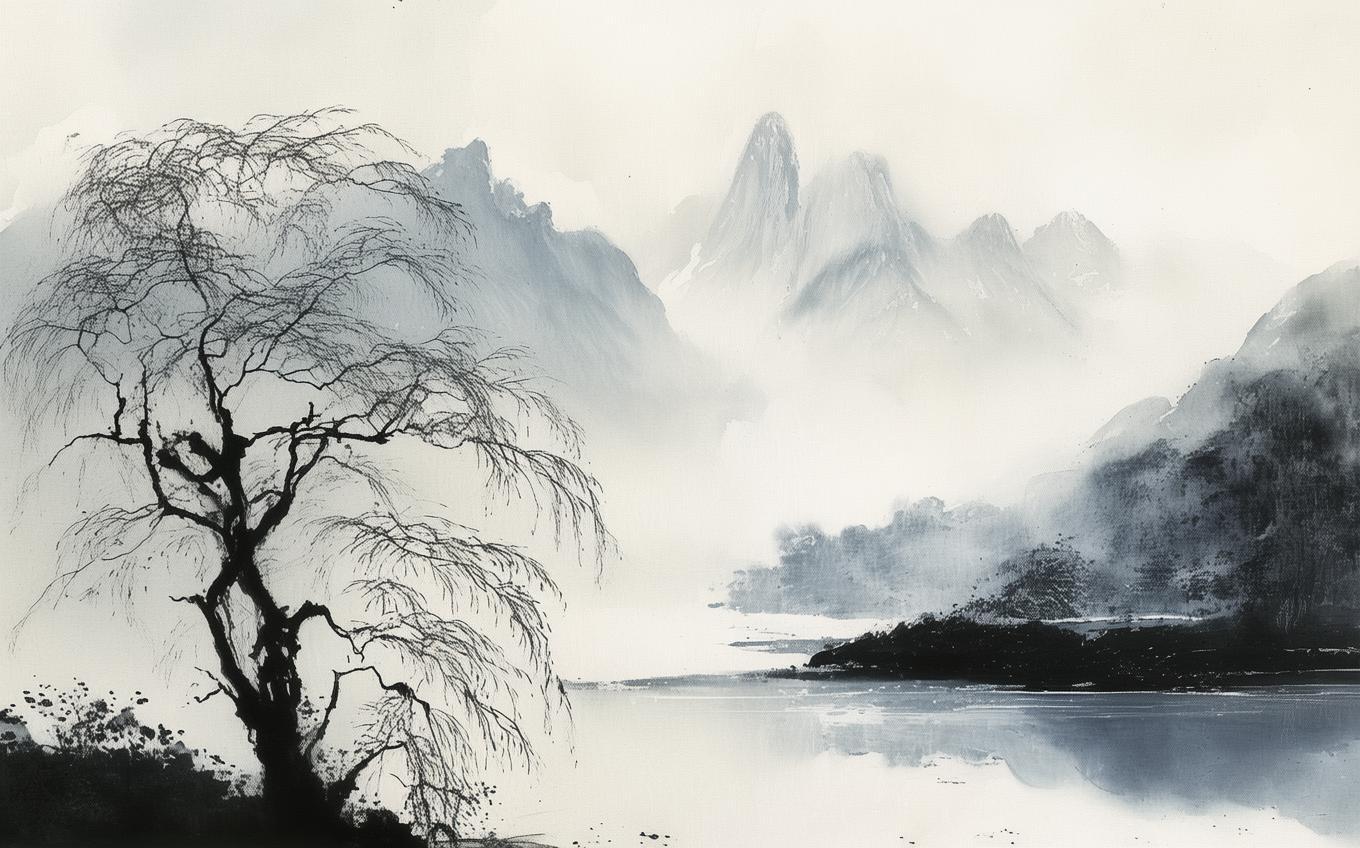
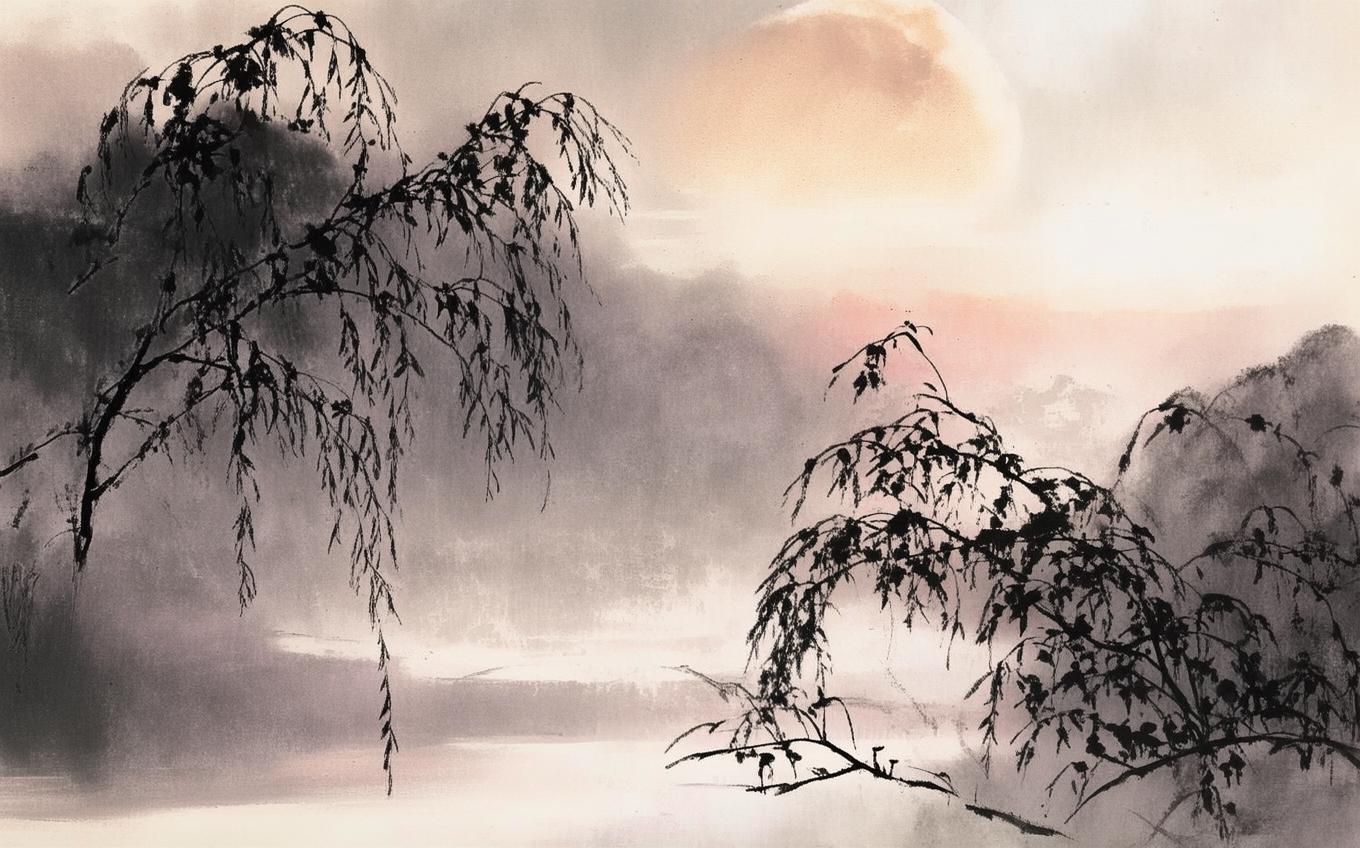
The opening line, “Drooping willows brush the green water,” presents a soft and graceful spring scene. The willow branches bend downward, touching the water as if in tenderness. This image immediately creates a mood of delicacy and emotion. In Chinese poetry, water often suggests flowing time, distance, and separation; here, the willow and water together prepare us for a poem about longing.
The second line, “They sway beautifully in the season of the east wind,” deepens the spring atmosphere. The “east wind” is the wind of spring in classical Chinese poetry. It brings warmth, life, and renewal. Yet this beauty is not purely joyful. In poems of separation, spring can make longing more painful because the world is flourishing while the human heart remains lonely.
The third line, “Their blossoms shine against the snow of Yumen Pass,” suddenly shifts the scene from a gentle inner world to the distant frontier. Yumen Pass (玉关, Yùguān) was a famous gateway on China’s northwestern frontier, associated with soldiers, exile, and dangerous journeys beyond the heartland. The contrast between flowers and snow is striking: spring blossoms belong to home, while snow belongs to the cold borderlands.
The fourth line, “Their leaves seem warm in the mist by a golden window,” returns to the domestic space. The “golden window” suggests the room of a refined woman, perhaps a wife or lover waiting at home. The warm leaves near the window contrast with the cold snow of the frontier. Li Bai creates two worlds at once: the woman’s spring chamber and the soldier’s harsh borderland.
The fifth line, “A beautiful woman is bound in endless longing,” reveals the emotional center of the poem. The word “bound” is important: her thoughts are tied into a knot. She cannot free herself from missing the absent person. The poem does not directly say whether the man is a husband, lover, or soldier, but the emotional situation is clear—someone she loves is far away.
The sixth line, “Facing this scene, her heart grows sorrowful,” shows how nature intensifies feeling. The willow, the spring wind, the flowers, and the leaves are beautiful, but beauty becomes painful when one is alone. This is a common feature of Chinese lyric poetry: the outer landscape reflects and awakens the inner emotional landscape.
The seventh line, “She climbs to grasp a branch and breaks off spring’s color,” returns to the traditional act of breaking a willow branch. But Li Bai phrases it beautifully: she is not merely breaking a branch; she is breaking off “spring’s color.” The willow branch becomes a piece of the season itself, a fragment of home, warmth, and love.
The final line, “Sending it far away, before the northern royal court,” places the absent beloved in a distant northern region. “Dragon Court” (龙庭, Lóngtíng) traditionally refers to the court of northern nomadic powers, often used in Tang poetry to symbolize the frontier or enemy territory. The woman’s willow branch crosses a vast emotional and geographic distance. It is a small object carrying enormous feeling.
Themes and Symbolism
One major theme of the poem is separation. The willow branch stands for farewell, memory, and the desire for reunion. Because 柳 (liǔ, willow) sounds like 留 (liú, to stay), the willow became deeply connected with parting scenes in Chinese culture.
Another key theme is the contrast between home and frontier. The woman’s world is filled with spring, warmth, and beauty; the soldier’s world is suggested through snow, Yumen Pass, and the northern court. This contrast gives the poem emotional depth: love is not only personal but also shaped by history, war, and distance.
The poem also explores how beauty can become sorrow. Spring usually symbolizes renewal and joy, but for the lonely woman, spring only reminds her of absence. The more beautiful the willow becomes, the sharper her longing feels.
The willow itself is the central symbol. It represents tenderness, flexibility, farewell, and emotional attachment. Its drooping branches resemble a person bending in sorrow, while its living green color suggests hope that love may survive across distance.
Cultural Context
“折杨柳” belongs to the Yuefu tradition, which often used older song titles to explore common human experiences: love, war, labor, travel, and separation. By the Tang dynasty, poets like Li Bai used these inherited titles not simply to imitate folk songs, but to create refined literary works with strong emotional resonance.
The frontier was an important subject in Tang poetry. The Tang empire expanded widely, and many men served in distant military regions. Poems about wives waiting at home, soldiers stationed at border passes, and the pain of separation became a major part of Tang literary culture.
The custom of giving willow branches at parting was especially associated with farewell outside city gates or along roads and riverbanks. In this poem, Li Bai turns that custom into a symbolic act of communication. The woman cannot travel to the frontier herself, so she sends a willow branch as a substitute for her presence.
This reflects a broader Chinese poetic value: emotion is often expressed indirectly through objects and scenes. Rather than saying “I miss you” in a simple way, the poem lets the willow, the spring wind, the snow, and the distant pass speak for the heart.
Conclusion
Li Bai’s “折杨柳” is a short poem, but it contains a wide emotional world. In only eight lines, it moves from spring willows and green water to frontier snow and distant longing. Its beauty lies in the way it joins landscape, cultural symbolism, and human feeling.
For modern readers, the poem remains powerful because it speaks to a universal experience: the pain of being separated from someone loved. The willow branch becomes more than a plant; it becomes a message, a memory, and a fragile hope sent across distance. Through this simple image, Li Bai shows how poetry can preserve love in the face of absence.
Comments (0)
No comments yet. Be the first to comment!