Introduction
- The phrase 慢卷绸 (màn juǎn chóu, “slowly rolling silk”) is not the title of a widely transmitted classical poem, but it evokes one of the most famous silk-related images in ancient Chinese poetry: 李商隐 (Lǐ Shāngyǐn, ca. 813-858), a late Tang dynasty poet, and his celebrated poem 《无题》 (Wú Tí, “Untitled”).
- Li Shangyin lived during the politically troubled late Tang period, when court factionalism and personal disappointment often shaped literary expression. His poetry is famous for emotional subtlety, dense symbolism, and ambiguous love imagery.
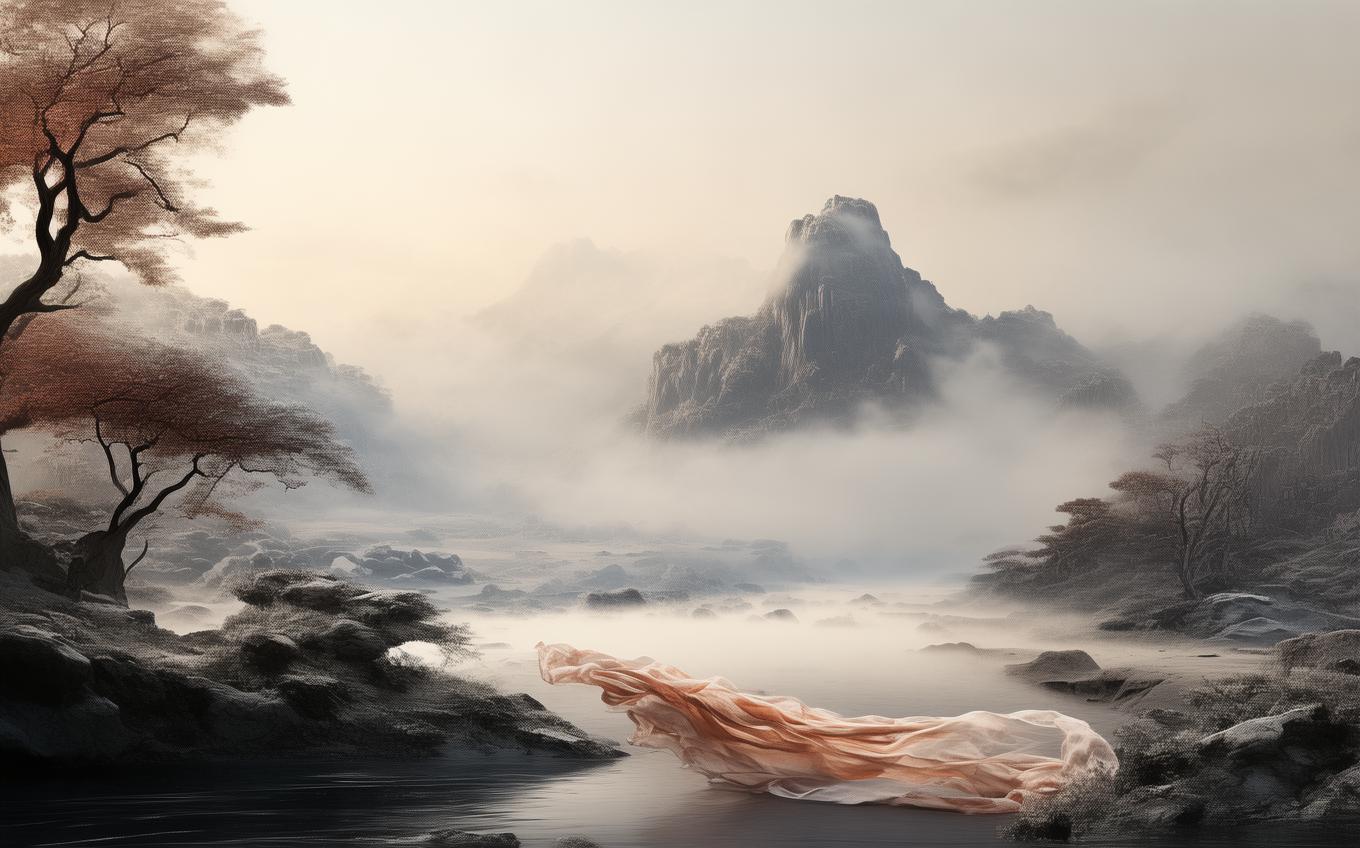
- This poem is significant in Chinese literature because it turns intimate longing into unforgettable symbols: the silkworm exhausting itself in thread, the candle burning into ash, and the moonlit night of separation. The silk image closely resonates with 慢卷绸, suggesting tenderness, restraint, and emotions slowly unfolding like fine fabric.
The Poem: Full Text and Translation
相见时难别亦难
xiāng jiàn shí nán bié yì nán
It is hard to meet, and hard as well to part.
东风无力百花残
dōng fēng wú lì bǎi huā cán
The east wind is weak; a hundred flowers fade.
春蚕到死丝方尽
chūn cán dào sǐ sī fāng jìn
The spring silkworm spins until death, only then its silk is spent.
蜡炬成灰泪始干
là jù chéng huī lèi shǐ gān
The wax candle becomes ash; only then do its tears dry.
晓镜但愁云鬓改
xiǎo jìng dàn chóu yún bìn gǎi
At dawn before the mirror, she only fears her cloud-like hair has changed.
夜吟应觉月光寒
yè yín yīng jué yuè guāng hán
Chanting at night, he must feel the moonlight cold.
蓬山此去无多路
péng shān cǐ qù wú duō lù
The road from here to Penglai Mountain is not so very far.
青鸟殷勤为探看
qīng niǎo yīn qín wèi tàn kàn
Blue messengers, be diligent and go look for her for me.
Line-by-Line Analysis
-
相见时难别亦难: The poem opens with a balanced statement: meeting is difficult, and parting is difficult too. This is not merely about physical distance. In classical Chinese love poetry, “difficulty” often suggests social barriers, political constraints, or emotional hesitation. The line immediately places love under pressure.
-
东风无力百花残: The east wind usually signals spring, warmth, and renewal. Here, however, it is “weak,” and flowers are fading. The natural world mirrors the lovers’ emotional exhaustion. Spring, normally a season of union and vitality, becomes a scene of decline.
-
春蚕到死丝方尽: This is the poem’s most famous line and the point most closely connected to 慢卷绸. The silkworm produces silk thread until it dies. In Chinese, 丝 (sī, silk thread) sounds like 思 (sī, longing or thought), creating a powerful pun. The image suggests devotion that continues until life itself is exhausted. If we imagine silk being slowly rolled or unwound, the emotion is not sudden passion but sustained, delicate, and irreversible attachment.
-
蜡炬成灰泪始干: The candle’s “tears” are drops of melting wax. Like the silkworm, the candle gives itself away through gradual self-consumption. Love is represented as endurance, not possession. The beloved may be absent, but feeling continues to burn.
-
晓镜但愁云鬓改: The focus shifts to morning. A woman looks into the mirror and worries that her beautiful hair, compared to clouds, may have changed. This line introduces the anxiety of time: longing does not remain abstract; it leaves marks on the body.
-
夜吟应觉月光寒: The speaker imagines the other person chanting poetry at night under cold moonlight. Moonlight in Chinese poetry often suggests distance, memory, and shared loneliness. Even if the lovers are apart, the moon becomes a silent medium linking them.
-
蓬山此去无多路: Penglai Mountain, one of the mythical islands of immortals, represents an unreachable or dreamlike realm. The line says it is “not far,” but the very use of Penglai implies that the beloved is almost impossibly distant. The poem moves from human separation into mythic distance.
-
青鸟殷勤为探看: The “blue bird” refers to a legendary messenger associated with the Queen Mother of the West. The speaker asks this messenger to visit the beloved. This final gesture is tender and helpless: when direct communication is impossible, only myth, imagination, and poetry can cross the distance.
Themes and Symbolism
-
Love and separation: The poem presents love as intense but constrained. The lovers cannot freely meet, and parting becomes a repeated emotional wound.
-
Endurance and self-sacrifice: The silkworm and candle are symbols of total devotion. Both create beauty through self-exhaustion: silk thread and light.
-
Time and decay: Fading flowers, changing hair, and ashes all suggest that time is passing. Love is precious because it is vulnerable to loss.
-
Silk as longing: The silk image is especially important. Because 丝 (sī) echoes 思 (sī), silk becomes more than material luxury. It becomes a metaphor for thought, memory, and emotional continuity. The idea of 慢卷绸 can be read as the slow unfolding of hidden feeling.
-
Mythic distance: Penglai Mountain and the blue bird enlarge a private love poem into a cosmic scene. The beloved seems as distant as an immortal realm.
Cultural Context
-
Li Shangyin wrote during the late Tang dynasty, a period known for political instability but also for remarkable poetic refinement. Compared with earlier Tang poets such as Li Bai or Du Fu, Li Shangyin often writes in a more indirect, symbolic, and psychologically intricate style.
-
The title 《无题》 means “Untitled.” Li Shangyin used this title for several poems, often when the subject was too private, politically sensitive, or emotionally complex to name directly. This lack of title invites readers to enter the poem through mood and image rather than through a fixed narrative.
-
The silkworm image also reflects the deep cultural importance of silk in China. Silk was not only a luxury textile but a symbol of refinement, labor, femininity, and civilization. In this poem, silk becomes emotional rather than decorative: it is the thread of longing drawn from the body and heart.
-
The poem also reflects a Chinese literary value: emotion is often most powerful when expressed indirectly. Instead of saying “I love you forever,” Li Shangyin gives us a silkworm, a candle, fading flowers, a cold moon, and a mythical messenger. The images allow feeling to remain dignified, restrained, and inexhaustible.
Conclusion
-
Li Shangyin’s 《无题》 endures because it transforms private longing into images that readers can immediately feel. The silkworm’s silk, the candle’s tears, the fading spring flowers, and the cold moonlight all express love as beautiful, painful, and persistent.
-
In relation to 慢卷绸, the poem teaches us to imagine emotion as something slowly unwound: fine, continuous, fragile, and difficult to break. Its message remains relevant today because separation, longing, and the desire to be understood across distance are still universal human experiences.
Comments (0)
No comments yet. Be the first to comment!