Introduction
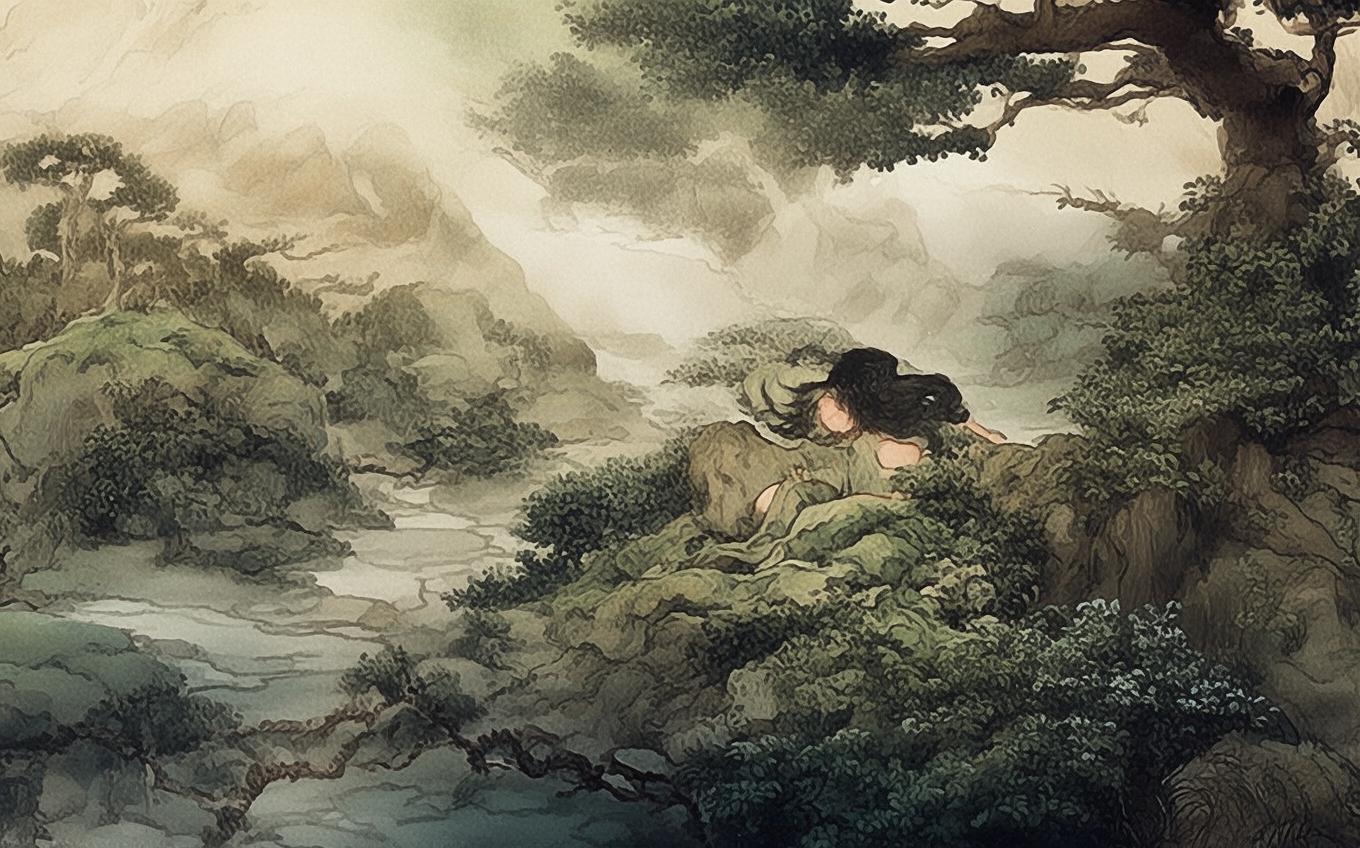
“佳人醉” (Jiā Rén Zuì, “The Beautiful Lady Is Drunk”) is the name of a cí tune pattern, a form of lyric poetry that flourished during the Song dynasty. The poem most commonly associated with this title is “佳人醉·暮景萧萧雨霁” by Liu Yong(柳永), one of the most influential lyric poets of the Northern Song period.
Liu Yong lived during the 11th century, a time when urban culture, music, entertainment, and refined emotional expression were highly developed. Unlike many earlier poets who focused on political ideals or pastoral retreat, Liu Yong often wrote about longing, separation, travel, and the inner lives of lovers. His lyrics were widely sung in pleasure quarters and urban gatherings, making him both popular and controversial.
This poem is significant because it shows Liu Yong’s gift for turning a quiet night scene into a deeply emotional meditation on distance and longing. Through moonlight, coldness, and sleeplessness, the poem expresses the sorrow of someone separated from a beloved person.
The Poem: Full Text and Translation
暮景萧萧雨霁
Mù jǐng xiāo xiāo yǔ jì
The evening scene is desolate and still after the rain has cleared.
云淡天高风细
Yún dàn tiān gāo fēng xì
The clouds are pale, the sky is high, and the wind is gentle.
正月华如水
Zhèng yuè huá rú shuǐ
Just then, the moonlight flows like water.
金波银汉,潋滟无际
Jīn bō yín hàn, liàn yàn wú jì
Golden waves and the silver Milky Way shimmer without end.
冷浸书帷梦断
Lěng jìn shū wéi mèng duàn
Cold light soaks the study curtains, breaking my dream.
却披衣重起
Què pī yī chóng qǐ
So I put on my clothes and rise again.
临轩砌
Lín xuān qì
I stand by the window and the stone steps.
素光遥指
Sù guāng yáo zhǐ
The pure white light points far into the distance.
因念翠蛾
Yīn niàn cuì é
Because of it, I think of her delicate painted brows.
杳隔音尘何处
Yǎo gé yīn chén hé chù
She is far away, cut off from news and traces—where can she be?
相望同千里
Xiāng wàng tóng qiān lǐ
We gaze toward each other, though a thousand miles apart.
尽凝睇
Jìn níng dì
I keep staring intently into the distance.
厌厌无寐
Yān yān wú mèi
Weary and sorrowful, I cannot sleep.
渐晓雕阑独倚
Jiàn xiǎo diāo lán dú yǐ
As dawn gradually comes, I lean alone against the carved railing.
Line-by-Line Analysis
The poem begins with a scene of stillness after rain:
暮景萧萧雨霁
Mù jǐng xiāo xiāo yǔ jì
The evening scene is desolate and still after the rain has cleared.
The word 萧萧 suggests loneliness, emptiness, and a faint melancholy. The rain has stopped, but the emotional atmosphere remains cold and quiet. In classical Chinese poetry, the time after rain often creates a sharpened sense of clarity: the sky is cleaner, the air is cooler, and emotions feel more exposed.
云淡天高风细
Yún dàn tiān gāo fēng xì
The clouds are pale, the sky is high, and the wind is gentle.
This line expands the visual field. The pale clouds and high sky suggest openness, but also distance. The gentle wind is not violent or dramatic; instead, it deepens the silence. Liu Yong’s sorrow is restrained, not exaggerated.
正月华如水
Zhèng yuè huá rú shuǐ
Just then, the moonlight flows like water.
Moonlight is one of the most important images in Chinese poetry. It often symbolizes longing, homesickness, memory, and emotional connection across distance. Here, the moonlight is compared to water. This image suggests softness, coolness, and flowing emotion. The moonlight seems to fill the world like a liquid, surrounding the speaker.
金波银汉,潋滟无际
Jīn bō yín hàn, liàn yàn wú jì
Golden waves and the silver Milky Way shimmer without end.
金波 refers to the shimmering golden light of the moon, while 银汉 is a classical name for the Milky Way. The universe appears vast and radiant. Yet this beauty does not bring comfort. Instead, it reminds the speaker of distance. The phrase 无际, “without end,” suggests both the endless sky and the endless separation between lovers.
冷浸书帷梦断
Lěng jìn shū wéi mèng duàn
Cold light soaks the study curtains, breaking my dream.
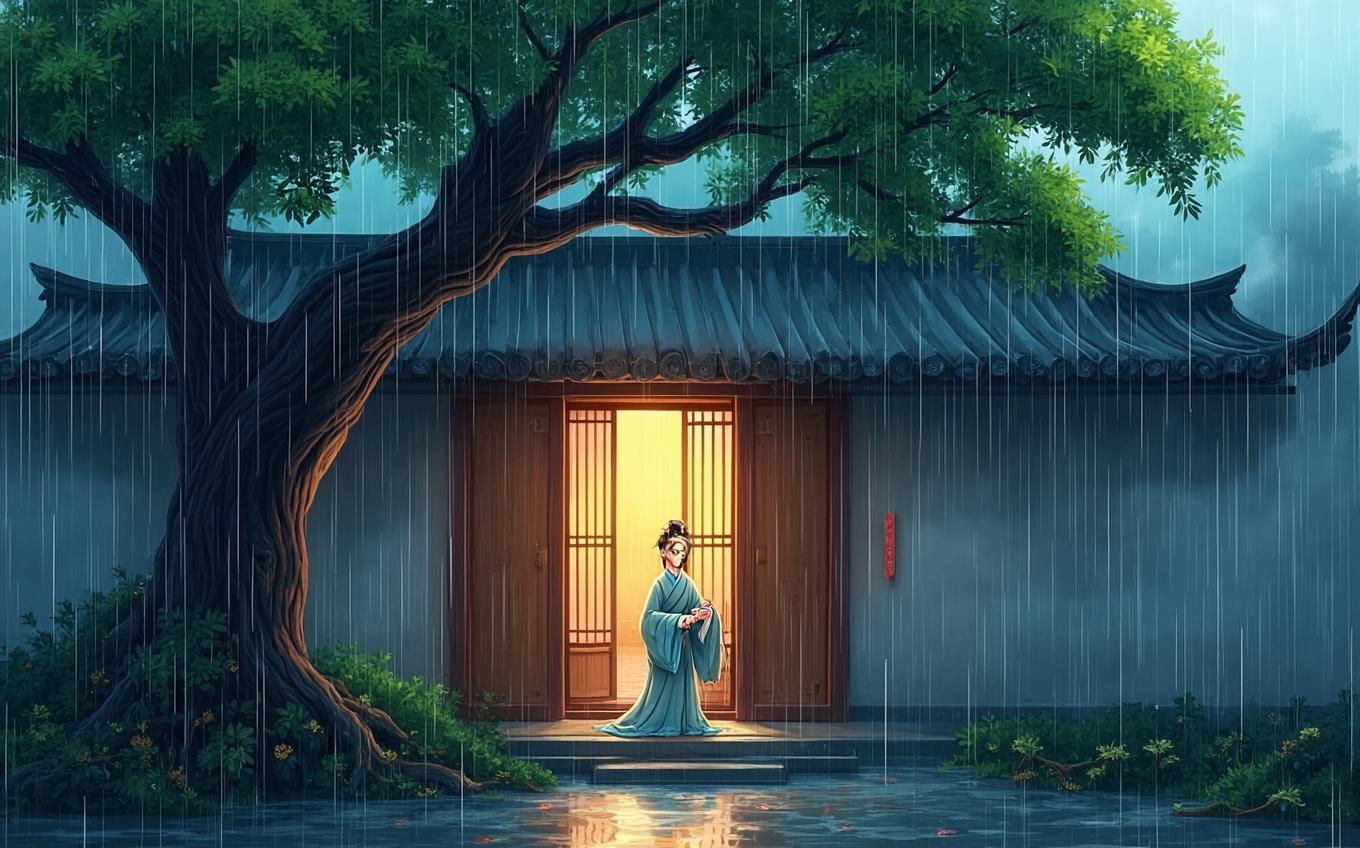
The poem now moves indoors. The moonlight enters the speaker’s private space, soaking the curtains of his study. The word 冷, “cold,” is emotionally important. It describes physical coldness, but also loneliness. His dream is interrupted, perhaps a dream of the beloved. The outside world breaks into the inner world.
却披衣重起
Què pī yī chóng qǐ
So I put on my clothes and rise again.
Unable to return to sleep, the speaker gets dressed and rises. The word 重, “again,” implies that this may not be the first time he has awakened. His longing is repetitive and restless. He cannot escape it even in dreams.
临轩砌
Lín xuān qì
I stand by the window and the stone steps.
The speaker moves to a liminal space: near the window, beside the steps. He is neither fully inside nor outside. This physical position mirrors his emotional state. He is suspended between presence and absence, memory and reality, self and beloved.
素光遥指
Sù guāng yáo zhǐ
The pure white light points far into the distance.
The moonlight seems to “point” outward. This is a beautiful example of poetic personification. The light becomes almost like a guide, directing the speaker’s thoughts across space toward the absent beloved.
因念翠蛾
Yīn niàn cuì é
Because of it, I think of her delicate painted brows.
翠蛾 literally refers to green-black moth-like eyebrows, a classical phrase describing a beautiful woman’s carefully painted brows. In Chinese literary tradition, a woman’s eyebrows often symbolize beauty, intimacy, and longing. The speaker does not describe the woman fully; he remembers one delicate feature. This small detail makes the emotion more personal and tender.
杳隔音尘何处
Yǎo gé yīn chén hé chù
She is far away, cut off from news and traces—where can she be?
The word 杳 means distant, obscure, and unreachable. 音尘 refers to news, messages, or traces of someone’s whereabouts. The speaker does not merely miss the beloved; he does not even know where she is. This uncertainty intensifies the sadness.
相望同千里
Xiāng wàng tóng qiān lǐ
We gaze toward each other, though a thousand miles apart.
This line expresses a classic Chinese poetic idea: lovers separated by distance may still share the same moon. They cannot touch or speak, but they may be looking at the same light. The phrase creates emotional symmetry. The speaker imagines that she, too, may be gazing toward him.
尽凝睇
Jìn níng dì
I keep staring intently into the distance.
凝睇 means to gaze fixedly and deeply. The speaker’s eyes become the outward form of his longing. He looks, but there is nothing concrete to see. The gaze itself becomes an act of love.
厌厌无寐
Yān yān wú mèi
Weary and sorrowful, I cannot sleep.
The phrase 厌厌 describes a state of emotional heaviness, languor, and quiet suffering. This is not a dramatic cry of despair; it is the exhaustion of longing that continues through the night.
渐晓雕阑独倚
Jiàn xiǎo diāo lán dú yǐ
As dawn gradually comes, I lean alone against the carved railing.
The poem ends at dawn. The speaker has spent the whole night awake. The 雕阑, or carved railing, suggests a refined and elegant setting, but elegance cannot cure loneliness. The final word 独, “alone,” is crucial. After all the moonlight, memories, and imagined connection, the speaker remains physically alone.
Themes and Symbolism
One of the central themes of this poem is longing across distance. The speaker is separated from a beloved woman and can only imagine her presence through moonlight and memory. This kind of longing is a major theme in Chinese lyric poetry, especially in the Song dynasty.
Another important theme is the contrast between beauty and sorrow. The night scene is extraordinarily beautiful: clear sky, gentle wind, flowing moonlight, and the shining Milky Way. Yet this beauty increases the speaker’s sadness. In classical Chinese poetry, beautiful scenery often does not distract from sorrow; instead, it deepens it.
The poem also explores sleeplessness as a symbol of emotional unrest. The speaker wakes from a broken dream, rises, gazes into the distance, and remains awake until dawn. Sleeplessness becomes a physical expression of love and longing.
Key symbols include:
- Moonlight: emotional connection, memory, and longing across distance.
- Water: softness, flowing feeling, and the coldness of separation.
- The Milky Way: cosmic distance and unreachable love.
- Curtains and railings: boundaries between inner feeling and the outside world.
- Eyebrows: feminine beauty, intimacy, and remembered affection.
- Dawn: the passage of time, but not the resolution of sorrow.
Cultural Context
Liu Yong wrote during the Northern Song dynasty, an era known for its sophisticated urban life and flourishing arts. The cí form was closely connected with music. Unlike earlier regulated verse, which was often associated with scholarly and official culture, cí lyrics were frequently sung by professional performers. They allowed poets to express more personal, romantic, and emotionally delicate subjects.
The tune title 佳人醉 does not necessarily mean that the poem must describe a drunken beauty. In cí poetry, the title often indicates the musical pattern rather than the specific content. Poets wrote new words to established melodies, and each tune pattern had its own rhythm and structure.
This poem reflects several important Chinese cultural values and literary habits. First, it shows the importance of indirect emotional expression. The speaker does not simply say, “I miss her terribly.” Instead, he describes rain clearing, moonlight entering the room, a broken dream, and a solitary figure leaning by a railing. Emotion is conveyed through scene.
Second, the poem reflects the Chinese poetic idea of 情景交融, the fusion of emotion and landscape. The outer world and inner feeling are inseparable. The cold moonlight is not merely a natural phenomenon; it is the emotional atmosphere of the speaker’s heart.
Third, the poem uses the moon as a symbol of shared experience. In Chinese literature, people separated by great distances often look at the same moon and feel connected. This idea appears famously in many poems, including works by Li Bai and Su Shi. Liu Yong joins this tradition but gives it an intimate, romantic tone.
Conclusion
“佳人醉·暮景萧萧雨霁” is a graceful and deeply moving poem about loneliness, memory, and longing. Liu Yong transforms a quiet night after rain into an emotional landscape filled with moonlight, distance, and sleepless yearning.
Its beauty lies in restraint. Nothing dramatic happens: the rain clears, the moon rises, the speaker wakes, thinks of someone far away, and remains alone until dawn. Yet within this simple movement, Liu Yong captures a universal human experience—the ache of missing someone who is beyond reach.
For modern readers, the poem remains powerful because it speaks to a feeling that has not changed across centuries. Whether separated by miles, time, or circumstance, people still look into the night and think of someone absent. Liu Yong’s moonlit world reminds us that longing is both deeply personal and beautifully shared.
Comments (0)
No comments yet. Be the first to comment!