Introduction
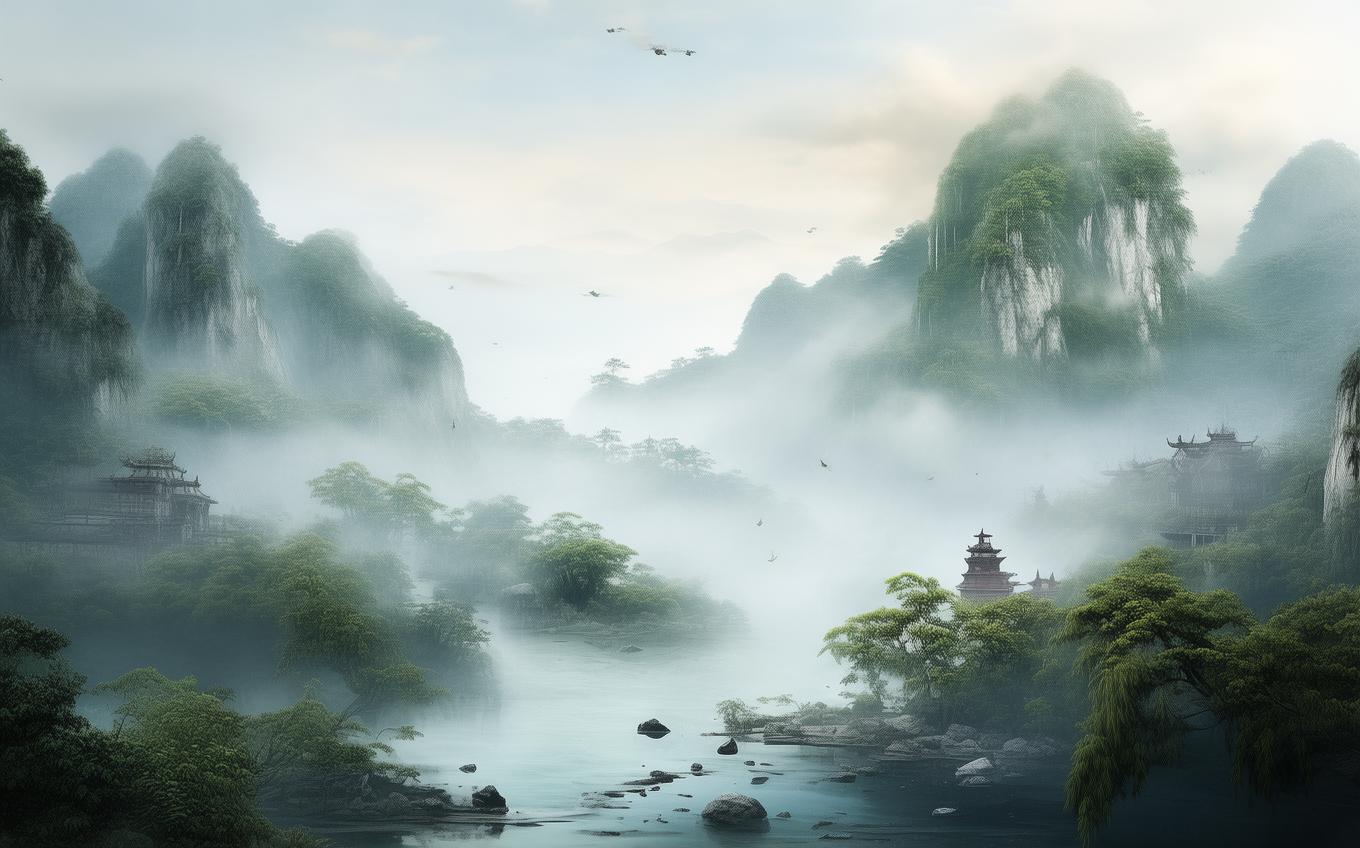
The poem analyzed here is 《醉蓬莱·渐亭皋叶下》 (Zuì Pénglái · Jiàn tíng gāo yè xià) by Liu Yong (柳永, Liǔ Yǒng, c. 987–1053), one of the most important lyric poets of the Northern Song dynasty.
“醉蓬莱” (Zuì Pénglái, “Drunk in Penglai”) is not simply a title but a cí tune pattern (词牌, cípái). In Song-dynasty poetry, poets wrote lyrics according to established musical patterns, each with its own rhythm, tonal structure, and emotional atmosphere. The name “Penglai” refers to the legendary island of immortals in Daoist mythology, giving the tune an aura of transcendence, elegance, and celestial beauty.
Liu Yong is best known for his emotionally rich lyrics about love, travel, and urban life. This poem, however, belongs to a more ceremonial and courtly mode. It praises imperial peace, auspicious omens, and the refined splendor of the royal palace. Its importance lies in showing another side of Song poetry: not only private emotion, but also public celebration, cosmology, and political symbolism.
The Poem: Full Text and Translation
渐亭皋叶下,
Jiàn tíng gāo yè xià,
Gradually, leaves fall on the waterside plain,
陇首云飞,
Lǒng shǒu yún fēi,
Clouds fly above the mountain ridges,
素秋新霁。
Sù qiū xīn jì.
In pure autumn, just cleared after rain.
华阙中天,
Huá què zhōng tiān,
The splendid palace towers rise toward mid-heaven,
锁葱葱佳气。
Suǒ cōng cōng jiā qì.
Enclosing a lush, auspicious vapor.
嫩菊黄深,
Nèn jú huáng shēn,
Tender chrysanthemums deepen in yellow,
拒霜红浅,
Jù shuāng hóng qiǎn,
Frost-resistant blossoms show a pale red,
近宝阶香砌。
Jìn bǎo jiē xiāng qì.
Near jeweled steps and fragrant stone paths.
玉宇无尘,
Yù yǔ wú chén,
The jade-like halls are free of dust,
金茎有露,
Jīn jīng yǒu lù,
Dew gathers on the golden stem,
碧天如水。
Bì tiān rú shuǐ.
The blue sky is like water.
正值升平,
Zhèng zhí shēng píng,
It is just an age of rising peace,
万几多暇,
Wàn jī duō xiá,
The ruler, amid countless affairs, has leisure,
夜色澄鲜,
Yè sè chéng xiān,
The night is clear and fresh,
漏声迢递。
Lòu shēng tiáo dì.
The water-clock’s sound travels far.
南极星中,
Nán jí xīng zhōng,
Among the stars of the southern pole,
有老人呈瑞。
Yǒu lǎo rén chéng ruì.
The Old Man Star presents an omen of blessing.
此际宸游,
Cǐ jì chén yóu,
At this moment of imperial excursion,
凤辇何处,
Fèng niǎn hé chù,
Where is the phoenix carriage?
度管弦清脆。
Dù guǎn xián qīng cuì.
Clear music of pipes and strings drifts through.
太液波翻,
Tài yè bō fān,
Waves stir on the Taiye Lake,
披香帘卷,
Pī xiāng lián juǎn,
Curtains roll up in the Fragrant Hall,
月明风细。
Yuè míng fēng xì.
The moon is bright, and the wind is gentle.
Line-by-Line Analysis
The opening lines place us in early autumn:
渐亭皋叶下,
陇首云飞,
素秋新霁。
The phrase 亭皋 (tíng gāo) refers to a flat, open place near water, often used in classical poetry to evoke distance, elegance, and seasonal change. Falling leaves immediately signal autumn, a season associated in Chinese poetry with reflection, clarity, and sometimes melancholy. Yet this poem does not become sorrowful. The sky has just cleared after rain, creating a feeling of brightness and renewal.
华阙中天,
锁葱葱佳气。
Here the poem turns from landscape to palace architecture. 华阙 (huá què) means magnificent palace towers or gates. They rise toward the center of the sky, suggesting imperial majesty. The phrase 佳气 (jiā qì) refers to auspicious vapors or fortunate atmospheric signs. In traditional Chinese political thought, natural phenomena could reflect the virtue of the ruler. A peaceful empire was believed to harmonize Heaven, Earth, and human government.
嫩菊黄深,
拒霜红浅,
近宝阶香砌。
These lines bring the reader closer to the palace grounds. The yellow chrysanthemum is a major autumn flower in Chinese culture, associated with endurance, purity, and refined taste. 拒霜 (jù shuāng), literally “resisting frost,” is a flower that blooms in autumn, often identified with the hibiscus or cotton rose. Its name itself suggests resilience.
The flowers grow near 宝阶 (bǎo jiē), “jeweled steps,” and 香砌 (xiāng qì), “fragrant stone paths.” The natural world and imperial space blend together: autumn flowers decorate the palace, while the palace gives the landscape an aura of preciousness.
玉宇无尘,
金茎有露,
碧天如水。
This is one of the most elegant visual moments in the poem. 玉宇 (yù yǔ), “jade-like halls,” suggests purity and celestial beauty. 金茎 (jīn jīng) refers to a golden pillar or stem associated with collecting dew, an image connected to ancient legends of immortality. In Han-dynasty lore, emperors sought heavenly dew as part of their desire for long life.
The line 碧天如水 (bì tiān rú shuǐ), “the blue sky is like water,” is especially graceful. It captures the transparent calm of an autumn night. The sky is not merely blue; it is liquid, clear, and still.
The second half of the poem shifts into a more explicitly political and ceremonial register:
正值升平,
万几多暇,
夜色澄鲜,
漏声迢递。
升平 (shēng píng) means peace and prosperity. The phrase suggests a golden age under good governance. 万几 (wàn jī) refers to the countless affairs of state handled by the emperor. To say that the ruler has leisure is not to imply laziness, but rather that the empire is so orderly that even the emperor can enjoy a peaceful night.
The 漏声 (lòu shēng) is the sound of the ancient water-clock. In Chinese poetry, the water-clock often marks the passage of night. Here, its distant sound creates stillness and ceremony, as if time itself has slowed within the palace.
南极星中,
有老人呈瑞。
The 老人 (lǎo rén) is the “Old Man Star,” also known as the Star of Longevity, associated with Canopus. In Chinese astrology, its appearance was considered an auspicious sign, especially connected with long life and imperial blessing. The poem therefore moves beyond earthly beauty into cosmic symbolism: the heavens themselves appear to support the ruler.
此际宸游,
凤辇何处,
度管弦清脆。
宸游 (chén yóu) means an imperial outing or excursion. 凤辇 (fèng niǎn), the phoenix carriage, refers to the emperor’s vehicle. The phoenix is a symbol of imperial grace, harmony, and noble virtue. The question “Where is the phoenix carriage?” adds movement and expectation, as if the speaker hears music before seeing the emperor.
The phrase 管弦 (guǎn xián) means wind and string instruments. Their “clear and crisp” sound floats through the night, deepening the atmosphere of elegance.
太液波翻,
披香帘卷,
月明风细。
The poem closes with three cinematic images: waves on Taiye Lake, curtains lifting in a fragrant palace hall, and a bright moon with a delicate wind. 太液 (Tài yè) refers to an imperial lake, originally associated with Han-dynasty palace gardens and later used as a poetic symbol of royal splendor.
The ending does not conclude with a direct statement of praise. Instead, it leaves us with atmosphere: rippling water, moving curtains, moonlight, and soft wind. The empire’s peace is expressed through sensory harmony.
Themes and Symbolism
One major theme of the poem is imperial peace and cosmic harmony. The poem presents the palace not simply as a political center, but as a place where Heaven and Earth converge. Clear skies, auspicious vapors, bright stars, and gentle winds all suggest that the universe is in agreement with the human order.
Another important theme is autumnal beauty without sadness. In much Chinese poetry, autumn is linked to decline, homesickness, or aging. Here, however, autumn becomes refined and celebratory. Falling leaves and chrysanthemums do not create grief; they create elegance and clarity.
The poem also uses strong symbols of longevity and immortality. The title “醉蓬莱” points toward Penglai, the mythical island of immortals. The golden stem with dew recalls ancient quests for eternal life. The Old Man Star symbolizes long life. Together, these images form a network of blessing, especially appropriate for courtly praise.
Key symbols include:
- Penglai: A Daoist paradise and island of immortals, suggesting transcendence.
- Chrysanthemum: Autumn purity, endurance, and refined taste.
- Golden stem and dew: Longevity, immortality, and imperial aspiration.
- Old Man Star: A heavenly omen of long life and good fortune.
- Phoenix carriage: Imperial presence and noble harmony.
- Moon and gentle wind: Peace, clarity, and poetic beauty.
Cultural Context
This poem comes from the Northern Song dynasty, a period known for its highly developed urban culture, refined court life, and extraordinary literary achievements. The Song era saw the flourishing of cí poetry, a lyrical form originally connected with music and performance. Unlike regulated verse, cí allowed varied line lengths and often created a more fluid, song-like rhythm.
Liu Yong played a major role in popularizing cí. He wrote many lyrics in a more accessible and emotionally direct style, often drawing from city life, entertainment districts, and personal longing. Yet this poem shows his ability to work within a grand, ceremonial style as well.
The poem reflects several Chinese cultural ideas:
First, it reflects the belief in the connection between Heaven and political order. In traditional Chinese thought, a virtuous ruler brought harmony not only to society but also to the natural world. Auspicious stars, clear weather, and peaceful nights could all be read as signs of good governance.
Second, it reflects the Chinese aesthetic of indirect praise. Rather than simply saying, “The emperor is great,” the poem shows a world made beautiful by imperial peace. The palace, flowers, stars, lake, moon, and music all participate in praise.
Third, it reflects the blending of Confucian and Daoist imagery. The poem’s political praise belongs to a Confucian world of rulership and order, while its references to Penglai, dew, and longevity draw from Daoist imagination. This combination is common in Chinese court poetry, where political power is often surrounded by sacred and cosmic imagery.
Conclusion
《醉蓬莱·渐亭皋叶下》 is a poem of elegance, ceremony, and luminous atmosphere. Liu Yong transforms an autumn night at the imperial palace into a vision of cosmic harmony. Every image—falling leaves, chrysanthemums, jade halls, golden dew, distant music, bright moon—contributes to a sense of peace and blessing.
For modern readers, the poem offers a window into how classical Chinese poets understood beauty as a relationship between nature, culture, and moral order. The palace is not isolated from the world; it is connected to flowers, stars, water, wind, and time itself.
Its enduring appeal lies in this graceful fusion of political praise and poetic sensitivity. Even if we no longer share the same imperial worldview, we can still appreciate the poem’s dream of a world in balance: clear sky, gentle wind, bright moon, and music drifting through the night.
Comments (0)
No comments yet. Be the first to comment!