Introduction
岑文本 (Cén Wénběn, 595–645) was a prominent statesman and literary figure of the early Tang Dynasty. Serving under Emperor Taizong, he was known not only for his administrative brilliance but also for his refined literary talent. He was part of a generation of scholar-officials who helped shape the cultural golden age of the Tang, a period often regarded as the pinnacle of Chinese poetry.
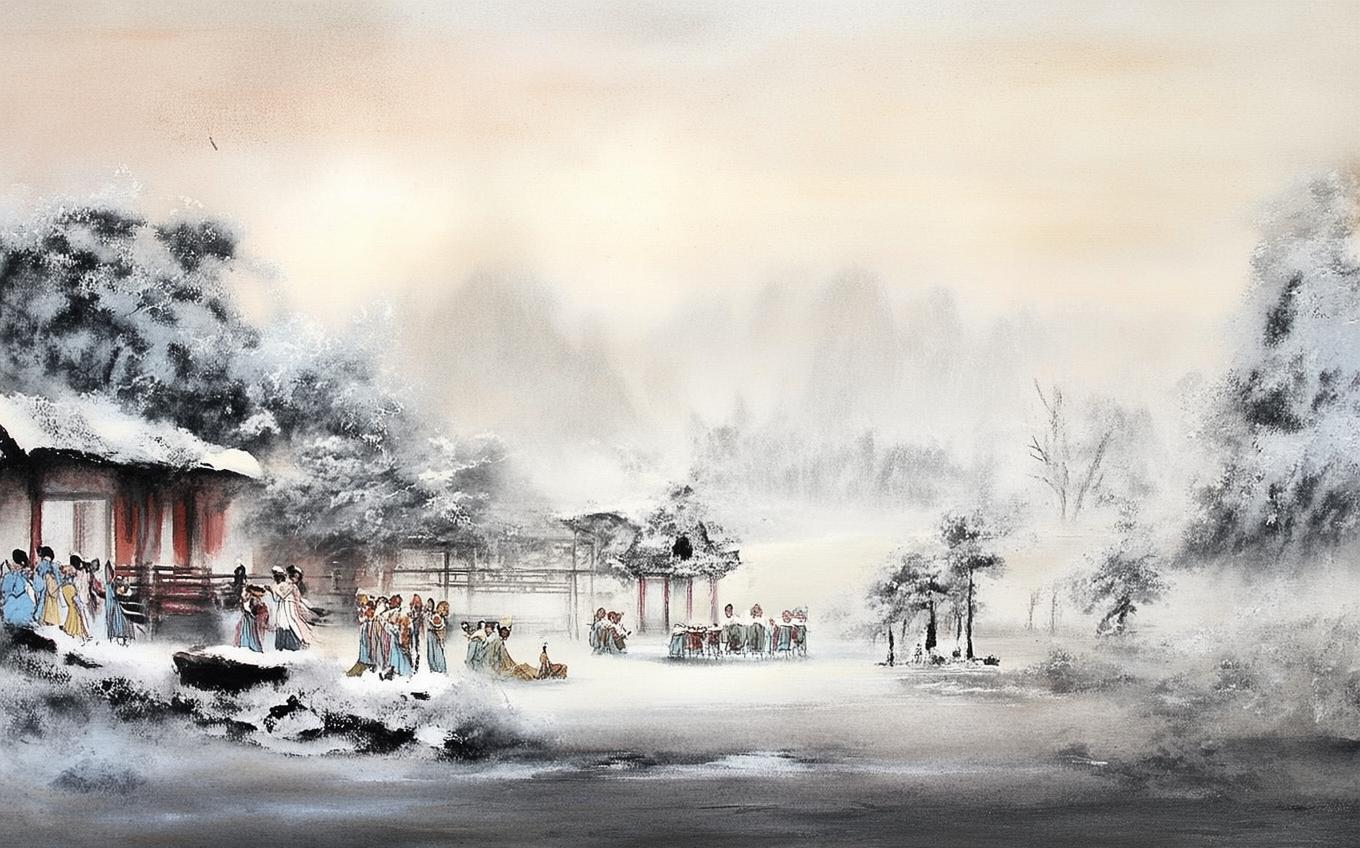
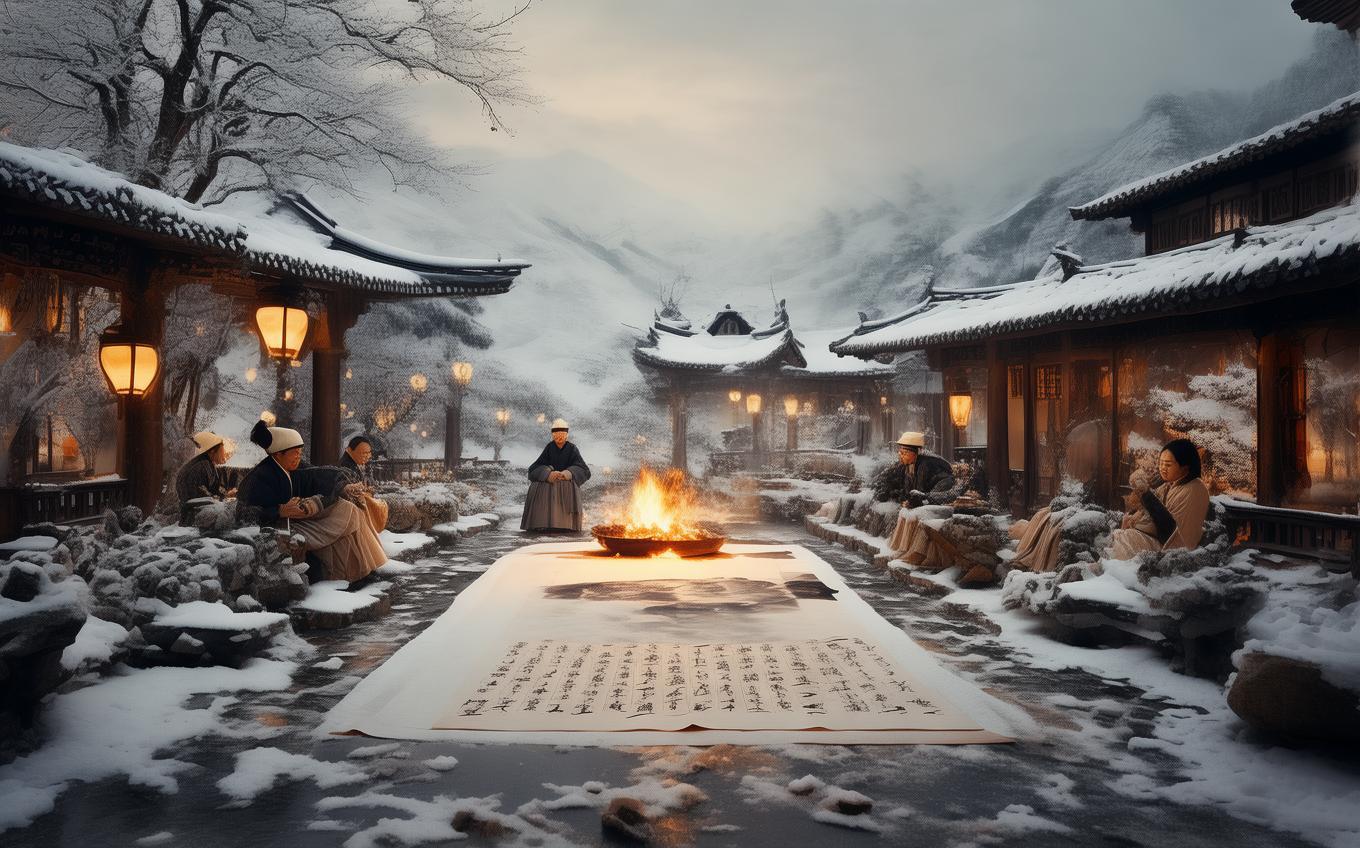
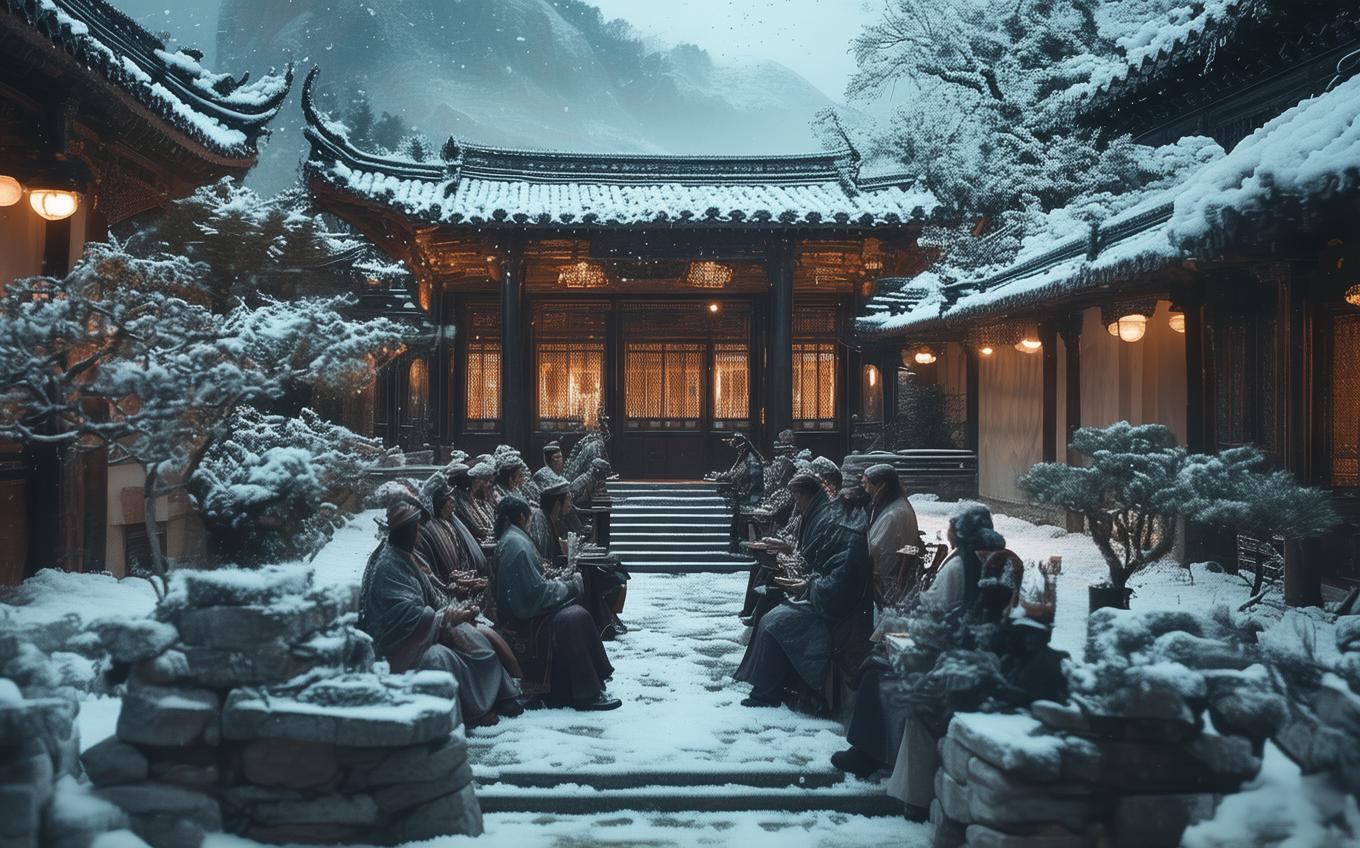
The poem "冬日宴于庶子宅各赋一字得平" (A Winter Banquet at the Residence of the Imperial Tutor, Each Guest Composed a Poem on an Assigned Rhyme, and I Received the Character "Píng") belongs to a distinctive genre of Chinese literary culture: the fēnyùn (分韵) or "assigned rhyme" poem. At elegant gatherings, guests would be given a specific rhyme character around which to compose their verse. Here, 岑文本 received the character 平 (píng), meaning "peace," "level," or "calm." This social context is essential—the poem is not a solitary meditation but a communal performance, a demonstration of wit, learning, and emotional depth composed in real time among friends and colleagues.
The poem is significant in Chinese literature as a fine example of Tang occasional verse, blending personal emotion with social grace. It demonstrates how Chinese poets transformed formal, even bureaucratic, occasions into moments of genuine philosophical reflection and human warmth.
The Poem: Full Text and Translation
金兰笃惠好,尊酒畅生平。
jīn lán dǔ huì hǎo, zūn jiǔ chàng shēng píng.
Our friendship, firm as gold and fragrant as orchids, is deep and kind; with goblets of wine we give free expression to the joys of life.
既欣投辖赏,暂缓望乡情。
jì xīn tóu xiá shǎng, zàn huǎn wàng xiāng qíng.
Already delighted by the generous hospitality that removes the carriage linchpins, I temporarily set aside my longing for home.
爱景含霜晦,落照带风轻。
ài jǐng hán shuāng huì, luò zhào dài fēng qīng.
The beloved winter scenery holds frost within its dimness; the setting sun carries a gentle breeze.
于兹欢宴洽,宠辱讵相惊。
yú zī huān yàn qià, chǒng rǔ jù xiāng jīng.
In this harmonious and joyful banquet, how could favor or disgrace startle me at all?
Line-by-Line Analysis
Line 1: 金兰笃惠好,尊酒畅生平。
The opening line establishes the emotional foundation of the poem. The phrase 金兰 (jīn lán) is a classical allusion from the Book of Changes (I Ching), where it is said that "when two persons are of one mind, their sharpness can cut through metal; words of one mind smell like orchids." Thus, "gold and orchid" became a standard metaphor for profound, loyal friendship. By using this allusion, 岑文本 immediately elevates the gathering from a mere social event to a celebration of genuine bonds.
笃 (dǔ) means "sincere," "deep," or "solid," emphasizing the weight and authenticity of these relationships. 惠好 (huì hǎo) suggests kindness and goodwill. The second half of the line, 尊酒畅生平, shifts to the physical setting: goblets of wine (尊酒) allow the guests to 畅 (chàng)—to give free, unconstrained expression to—生平 (shēng píng), the experiences and joys of their lives. Wine in Chinese poetry is not merely a beverage; it is a medium for truth-telling, for dissolving social barriers, for releasing the authentic self.
Line 2: 既欣投辖赏,暂缓望乡情。
This line contains one of the most charming allusions in the poem. 投辖 (tóu xiá) literally means "to throw away the linchpin." The reference is to a story from the Han Dynasty about a man named 陈遵 (Chén Zūn), who was so hospitable that when guests came to drink with him, he would have the linchpins removed from their carriage wheels so they could not leave. The phrase became a byword for warm, insistent hospitality—the kind that makes departure impossible.
By saying he is 欣 (xīn), "delighted," by this "linchpin-throwing" hospitality, 岑文本 is paying a graceful compliment to his host while also expressing genuine pleasure. The second half of the line reveals a deeper emotional layer: 暂缓望乡情—"temporarily easing my homesickness." The word 暂 (zàn), "temporarily," is crucial. It acknowledges that the longing for home (望乡情) is real and persistent, but that the warmth of the present gathering can hold it at bay, if only for a while. This is not escapism but a recognition of how human connection can soothe the ache of displacement.
Line 3: 爱景含霜晦,落照带风轻。
Here the poem turns outward to the natural world. The 爱景 (ài jǐng) refers to the "beloved scenery" of winter. 含霜晦 (hán shuāng huì) describes the landscape as "containing frost within its dimness"—a delicate, almost paradoxical image. Frost suggests cold and clarity, while 晦 (huì) suggests darkness, obscurity, or the fading of light. Together they create a picture of a winter evening where the cold is not harsh but softened by the approaching dusk.
The second half, 落照带风轻 (luò zhào dài fēng qīng), describes the setting sun (落照) as carrying (带) a light breeze (风轻). The word 轻 (qīng)—"light," "gentle"—is the emotional key. The wind is not biting or fierce but soft, almost tender. This gentle natural imagery mirrors the mood of the banquet: warm, relaxed, unhurried. The external world and the internal emotional world are in harmony.
Line 4: 于兹欢宴洽,宠辱讵相惊。
The final couplet brings the poem to its philosophical climax. 于兹 (yú zī) means "at this place" or "in this moment." 欢宴洽 (huān yàn qià) describes the banquet as joyful and harmonious—洽 (qià) suggests a state of perfect accord, where everything flows smoothly and nothing is out of place.
The last phrase is the heart of the poem: 宠辱讵相惊 (chǒng rǔ jù xiāng jīng)—"How could favor or disgrace startle me?" This is a direct echo of Daoist philosophy, particularly the teachings of Zhuangzi and the Dao De Jing, which counsel equanimity in the face of life's fluctuations. 宠辱 (chǒng rǔ), "favor and disgrace," represents the twin poles of worldly fortune—praise and blame, success and failure, honor and humiliation. The rhetorical question 讵 (jù), "how could it be that...?" expresses a serene confidence: in this moment of genuine friendship and natural beauty, the petty concerns of status and reputation lose their power to disturb the mind.
Themes and Symbolism
Friendship as Refuge
The dominant theme of the poem is friendship as a source of emotional and spiritual refuge. The allusions to 金兰 (gold and orchid) and 投辖 (throwing away the linchpin) both emphasize the depth and warmth of human bonds. In a world of political intrigue and constant social pressure—especially for a court official like 岑文本—the banquet represents a space where authentic connection is possible.
The Transience of Homesickness
The poem subtly explores the theme of homesickness (望乡情). In Chinese literature, longing for one's homeland is one of the most persistent and powerful emotions, particularly for officials posted far from their native places. 岑文本 does not deny this feeling; he acknowledges it openly. But he also shows how present joy can temporarily ease the ache. This is not a permanent cure—the word 暂 (temporarily) is honest about that—but it is a genuine comfort.
Equanimity in the Face of Fortune
The final line introduces the theme of emotional equanimity. The reference to 宠辱 (favor and disgrace) invokes a long tradition of Daoist and Confucian wisdom about maintaining inner peace regardless of external circumstances. The poem suggests that true equanimity is not achieved through abstract meditation alone but through the concrete experience of friendship, beauty, and shared joy.
Key Symbols
- 金兰 (Gold and Orchid): Symbol of profound, loyal friendship, drawn from the I Ching.
- 尊酒 (Goblet of Wine): Represents openness, truth-telling, and the release of social constraints.
- 投辖 (Thrown Linchpin): Symbol of warm, insistent hospitality that makes departure impossible.
- 霜 (Frost): The clarity and coldness of winter, but here softened by the dimness of dusk.
- 落照 (Setting Sun): The beauty of endings, the gentle close of day, mirroring the peaceful close of the banquet.
- 宠辱 (Favor and Disgrace): The twin poles of worldly fortune, which the speaker transcends through present joy.
Cultural Context
The Tang Dynasty Banquet Culture
The Tang Dynasty (618–907) was a period of extraordinary cultural flourishing. Banquets were not merely social events; they were arenas for literary performance, political networking, and philosophical exchange. The practice of 分韵 (fēnyùn)—assigning rhyme characters to guests—was a test of wit and erudition. A poet had to compose a polished verse on the spot, incorporating the assigned rhyme without sacrificing meaning or elegance. This poem is a product of that culture, and its very existence testifies to 岑文本's skill.
The Scholar-Official Ideal
岑文本 embodied the ideal of the Tang scholar-official: a man who was both a capable administrator and a refined literary artist. The poem reflects this dual identity. On one hand, it is a social document, a record of a specific gathering among colleagues. On the other hand, it is a deeply personal meditation on friendship, homesickness, and equanimity. The ability to move between these registers—the public and the private, the formal and the intimate—was a hallmark of Tang literary culture.
Daoist and Confucian Influences
The poem's final line draws on Daoist ideas about transcending worldly concerns. The Dao De Jing famously asks, "What is the difference between favor and disgrace?" and counsels the wise person to treat both with detachment. At the same time, the poem's emphasis on friendship and social harmony reflects Confucian values. The banquet is a microcosm of an ideal society: people of talent and virtue gathered in mutual respect and joy. The poem thus synthesizes two major streams of Chinese philosophy.
The Significance of Winter
Winter in Chinese poetry is often associated with solitude, hardship, and endurance. But here, winter is transformed. The frost is softened by dusk, the wind is gentle, and the cold outside only makes the warmth inside more precious. This is a distinctly positive vision of winter—a season not of deprivation but of intimate gathering, where human warmth compensates for the cold of nature.
Conclusion
"冬日宴于庶子宅各赋一字得平" is a gem of Tang occasional poetry. On the surface, it is a graceful record of a winter banquet, complete with warm compliments to the host and elegant descriptions of the evening scenery. But beneath this polished surface lies a deeper meditation on what sustains human beings in a world of uncertainty and change.
The poem's enduring appeal lies in its honesty. 岑文本 does not pretend that homesickness can be cured or that worldly fortune is irrelevant. Instead, he shows us something more modest and more achievable: that in moments of genuine friendship, surrounded by beauty, the burdens of the heart can be temporarily lifted. The final line is not a boast but a quiet realization—that when we are truly present with those we love, in a place of peace and harmony, the fluctuations of favor and disgrace lose their power over us.
For modern readers, the poem offers a timeless reminder: in an age of constant distraction and anxiety about status, the simple act of gathering with friends, sharing food and drink, and being fully present can be a profound act of resistance and renewal. The "level" character (平) that 岑文本 was assigned becomes the poem's deepest wish—a wish for peace, for balance, for a heart undisturbed by the storms of fortune. It is a wish that resonates as strongly today as it did in the winter of the Tang Dynasty.
Sources and Verification
- Verified text and attribution: 岑文本, “冬日宴于庶子宅各赋一字得平” (Tang dynasty).
- Primary dataset: Chinese Poetry open corpus.
- Source record:
d90209d5-cce5-4548-9317-5c05ade10b8d.
The Chinese source text and attribution are supplied from the verified record above. The English translation and commentary are educational explanations.
Comments (0)
No comments yet. Be the first to comment!