Introduction
Liu Xiaosun (刘孝孙) was a poet of the early Tang Dynasty, a period often celebrated as a golden age of Chinese poetry. The Tang Dynasty (618–907 CE) witnessed an extraordinary flourishing of literary arts, with poetry becoming the premier form of cultural expression among the educated elite. Liu Xiaosun, though not as widely known as contemporaries like Wang Wei or Li Bai, contributed to the rich tapestry of Tang poetry with works that reflect the era's deep engagement with Buddhist philosophy, nature, and the aesthetics of landscape.
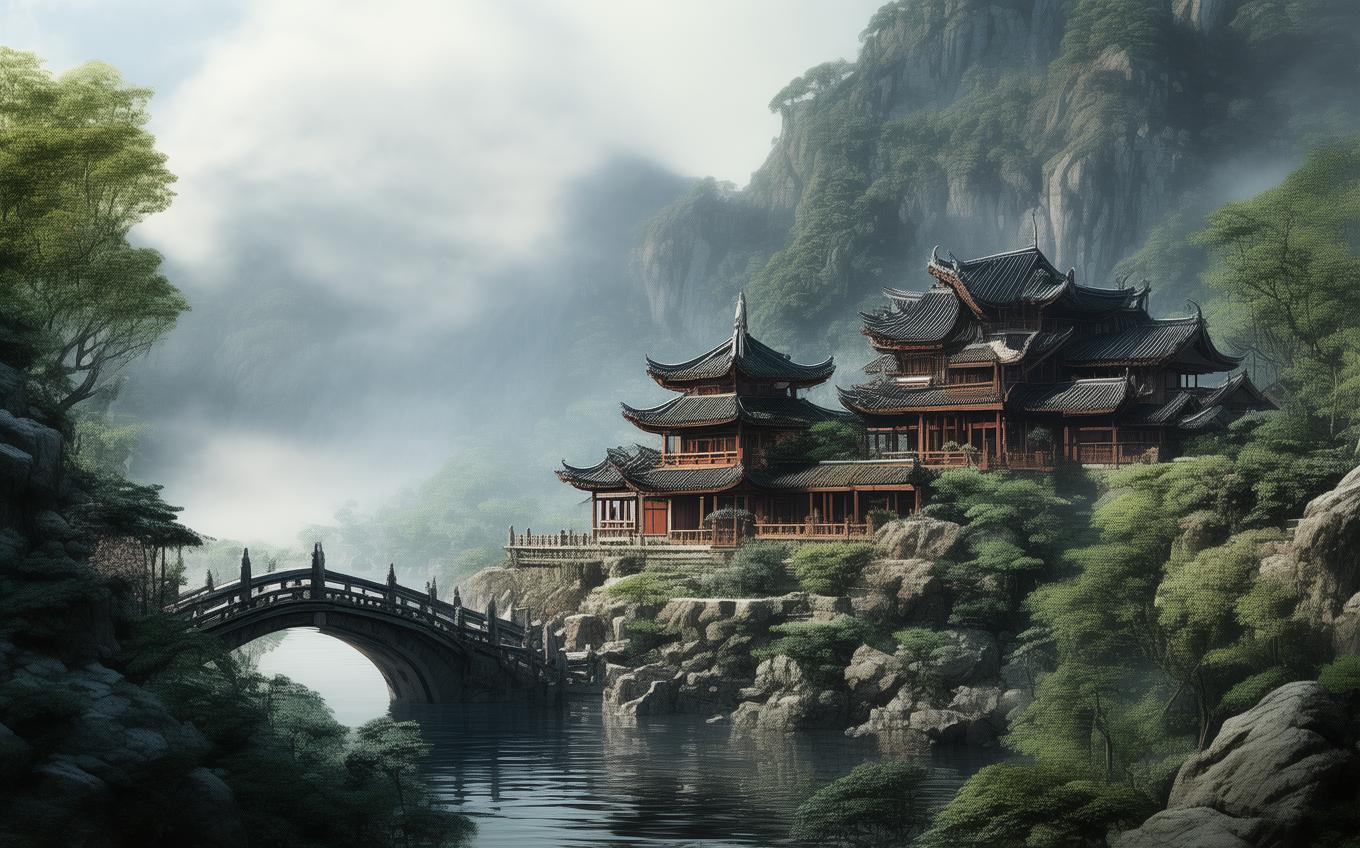
"游灵山寺" (Yóu Língshān Sì), or "Visiting Lingshan Temple," belongs to the tradition of "temple-visiting poetry" (游寺诗), a subgenre in which poets recorded their pilgrimages to Buddhist monasteries nestled in mountains. These poems typically blend landscape description with spiritual reflection, capturing both the physical journey and the inner transformation it inspires. This particular poem is significant for its vivid imagery of a royal procession, its philosophical depth regarding Buddhist concepts, and its ultimate celebration of retreat from worldly clamor.
The Poem: Full Text and Translation
吾王游胜地,骖驾历祗园。
Wú wáng yóu shèngdì, cān jià lì qíyuán.
Our king tours this scenic land; his carriage passes through the Jetavana Grove.
临风画角愤,耀日采旗翻。
Lín fēng huà jiǎo fèn, yào rì cǎi qí fān.
Facing the wind, the painted horn sounds with fierce spirit; in the blazing sun, the colored banners flutter.
永怀筌了义,寂念启玄门。
Yǒng huái quán liǎo yì, jì niàn qǐ xuán mén.
Ever cherishing the ultimate truth beyond the trap of words; in silent contemplation, the gate of mystery opens.
深谿穷地脉,高嶂接云根。
Shēn xī qióng dì mài, gāo zhàng jiē yún gēn.
Deep ravines exhaust the veins of the earth; lofty peaks touch the roots of clouds.
信美谐心赏,幽邃且攀援。
Xìn měi xié xīn shǎng, yōu suì qiě pān yuán.
Truly beautiful, harmonious with the heart's delight; secluded and profound, inviting us to climb and explore.
曳裾欣扈从,方悟屏尘諠。
Yè jū xīn hù cóng, fāng wù bǐng chén xuān.
Trailing our robes, we joyfully follow in attendance; only now do we realize the value of shutting out worldly clamor.
Line-by-Line Analysis
Lines 1–2: The Royal Arrival
The poem opens with a grand statement: "吾王游胜地,骖驾历祗园" — the king himself is touring this scenic place, his carriage passing through the "祗园" (qíyuán). The term "祗园" is a direct reference to the Jetavana Grove (祗树给孤独园), the famous monastery in ancient India where the Buddha delivered many of his sermons. By likening Lingshan Temple to the Jetavana Grove, Liu Xiaosun elevates this Chinese temple to the status of the Buddha's own sacred dwelling. The presence of the king (吾王, "our king") adds political and social weight to the visit, suggesting that even the highest secular authority seeks spiritual nourishment.
Lines 3–4: Ceremony and Grandeur
"临风画角愤,耀日采旗翻" presents a striking visual and auditory scene. The "画角" (huà jiǎo) is a painted horn, a military instrument used in processions and ceremonies. Its sound, described as "愤" (fèn) — fierce, impassioned, or indignant — conveys a sense of martial vigor and emotional intensity. Meanwhile, the "采旗" (cǎi qí), or colored banners, flutter and turn in the bright sunlight ("耀日"). This couplet captures the pomp and ceremony of the royal procession, but there is an interesting tension here: the martial sounds and dazzling displays belong to the secular world of power, yet they are now entering a sacred space. The poem subtly acknowledges this contrast, setting the stage for the spiritual turn that follows.
Lines 5–6: Philosophical Reflection
The fifth line, "永怀筌了义," contains a sophisticated philosophical allusion. The character "筌" (quán) refers to a fish trap — a bamboo device used to catch fish. This alludes to the famous passage in the Zhuangzi (庄子): "The fish trap exists because of the fish; once you've caught the fish, you can forget the trap." In Buddhist and Daoist philosophy, this became a metaphor for the relationship between words and truth: words are merely tools to convey meaning, and once the meaning is grasped, the words can be set aside. "了义" (liǎoyì) is a Buddhist term meaning "definitive meaning" or "ultimate truth," as opposed to provisional or expedient teachings. Liu Xiaosun is saying that he "ever cherishes" the ultimate truth that lies beyond verbal formulation — a deeply sophisticated philosophical stance.
The sixth line, "寂念启玄门," continues this spiritual meditation. "寂念" (jì niàn) means "silent thought" or "tranquil contemplation" — a state of mind free from discursive chatter. In this stillness, "玄门" (xuán mén), the "gate of mystery" or "profound gateway," opens. The term "玄" (xuán) carries strong Daoist connotations, referring to the ineffable, mysterious nature of the Dao. Here, Buddhist and Daoist vocabularies merge seamlessly, reflecting the syncretic religious culture of the Tang Dynasty.
Lines 7–8: The Landscape
"深谿穷地脉,高嶂接云根" shifts the focus to the natural scenery surrounding the temple. The "深谿" (shēn xī) — deep ravines or mountain streams — are said to "穷地脉" (qióng dì mài), literally "exhaust the veins of the earth." This vivid metaphor suggests that the ravines cut so deeply into the landscape that they reach the very arteries of the earth itself. The "高嶂" (gāo zhàng) — high peaks or cliffs — "接云根" (jiē yún gēn), touching the "roots of clouds." This is a beautiful inversion: clouds are typically seen as floating high above, but here they are imagined as having roots, and the peaks rise to meet them. The imagery conveys both the immense depth and towering height of the landscape, creating a sense of verticality that mirrors the spiritual ascent from earthly concerns to heavenly realms.
Lines 9–10: Aesthetic and Physical Engagement
"信美谐心赏,幽邃且攀援" expresses the poet's genuine appreciation for the scene. "信美" (xìn měi) means "truly beautiful" — an emphatic affirmation of the landscape's beauty. The beauty "谐心赏" (xié xīn shǎng), harmonizes with the heart's appreciation, suggesting a perfect correspondence between the external scenery and internal emotional response. The second half of the couplet, "幽邃且攀援" (yōu suì qiě pān yuán), describes the landscape as "secluded and profound" (幽邃) and expresses the desire to "climb and explore" (攀援). This physical engagement with the landscape is not merely recreational; it is a form of spiritual practice, a way of participating in the sacred geography of the mountain.
Lines 11–12: Conclusion and Enlightenment
The final couplet brings the poem to a reflective close. "曳裾欣扈从" (yè jū xīn hù cóng) describes the poet and his companions "trailing their robes" (曳裾) as they "joyfully follow in attendance" (欣扈从). The image of trailing robes suggests a relaxed, unhurried pace — the formal ceremony of the earlier lines has given way to a more intimate, contemplative mode of movement. The word "扈从" (hù cóng) specifically refers to accompanying a sovereign or high official, reminding us that this is still a royal entourage.
The final line, "方悟屏尘諠" (fāng wù bǐng chén xuān), delivers the poem's central insight: "only now do we realize the value of shutting out worldly clamor." The character "悟" (wù) means "to awaken" or "to realize" — it is the same character used in Buddhist contexts for enlightenment. "尘諠" (chén xuān) combines "dust" (尘), a Buddhist metaphor for worldly defilements, with "clamor" or "noise" (諠), suggesting the chaotic distractions of secular life. The word "屏" (bǐng) means "to screen off" or "to shut out." The poem thus concludes with a moment of genuine spiritual insight: the journey to the temple, with its combination of natural beauty and philosophical contemplation, has revealed the value of retreating from the noise of the world.
Themes and Symbolism
The Journey as Spiritual Pilgrimage
The poem is structured as a journey — both literal and metaphorical. The physical movement from the secular world to the sacred space of the temple mirrors an inner journey from worldly distraction to spiritual clarity. This double movement is a hallmark of Chinese temple-visiting poetry, and Liu Xiaosun executes it with particular elegance, moving from the grand ceremony of the royal procession to the quiet realization of the final line.
The Fusion of Buddhist and Daoist Thought
One of the most striking features of this poem is its seamless blending of Buddhist and Daoist vocabulary. The "祗园" (Jetavana Grove) and "了义" (ultimate truth) are Buddhist references, while "玄门" (gate of mystery) and the philosophical approach to language in "筌了义" draw heavily from Daoist sources. This syncretism reflects the religious culture of the Tang Dynasty, in which Buddhism, Daoism, and Confucianism coexisted and often interpenetrated. For Tang intellectuals, these traditions were not mutually exclusive but complementary paths to wisdom.
Nature as Sacred Space
The landscape description in lines 7–8 is not merely decorative. In Chinese Buddhist and Daoist thought, mountains were considered particularly sacred spaces — places where the boundary between the human and divine realms was thin. The deep ravines reaching to the "veins of the earth" and the high peaks touching the "roots of clouds" suggest a landscape that connects the underworld, the human realm, and the heavens. By climbing these mountains, the poet and his companions participate in this cosmic verticality.
The Contrast Between Worldly Power and Spiritual Peace
The poem opens with the trappings of royal power — carriages, horns, banners — but concludes with the quiet joy of escaping worldly clamor. This movement from external display to internal peace is central to the poem's meaning. The king, despite his worldly authority, seeks out the temple; the poet, despite his role in the royal entourage, finds his deepest satisfaction in contemplative silence. The poem suggests that true fulfillment lies not in power or ceremony but in spiritual awakening.
Cultural Context
Temple-Visiting Poetry in the Tang Dynasty
The Tang Dynasty saw a remarkable flourishing of Buddhism in China, with thousands of temples established across the empire. Visiting these temples became a common activity for the educated elite, and poetry about such visits became a recognized subgenre. Poets like Wang Wei (王维), Meng Haoran (孟浩然), and Chang Jian (常建) all wrote celebrated temple-visiting poems. These works typically share certain features: descriptions of the journey to the temple, vivid landscape imagery, philosophical reflection, and a concluding moment of insight or peace.
The Role of the Literati
Liu Xiaosun, like many Tang poets, belonged to the literati class — educated men who served in government positions while also cultivating literary and philosophical pursuits. The ability to compose poetry was essential for participation in elite social life, and poems were often written on specific occasions, such as visits to scenic spots or gatherings of friends. This poem, with its reference to accompanying the king, likely records an actual historical event — a royal visit to Lingshan Temple that the poet was privileged to attend.
Buddhist Philosophy and Language
The reference to "筌了义" reflects a sophisticated engagement with Buddhist philosophy of language. The Buddhist tradition has long grappled with the relationship between words and ultimate truth, with many schools emphasizing that true reality cannot be captured in verbal formulations. The Diamond Sutra (金刚经), one of the most influential Buddhist texts in China, famously states that "the truth is uncontainable and inexpressible." Liu Xiaosun's reference to this philosophical tradition demonstrates the depth of Buddhist learning among Tang intellectuals.
The Aesthetics of Seclusion
The poem's celebration of "屏尘諠" (shutting out worldly clamor) reflects a broader cultural value in Chinese civilization: the ideal of retreat from public life. This ideal, rooted in both Daoist philosophy and Buddhist practice, held that true wisdom and peace could only be found by withdrawing from the distractions of society. Many Chinese literati alternated between periods of government service and periods of retreat, and the mountain temple represented the ultimate space of seclusion and contemplation.
Conclusion
"游灵山寺" by Liu Xiaosun is a masterful example of Tang Dynasty temple-visiting poetry. Through its seven couplets, the poem traces a complete spiritual arc — from the grand ceremony of the royal procession to the quiet realization of the value of seclusion. The poem's sophisticated blending of Buddhist and Daoist philosophy, its vivid landscape imagery, and its elegant movement from external display to internal peace all contribute to its enduring appeal.
For modern readers, the poem offers a glimpse into a world where poetry, philosophy, and spiritual practice were intimately intertwined. The image of the king's banners fluttering in the mountain sunlight, the deep ravines and cloud-touching peaks, and the final moment of quiet insight all speak to a timeless human longing: the desire to escape the noise of daily life and find peace in nature and contemplation. In our own age of constant connectivity and information overload, Liu Xiaosun's celebration of "屏尘諠" — shutting out worldly clamor — resonates with perhaps even greater urgency than it did in his own time.
The poem reminds us that the journey to wisdom is not merely intellectual but physical and emotional — it involves climbing mountains, feeling the wind, and allowing the beauty of the natural world to harmonize with the heart. It is this integration of body, mind, and spirit that makes "游灵山寺" a lasting treasure of Chinese literature.
Sources and Verification
- Verified text and attribution: 刘孝孙, “游灵山寺” (Tang dynasty).
- Primary dataset: Chinese Poetry open corpus.
- Source record:
d9666ac5-1ab3-49e1-9a02-8a61381fd21d.
The Chinese source text and attribution are supplied from the verified record above. The English translation and commentary are educational explanations.
Comments (0)
No comments yet. Be the first to comment!