Introduction
In the vast treasury of Tang Dynasty poetry, few works capture the melancholy of imperial decline as poignantly as 陆敬's "游隋故都" (Visiting the Former Capital of the Sui Dynasty). Lu Jing, a poet of the early Tang period, lived in the shadow of one of Chinese history's most dramatic dynastic transitions—the fall of the Sui Dynasty (581–618 CE) and the rise of the Tang (618–907 CE). This poem records his visit to the abandoned Sui capital, likely the eastern capital of Luoyang, where he wanders through the ruins and reflects on the impermanence of political power and the cyclical nature of dynastic rise and fall.
The poem is significant in Chinese literature as a meditation on huái gǔ (怀古), or "remembering the past"—a poetic tradition in which poets visit historical sites and contemplate the lessons embedded in their ruins. Lu Jing's work stands as an early Tang example of this genre, bridging the gap between the ornate palace-style poetry of the Six Dynasties and the more reflective, philosophical verse that would characterize the High Tang period.
The Poem: Full Text and Translation
洛城聊顾步,长想遂留连。
Luò chéng liáo gù bù, cháng xiǎng suì liú lián.
In Luoyang I pause to look around and walk slowly; my long thoughts make me linger and delay.
水斗宫初毁,风变鼎将迁。
Shuǐ dòu gōng chū huǐ, fēng biàn dǐng jiāng qiān.
The waters raged as the palace was first destroyed; the winds shifted as the sacred tripod was about to be moved.
皐陶德不建,汾隅祀忽焉。
Gāo Yáo dé bù jiàn, Fén yú sì hū yān.
The virtue of Gao Yao was not established; the sacrifices at the bend of the Fen River were suddenly abandoned.
宗祊旷无象,声朔缅谁传。
Zōng bēng kuàng wú xiàng, shēng shuò miǎn shuí chuán.
The ancestral temple stands empty, without its sacred images; the calendar and music of the dynasty—who now transmits them from afar?
枌榆何冷落,禾黍郁芊緜。
Fén yú hé lěng luò, hé shǔ yù qiān mián.
How desolate are the elm trees of the ancestral village! The grain fields grow thick and tangled.
悲歌尽商颂,太息悯周篇。
Bēi gē jìn Shāng sòng, tài xī mǐn Zhōu piān.
My mournful songs exhaust the Hymns of Shang; my deep sighs lament the chapters of Zhou.
来苏伫圣德,濡足乃乘干。
Lái sū zhù shèng dé, rú zú nǎi chéng gān.
Deliverance awaits the arrival of sacred virtue; only after wetting one's feet can one mount the heavenly path.
正始淳风被,人劳用息肩。
Zhèng shǐ chún fēng bèi, rén láo yòng xī jiān.
When the pure customs of the Zhengshi era spread abroad, the people's toil was finally relieved from their shoulders.
舞象文思泽,偃伯武功宣。
Wǔ xiàng wén sī zé, yǎn bó wǔ gōng xuān.
The elephant dance displayed the grace of civil governance; the resting of weapons proclaimed the glory of martial achievement.
则百昌厥后,于万永斯年。
Zé bǎi chāng jué hòu, yú wàn yǒng sī nián.
Then a hundred blessings flourished for their descendants; for ten thousand years, may this endure forever.
兹辰素商节,灰管变星躔。
Zī chén sù shāng jié, huī guǎn biàn xīng chán.
Now is the season of pure autumn; the ash-filled pipes mark the shifting courses of the stars.
平原悴秋草,乔木敛寒烟。
Píng yuán cuì qiū cǎo, qiáo mù liǎn hán yān.
The plains are withered with autumn grass; the tall trees gather in the cold mist.
翻黄坠疎叶,凝翠积高天。
Fān huáng zhuì shū yè, níng cuì jī gāo tiān.
Yellow leaves flutter down from sparse branches; frozen green hues accumulate in the high sky.
参差海曲鴈,寂寞柳门蝉。
Cēn cī hǎi qū yàn, jì mò liǔ mén chán.
Wild geese fly unevenly across the sea's bend; cicadas sing lonely at the willow gate.
兴悼今如此,悲愁复在旃。
Xīng dào jīn rú cǐ, bēi chóu fù zài zhān.
My rising lament is now such as this; grief and sorrow dwell once more upon this banner.
彷徨不忍去,杖策屡回邅。
Páng huáng bù rěn qù, zhàng cè lǚ huí zhān.
Hesitating, I cannot bear to leave; leaning on my staff, I turn back again and again.
Line-by-Line Analysis
Opening: The Wanderer Arrives (Lines 1–2)
The poem opens with the poet in Luoyang, the eastern capital of the Sui Dynasty. The phrase "聊顾步" (liáo gù bù) suggests a casual, almost aimless wandering—yet the word "聊" (liáo, "merely" or "idly") carries an undertone of helplessness. The poet cannot help but look around at what remains. The second line reveals his emotional state: "长想" (cháng xiǎng, "long thoughts") indicates deep, extended contemplation that makes him "留连" (liú lián), linger and hesitate to leave. From the very beginning, we understand this is not a tourist's visit but a pilgrimage of mourning.
The Fall of the Sui (Lines 3–4)
These lines describe the violent end of the Sui Dynasty using powerful natural imagery. "水斗" (shuǐ dòu, "waters fighting") evokes the floods and chaos that accompanied the dynasty's collapse, while "风变" (fēng biàn, "winds changing") suggests the shifting political climate. The "鼎" (dǐng), the sacred bronze tripod, was the ultimate symbol of imperial authority in ancient China—its "moving" (迁, qiān) represents the transfer of the Mandate of Heaven from one dynasty to another. Lu Jing frames the Sui's fall not as a political event but as a cosmic upheaval.
Failed Virtue and Abandoned Rites (Lines 5–8)
The poet invokes 皐陶 (Gāo Yáo), the legendary minister of justice under the sage-king Shun, whose virtue was said to be the foundation of good governance. By stating that "Gao Yao's virtue was not established," Lu Jing criticizes the Sui rulers for failing to cultivate the moral qualities necessary for legitimate rule. The reference to "汾隅" (Fén yú, "the bend of the Fen River") points to the ancestral homeland of the Sui imperial family—their ancestral sacrifices have been "suddenly abandoned" (忽焉, hū yān). The empty ancestral temple ("宗祊旷无象") and the loss of the dynasty's calendar and music ("声朔缅谁传") represent the complete erasure of Sui cultural identity. In Chinese political philosophy, a dynasty's calendar and ritual music were not mere administrative details but the very embodiment of its cosmic legitimacy.
The Desolate Landscape (Lines 9–12)
The imagery shifts to the physical landscape of the abandoned capital. "枌榆" (fén yú, "elm trees") were traditionally planted near ancestral villages, making their "cold desolation" (冷落, lěng luò) particularly poignant. The "禾黍" (hé shǔ, "grain and millet") growing wild and tangled ("郁芊緜") is a direct allusion to the "黍离" (Shǔ lí, "Luxuriant Millet") poem in the Book of Songs, traditionally interpreted as a lament for the fallen Western Zhou capital. By invoking the "Hymns of Shang" (商颂) and "Chapters of Zhou" (周篇), Lu Jing places his grief within the entire tradition of dynastic mourning, suggesting that the fall of the Sui echoes the falls of all previous dynasties.
Hope for Renewal (Lines 13–18)
The poem takes a philosophical turn as Lu Jing contemplates the possibility of renewal. "来苏" (lái sū) refers to the arrival of a savior-king who brings relief to the suffering people—a concept rooted in Confucian political theory. The "濡足" (rú zú, "wetting one's feet") suggests the necessary humility and sacrifice required before one can "乘干" (chéng gān, "mount the heavenly path"). The poet references the "正始" (Zhèng shǐ) era of the Wei Dynasty, remembered as a golden age of pure customs and good governance. The "elephant dance" (舞象) was a ritual performance symbolizing civil virtue, while "偃伯" (yǎn bó, "resting the weapons") represents the cessation of warfare. These lines express hope that the new Tang Dynasty will restore order and bring peace to the weary people.
The Autumn Scene (Lines 19–24)
The poem returns to the present moment with a vivid description of the autumn landscape. "素商" (sù shāng) is a poetic name for autumn, literally "pure Shang"—the Shang being one of the five Chinese musical modes associated with the season. The "灰管" (huī guǎn, "ash-filled pipes") refers to the ancient Chinese method of measuring the seasons by placing ashes in pitch pipes; the ashes would be blown out by the changing qi of each season. This scientific-astronomical detail grounds the poem's cosmic themes in observable reality. The withered plains, cold mist, falling yellow leaves, and "frozen green" sky create a landscape of decay and stillness. The wild geese flying "unevenly" (参差, cēn cī) and the lonely cicadas at the willow gate add auditory and visual elements of desolation.
The Poet's Refusal to Leave (Lines 25–26)
The final lines bring us back to the poet himself. "兴悼" (xīng dào) means "rising lament" or "stirring grief"—the poet's sorrow is not passive but actively generated by what he sees. The phrase "悲愁复在旃" (bēi chóu fù zài zhān) is intriguing: "旃" (zhān) can mean "banner" or "here," suggesting that grief and sorrow are not abstract emotions but present realities, as tangible as a flag fluttering in the wind. The poem ends with the poet "彷徨" (páng huáng), hesitating and wandering in circles, "不忍去" (bù rěn qù), unable to bear leaving. His staff (杖策) supports him as he turns back "again and again" (屡回邅, lǚ huí zhān). This final image of the poet physically unable to tear himself away from the ruins encapsulates the poem's central tension: the desire to move forward versus the pull of the past.
Themes and Symbolism
The Impermanence of Political Power
The poem's central theme is the transience of dynastic authority. The Sui Dynasty, which had unified China after centuries of division and undertaken massive public works projects like the Grand Canal, collapsed within a single generation. Lu Jing uses the ruins of Luoyang to remind readers that no political order, however grand, is permanent.
The Moral Foundation of Legitimate Rule
Through references to Gao Yao, the Zhengshi era, and the concept of "sacred virtue" (圣德, shèng dé), Lu Jing articulates the Confucian belief that dynasties fall not because of military weakness but because of moral failure. The Sui's collapse is presented as the inevitable consequence of its rulers' failure to cultivate virtue.
Nature as Witness and Metaphor
The autumn landscape serves as both a literal description and a metaphorical commentary. The withered grass, falling leaves, and cold mist mirror the decay of the dynasty. Yet autumn is also a season of transition, suggesting that decay precedes renewal—a cyclical view of history deeply rooted in Chinese philosophy.
Key Symbols
- The Tripod (鼎, dǐng): The sacred bronze vessels that symbolized imperial legitimacy. Their "moving" represents the transfer of the Mandate of Heaven.
- Elm Trees (枌榆, fén yú): Trees traditionally planted near ancestral homes, symbolizing family continuity and rootedness. Their desolation represents the destruction of the Sui imperial lineage.
- Grain and Millet (禾黍, hé shǔ): An allusion to the "Luxuriant Millet" poem in the Book of Songs, symbolizing the overgrowth of civilization by nature after political collapse.
- Wild Geese (鴈, yàn): Traditional symbols of migration, separation, and the passage of time. Their "uneven" flight suggests disorder and displacement.
- Cicadas (蝉, chán): In Chinese poetry, cicadas symbolize both summer's end and the lonely scholar-official. Their "lonely" singing at the willow gate emphasizes the emptiness of the abandoned capital.
Cultural Context
The Sui-Tang Transition
The Sui Dynasty (581–618) was founded by Yang Jian (Emperor Wen), who reunified China after nearly three centuries of division. His son, Emperor Yang, undertook ambitious projects—the Grand Canal, the reconstruction of Luoyang, military campaigns against Korea—that exhausted the empire's resources and led to widespread rebellion. The Sui fell in 618, replaced by the Tang Dynasty under Li Yuan (Emperor Gaozu).
Lu Jing wrote during the early Tang period, when the memory of the Sui's collapse was still fresh. His poem reflects the Tang court's official narrative: the Sui fell because of moral failure, and the Tang's rise represented the restoration of virtuous governance. Yet beneath this political orthodoxy lies genuine grief—not necessarily for the Sui themselves, but for the human suffering that accompanied every dynastic transition.
The "Remembering the Past" (怀古) Tradition
"游隋故都" belongs to the huái gǔ tradition, in which poets visit historical sites and meditate on the lessons of the past. This tradition dates back to the Book of Songs and reached its peak during the Tang Dynasty. Poets like Li Bai, Du Fu, and later Li Shangyin would all write famous huái gǔ poems. Lu Jing's work is significant as an early Tang example of this genre, demonstrating how the tradition evolved from simple lament to philosophical meditation.
Chinese Philosophy of History
The poem embodies the cyclical view of history central to Chinese thought. Unlike the linear, progressive view of history in Western thought, traditional Chinese philosophy saw history as a series of cycles—dynasties rise, flourish, decline, and fall, to be replaced by new dynasties. This cyclical view is reflected in the poem's structure: it moves from the Sui's fall to hope for Tang renewal, from autumn's decay to the promise of spring's rebirth.
The concept of the "Mandate of Heaven" (天命, tiān mìng) is implicit throughout the poem. According to this doctrine, Heaven grants the right to rule to virtuous rulers and withdraws it from corrupt ones. The Sui's fall is thus not merely a political event but a cosmic judgment.
Conclusion
Lu Jing's "游隋故都" is a masterpiece of early Tang poetry, combining vivid imagery, philosophical depth, and genuine emotional power. The poem takes us on a journey through the ruins of a fallen dynasty, inviting us to contemplate the impermanence of power, the importance of virtue, and the cyclical nature of history.
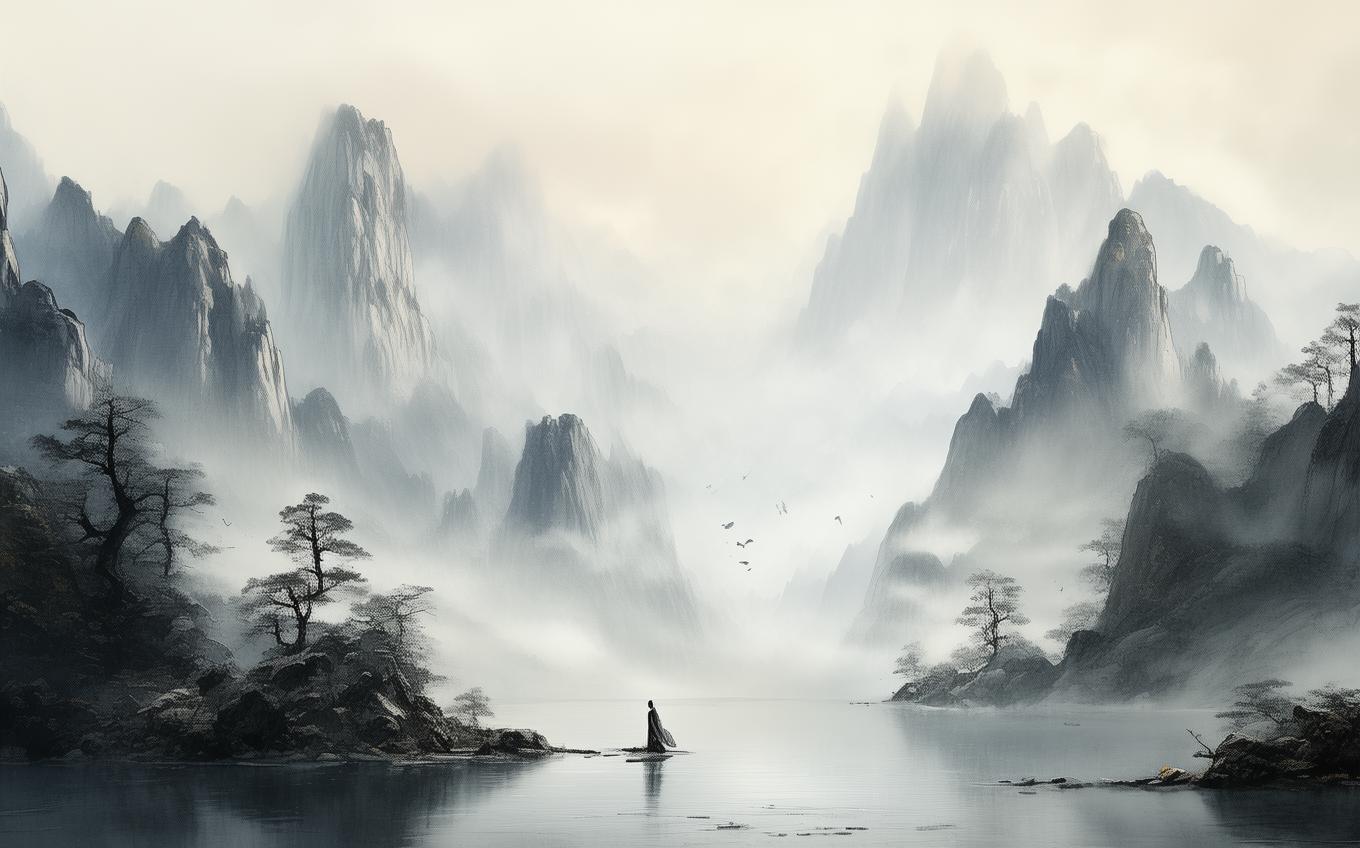
What makes this poem enduringly appealing is its universal human dimension. While it speaks to a specific historical moment—the Sui-Tang transition—its themes resonate across cultures and centuries. The image of a solitary figure wandering through ruins, unable to leave, speaks to the human need to make sense of loss and find meaning in decay. The poem's hope for renewal, expressed through the arrival of "sacred virtue" and the restoration of pure customs, reflects a fundamental optimism about the possibility of moral regeneration.
For modern readers, "游隋故都" offers a window into how Chinese civilization has processed political trauma and found hope in the midst of destruction. It reminds us that ruins are not merely evidence of failure but also monuments to human aspiration—and that every ending carries within it the seeds of a new beginning. As we face our own challenges of political instability and cultural change, Lu Jing's meditation on the ruins of Luoyang remains as relevant as ever.
Sources and Verification
- Verified text and attribution: 陆敬, “游隋故都” (Tang dynasty).
- Primary dataset: Chinese Poetry open corpus.
- Source record:
3f850538-6564-463b-acb3-9c9566e01c07.
The Chinese source text and attribution are supplied from the verified record above. The English translation and commentary are educational explanations.
Comments (0)
No comments yet. Be the first to comment!