Introduction
Yang Shidao (杨师道, ?–647 CE) was a prominent poet and statesman of the early Tang Dynasty, serving under Emperor Taizong. A member of the imperial family by marriage—he wed Princess Guiyang, a daughter of Emperor Gaozu—Yang Shidao was known for his refined literary craftsmanship and his ability to blend personal emotion with grand historical themes. His poetry often reflects the tension between the splendor of the Tang court and the harsh realities of life on the empire's frontiers.
"陇头水" (Lǒngtóu Shuǐ, "Waters of Longtou" or "The Water at Longtou") belongs to a long tradition of Chinese frontier poetry (biānsài shī 边塞诗), a genre that flourished during the Tang Dynasty when the empire was constantly engaged in military campaigns along its northern and western borders. The poem takes its title from Longtou (陇头), also known as Longshan (陇山) or the Long Mountains, located in present-day Gansu Province. This region was a critical military frontier and a place of exile, separation, and longing. The "Longtou water" became a powerful literary motif in Chinese poetry, symbolizing the sorrow of departure and the harshness of frontier life.
What makes Yang Shidao's treatment distinctive is his ability to weave together vivid natural imagery, the emotional weight of separation, and the urgent call of military duty into a single, haunting tableau. The poem moves from the personal to the political, from the sensory to the symbolic, creating a multi-layered meditation on duty, sacrifice, and the human cost of empire.
The Poem: Full Text and Translation
陇头秋月明,陇水带关城。
Lǒngtóu qiū yuè míng, Lǒng shuǐ dài guān chéng.
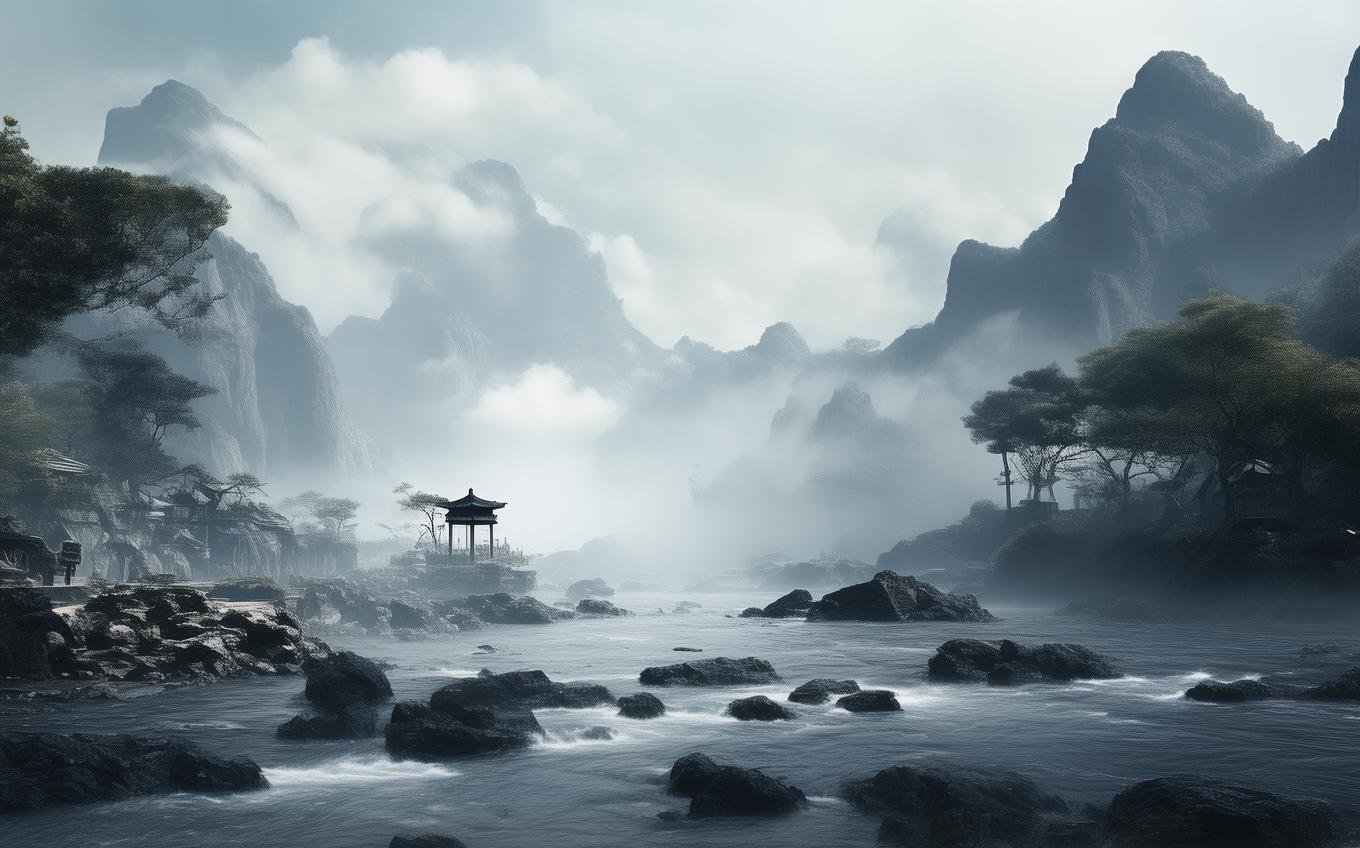
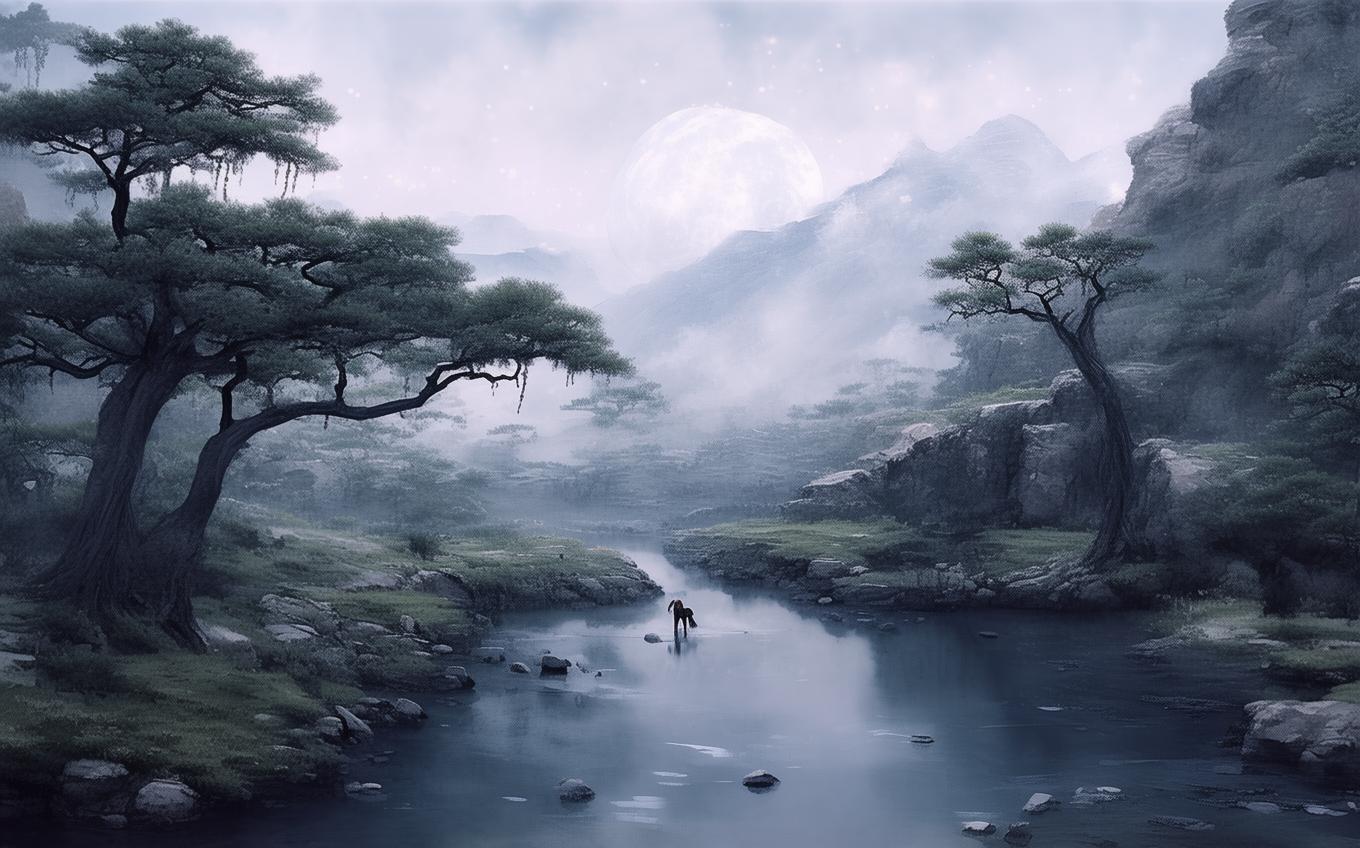
Over Longtou the autumn moon shines bright; the Long waters wind around the border fortress.
笳添离别曲,风送断肠声。
Jiā tiān líbié qū, fēng sòng duàncháng shēng.
The reed flute adds a melody of parting; the wind carries the sound of heartbreak.
映雪峰犹暗,乘冰马屡惊。
Yìng xuě fēng yóu àn, chéng bīng mǎ lǚ jīng.
Snow-reflecting peaks remain shadowed and dark; horses crossing the ice are repeatedly startled.
雾中寒雁至,沙上转蓬轻。
Wù zhōng hán yàn zhì, shā shàng zhuǎn péng qīng.
Through the fog, cold wild geese arrive; on the sand, tumbleweeds roll lightly.
天山传羽檄,汉地急征兵。
Tiānshān chuán yǔ xí, Hàn dì jí zhēng bīng.
From the Tianshan Mountains come urgent feathered dispatches; the Han lands hasten to conscript soldiers.
阵开都护道,劒聚伏波营。
Zhèn kāi Dūhù dào, jiàn jù Fúbō yíng.
Battle formations spread along the Protector-General's road; swords gather at the camps of General Fubo.
于兹觉无渡,方共濯胡缨。
Yú zī jué wú dù, fāng gòng zhuó hú yīng.
Here one realizes there is no crossing back; together we wash our barbarian headdress tassels.
Line-by-Line Analysis
Lines 1–2: Setting the Scene
The poem opens with a striking visual image: an autumn moon shining over Longtou, its light falling upon the waters that wind around a border fortress city. The autumn moon (qiū yuè) is a classic symbol in Chinese poetry, associated with clarity, coldness, and melancholy. Autumn itself is the season of decline and separation in the Chinese literary imagination.
The second line introduces the "Long waters" (Lǒng shuǐ), which in the poetic tradition are waters of sorrow. The image of water "carrying" or "binding" (dài) the fortress city suggests both geographic reality—the river literally flows around the fortification—and metaphorical weight: the water carries the emotional burden of those stationed there. The fortress (guān chéng) immediately establishes the military context and the sense of isolation at the empire's edge.
Lines 3–4: The Music of Sorrow
The third and fourth lines introduce sound into the visual landscape. The jiā (笳), a type of reed pipe or flute of Central Asian origin, was commonly played by soldiers and nomads on the frontier. Its mournful tone was said to evoke deep homesickness. Here, the flute "adds" (tiān) a melody of parting—as if the very air is composing a song of farewell.
The fourth line intensifies this: the wind "sends" (sòng) the "sound of heartbreak" (duàncháng shēng). The term duàncháng (断肠), literally "broken intestines," is one of the most powerful expressions of grief in Chinese—comparable to saying one's heart is torn apart. The wind becomes a messenger of sorrow, carrying the flute's lament across the landscape. Yang Shidao creates a synesthetic effect: we see the moon, hear the flute, and feel the cold wind all at once.
Lines 5–6: The Harsh Landscape
Lines five and six shift to the physical environment. The phrase "映雪峰犹暗" presents a paradox: peaks that reflect snow yet remain dark. This suggests towering mountains whose summits are snow-covered but whose lower slopes and valleys remain in shadow, or perhaps peaks where the snow's brightness is muted by the dim light of the moon. The darkness (àn) creates a sense of foreboding.
The sixth line, "乘冰马屡惊" (horses crossing the ice are repeatedly startled), is a masterful evocation of danger. The horses are not merely walking on ice—they are "riding" or "mounting" it (chéng), and they are "repeatedly startled" (lǚ jīng). The ice cracks, shifts, and makes sounds that frighten the animals. This line conveys the constant peril of frontier travel, where even a routine crossing can become a life-threatening endeavor.
Lines 7–8: Loneliness and Transience
The seventh line introduces wild geese (yàn 雁), one of the most emotionally charged images in Chinese poetry. Geese migrate south in autumn and north in spring, making them natural symbols of seasonal change, travel, and the longing for home. The modifier "cold" (hán) applies both to the geese themselves and to the atmosphere they inhabit. They arrive "through the fog" (wù zhōng), emerging from obscurity like ghostly messengers.
The eighth line presents the zhuǎn péng (转蓬), the tumbleweed or rolling weed. In Chinese literature, the tumbleweed is a powerful symbol of rootlessness and wandering—a plant torn from its roots, blown aimlessly by the wind. The word "light" (qīng) emphasizes its weightlessness and lack of anchor. The speaker may be implicitly comparing himself and his fellow soldiers to these tumbleweeds: displaced, directionless, at the mercy of forces beyond their control.
Lines 9–10: The Call to War
The ninth line introduces a dramatic shift in tone. "羽檄" (yǔ xí) refers to "feathered dispatches"—urgent military messages marked with feathers to indicate their importance and speed. These come from the Tianshan Mountains (天山), the "Celestial Mountains" of Central Asia, far to the northwest. The mention of Tianshan expands the poem's geographic scope dramatically, suggesting a vast theater of conflict.
The tenth line, "汉地急征兵" (the Han lands hasten to conscript soldiers), is particularly significant. Yang Shidao uses "Han" (汉) to refer to the Chinese empire—a common practice in Tang poetry, where the Han Dynasty served as a glorious historical model. The word "急" (jí, "urgent," "hastening") conveys the desperate pace of mobilization. The empire is calling its sons to war, and there is no refusing the summons.
Lines 11–12: Military Grandeur
The eleventh line mentions the "都护" (Dūhù), the Protector-General—a high military official appointed to govern frontier regions. The "Protector-General's road" (Dūhù dào) refers to the military routes under his command, now filled with "spreading battle formations" (zhèn kāi). The image is one of organized military power unfolding across the landscape.
The twelfth line references "伏波营" (Fúbō yíng), the camps of General Fubo. "Fubo" (伏波, "Subduer of Waves") was the title of the Han Dynasty general Ma Yuan (马援, 14 BCE–49 CE), a legendary military commander who pacified southern China and died on campaign. By invoking Ma Yuan, Yang Shidao connects the present military effort to the heroic tradition of the Han Dynasty, suggesting that the current soldiers are heirs to a glorious martial legacy. The "gathering of swords" (jiàn jù) is a powerful image of military preparation—cold steel massing for the coming conflict.
Lines 13–14: Resignation and Commitment
The final couplet delivers the poem's emotional and philosophical resolution. "于兹觉无渡" (here one realizes there is no crossing back) is a moment of stark recognition. The word "渡" (dù) means "to cross" or "to ford," but it also carries deeper connotations of passage, transition, and return. The realization that "there is no crossing" suggests the point of no return—the soldier has reached a place from which he cannot go back to his former life.
The final line, "方共濯胡缨" (together we wash our barbarian headdress tassels), is rich with ambiguity. The "胡缨" (hú yīng) refers to the tassels on the headdresses of the "barbarians" (hú—a term for non-Chinese peoples of the north and west). To "wash" (zhuó) these tassels could mean several things: preparing for battle by cleaning one's gear, symbolically purifying oneself for the coming conflict, or even adopting the customs of the frontier peoples among whom the soldiers live. The word "together" (gòng) emphasizes solidarity—whatever fate awaits, the soldiers face it as one.
Themes and Symbolism
The Frontier as a Place of Exile and Transformation
The poem's central theme is the frontier as a liminal space—a threshold between civilization and wilderness, home and exile, life and death. Longtou was traditionally considered the point where one left the Chinese heartland behind and entered the unknown. The poem's progression from moonlit beauty through sorrow, danger, and finally to martial resolve mirrors the psychological journey of the frontier soldier.
Nature as Mirror of Emotion
Yang Shidao uses natural imagery throughout to reflect and amplify human emotions. The bright moon suggests clarity but also coldness and distance. The wind carries not just sound but "heartbreak." The dark peaks, the treacherous ice, the fog, the cold geese, and the rootless tumbleweeds all externalize the inner state of the soldiers. This technique, known as qíng jǐng jiāo róng (情景交融, "the fusion of feeling and scene"), is a hallmark of classical Chinese poetry.
The Tension Between Duty and Desire
Beneath the poem's surface runs a profound tension between the soldier's duty to the empire and his natural desire for home, safety, and peace. The flute's "melody of parting" and the wind's "sound of heartbreak" express the emotional cost of military service. Yet the poem does not end in despair. Instead, it moves toward acceptance and even a kind of grim solidarity. The "no crossing back" is not merely a lament—it is also a commitment.
Key Symbols
- The Autumn Moon (秋月): Clarity, coldness, and the passage of time. It illuminates but does not warm.
- The Reed Flute (笳): The voice of the frontier, expressing sorrow that words cannot convey.
- Wild Geese (雁): Migration, separation, and the longing for home. Their arrival in the fog suggests news from afar.
- Tumbleweed (转蓬): Rootlessness and the fragility of human life on the frontier.
- Feathered Dispatches (羽檄): The urgency of war and the inescapable call of duty.
- General Fubo (伏波): The heroic military tradition, connecting the present to the glorious past.
- Washing the Tassels (濯胡缨): Purification, preparation, and the acceptance of one's fate.
Cultural Context
The Tang Frontier and the Genre of Border Poetry
The Tang Dynasty (618–907 CE) was a period of unprecedented territorial expansion, but also of constant military pressure from neighboring powers—the Turks, the Tibetans, the Khitans, and others. The government maintained large garrisons along the northern and western frontiers, and military service was both a path to advancement and a source of profound suffering for countless families.
Border poetry (biānsài shī) emerged as one of the most distinctive genres of Tang literature. Poets like Wang Changling, Gao Shi, Cen Shen, and Li Bai wrote powerful verses about the frontier, often drawing on their own experiences or on the rich tradition of yuefu (乐府, "Music Bureau") poetry. These poems typically combine vivid natural description with reflections on the human cost of war, creating a complex emotional register that ranges from patriotic pride to profound melancholy.
The Longtou Tradition
The specific setting of Longtou (陇头) carries deep literary resonance. The Long Mountains marked the traditional boundary between the Chinese heartland and the "Western Regions" (西域). For centuries, poets had used "Longtou water" as a symbol of separation and sorrow. The Han Dynasty "Music Bureau" song "Longtou Water" (Lǒngtóu Shuǐ) established the pattern:
陇头流水,流离山下。
The waters of Longtou flow down, scattered and lost below the mountain.
Yang Shidao's poem is part of this long tradition, but he enriches it with his own distinctive imagery and his characteristic blend of the personal and the political.
The Han-Tang Parallel
The poem's references to "Han lands" (汉地) and "General Fubo" (伏波) reflect a common Tang literary practice: using the Han Dynasty as a mirror for the Tang. The Han (206 BCE–220 CE) was the first great Chinese empire to project power deep into Central Asia, and Tang poets frequently invoked Han history to legitimize and glorify their own era's military endeavors. By connecting the present soldiers to the legendary Ma Yuan, Yang Shidao suggests that the current generation is worthy of the same respect and admiration.
Chinese Values Reflected in the Poem
The poem reflects several core Chinese cultural values:
- Loyalty to the State (忠): The soldiers answer the imperial summons without question, accepting their duty despite its hardships.
- Solidarity (义): The final image of "together" washing the tassels emphasizes collective identity over individual desire.
- Acceptance of Fate (命): The recognition that "there is no crossing back" reflects a philosophical acceptance of circumstances that cannot be changed.
- Harmony with Nature (天人合一): The poem's integration of natural imagery with human emotion reflects the Chinese view that humans are part of the natural world, not separate from it.
Conclusion
"陇头水" by Yang Shidao is a masterpiece of Tang frontier poetry, remarkable for its economy of language and its depth of emotional resonance. In just fourteen lines, the poet takes us from the serene beauty of an autumn moon to the desperate urgency of military mobilization, from the personal sorrow of separation to the collective resolve of soldiers facing an uncertain fate.
The poem's enduring appeal lies in its honesty. It does not glorify war, nor does it wallow in despair. Instead, it presents the frontier experience in all its complexity—the beauty and the danger, the sorrow and the solidarity, the longing for home and the acceptance of duty. The final image of soldiers washing their headdress tassels together is both mundane and profound: a simple act of preparation that becomes a ritual of commitment.
For modern readers, the poem offers a window into the emotional world of Tang Dynasty soldiers—men who, like soldiers in every era, found themselves far from home, facing dangers they could not fully comprehend, bound together by circumstances beyond their control. The moon over Longtou still shines, the wind still carries the sound of the flute, and the waters still flow—reminders that the human experiences of separation, duty, and solidarity transcend time and culture.
Yang Shidao's poem reminds us that great literature does not merely describe experience—it transforms it, finding in the particular details of a specific time and place the universal truths that connect us all.
Sources and Verification
- Verified text and attribution: 杨师道, “陇头水” (Tang dynasty).
- Primary dataset: Chinese Poetry open corpus.
- Source record:
e1e9364b-9365-4302-a5d0-502cc14ff8fb.
The Chinese source text and attribution are supplied from the verified record above. The English translation and commentary are educational explanations.
Comments (0)
No comments yet. Be the first to comment!