Introduction
Yang Shidao (杨师道, ?–647), courtesy name Jingsu, was a prominent statesman and poet of the early Tang Dynasty. A member of the imperial Yang family of the preceding Sui Dynasty, he served under Emperor Taizong of Tang and was known for his refined literary talent, particularly in the composition of court poetry. He was counted among the distinguished scholars at the imperial academy and frequently participated in imperial poetry gatherings.
The poem "赋终南山用风字韵应诏" (Composed on Mount Zhongnan, Using the Rhyme Character "Wind," in Response to Imperial Command) belongs to a specific genre of Chinese court poetry known as yingzhao (应诏) poetry—verses written at the explicit command of the emperor. The title tells us that the poem was composed during an imperial outing or gathering, with the emperor assigning the rhyme character "风" (fēng, wind) as a formal constraint. Such poems were not merely exercises in literary skill; they were demonstrations of wit, erudition, and loyalty, performed in the presence of the sovereign. Despite its courtly origins, this poem transcends mere flattery, offering instead a genuinely evocative landscape meditation that captures the serene beauty of Mount Zhongnan (终南山), the great mountain range south of the Tang capital Chang'an (modern Xi'an).
The Poem: Full Text and Translation
眷言怀隐逸,辍驾践幽丛。
Juàn yán huái yǐn yì, chuò jià jiàn yōu cóng.
With tender longing I recall the hermits of old; halting the carriage, I step into the secluded thickets.
白云飞夏雨,碧岭横春虹。
Bái yún fēi xià yǔ, bì lǐng héng chūn hóng.
White clouds drift through summer rain; across the emerald ridge stretches a rainbow of spring.
草绿长杨路,花疎五柞宫。
Cǎo lǜ cháng yáng lù, huā shū wǔ zhà gōng.
Grass grows green along the Long Yang Road; flowers bloom sparsely by the Wuzha Palace.
登临日将晚,兰桂起香风。
Dēng lín rì jiāng wǎn, lán guì qǐ xiāng fēng.
As I ascend and survey the scene, the sun is about to set; orchids and cassia stir a fragrant wind.
Line-by-Line Analysis
Line 1: 眷言怀隐逸,辍驾践幽丛
The poem opens with a deeply personal and contemplative note. The phrase "眷言" (juàn yán) is an archaic expression meaning "with tender regard" or "fondly recalling," lending the opening an air of gentle nostalgia. The poet declares that he "怀隐逸" (huái yǐn yì)—he cherishes the memory of yinyi, the hermits and recluses who withdrew from worldly affairs to live in mountain seclusion. This immediately establishes a thematic tension: the poet is a court official, yet his heart yearns toward the ideal of eremitic withdrawal, a concept deeply rooted in Daoist philosophy and long celebrated in Chinese literature.
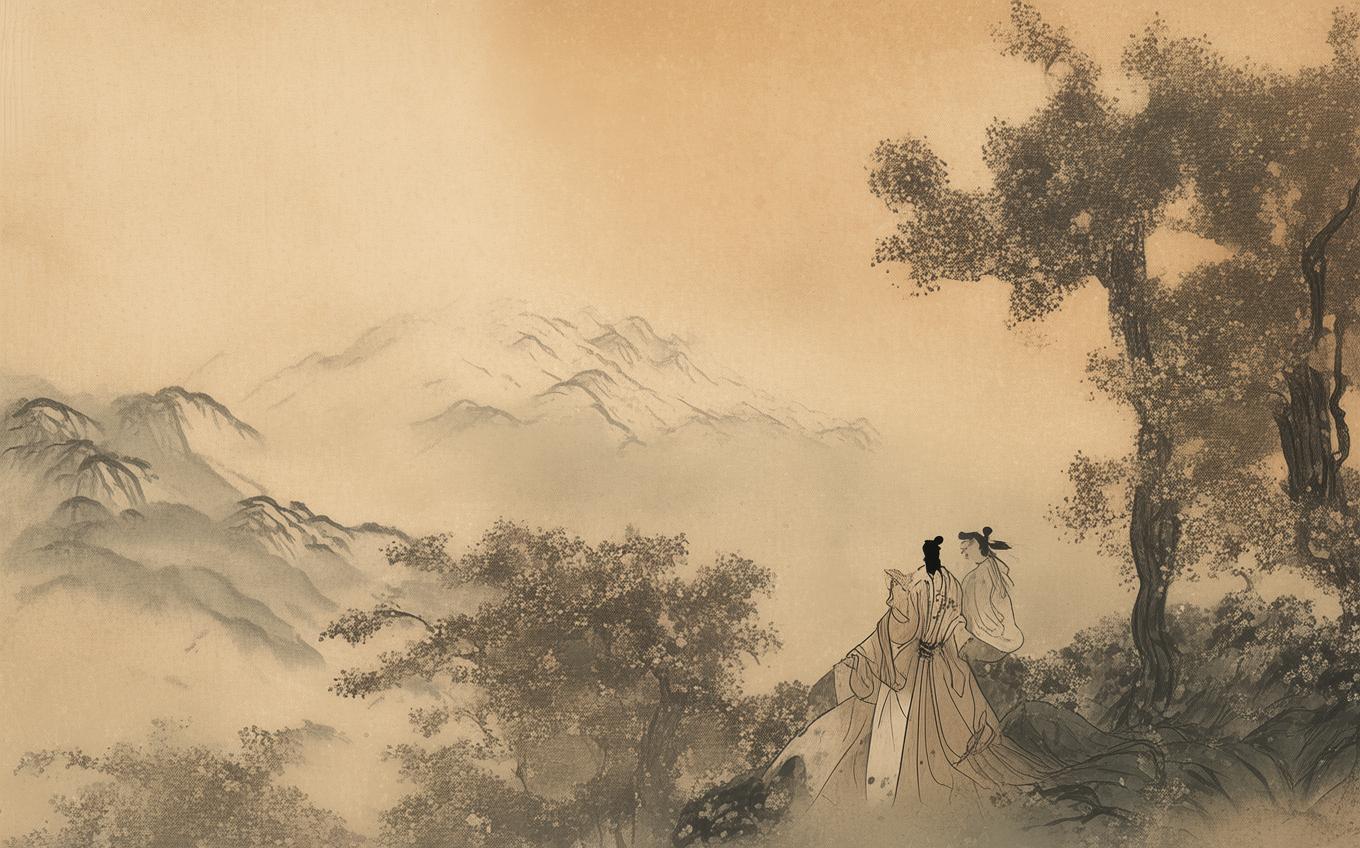
The second half of the line, "辍驾践幽丛" (chuò jià jiàn yōu cóng), translates to "halting the carriage, I tread into the secluded thickets." The verb "辍" (chuò) means to stop or cease, while "驾" (jià) refers to the imperial carriage or chariot. By halting his vehicle, the poet symbolically pauses his official journey to physically enter the wild, hidden places of the mountain. The word "践" (jiàn, to tread upon) suggests a deliberate, physical engagement with the landscape—not merely viewing it from a distance, but entering into it. "幽丛" (yōu cóng, secluded thickets or dark groves) evokes the mysterious, untamed quality of the mountain wilderness.
Line 2: 白云飞夏雨,碧岭横春虹
This couplet presents a stunning visual juxtaposition. "白云飞夏雨" (bái yún fēi xià yǔ)—"white clouds fly through summer rain"—combines two seemingly contradictory weather phenomena: the bright, airy movement of white clouds and the falling of summer rain. This creates a sense of dynamic atmospheric drama, as if the clouds themselves are racing through a passing shower. The verb "飞" (fēi, to fly) imparts a sense of speed and freedom to the clouds.
The second half, "碧岭横春虹" (bì lǐng héng chūn hóng)—"across the emerald ridge stretches a spring rainbow"—introduces a brilliant splash of color. The "碧岭" (bì lǐng) refers to the blue-green mountain ridges, rendered in that characteristic Chinese aesthetic color that blurs the boundary between blue and green. The verb "横" (héng) means to lie horizontally across, describing how a rainbow spans the mountain ridge like a celestial bridge. The mention of "春虹" (chūn hóng, spring rainbow) alongside "夏雨" (xià yǔ, summer rain) creates a deliberate blurring of seasons—perhaps suggesting that the mountain's beauty transcends temporal boundaries, or that the poet is compressing multiple visits into a single idealized vision. This technique of seasonal ambiguity is not uncommon in Chinese landscape poetry, where the goal is often to capture the essence of a place rather than a literal, time-bound snapshot.
Line 3: 草绿长杨路,花疎五柞宫
The third couplet grounds the poem in specific, identifiable geography. "草绿长杨路" (cǎo lǜ cháng yáng lù)—"grass grows green along the Long Yang Road"—refers to the Changyang Road (长杨路), a famous thoroughfare near the imperial hunting grounds. The lush green grass suggests vitality and the regenerative power of nature, even along a man-made road.
"花疎五柞宫" (huā shū wǔ zhà gōng)—"flowers bloom sparsely by the Wuzha Palace"—references the Wuzha Palace (五柞宫), an imperial palace from the Han Dynasty located in the Zhongnan region. The character "疎" (shū) means sparse or scattered, and its use here is significant. Rather than depicting a profusion of blossoms, the poet notes the sparseness of flowers, which creates a mood of elegant restraint and subtle melancholy. The palace, once a center of imperial grandeur during the Han Dynasty, is now marked by only scattered flowers—a gentle reminder of the passage of time and the transience of human glory against the enduring backdrop of nature. This allusion to Han Dynasty ruins would have resonated deeply with Tang Dynasty readers, who saw their own empire as the successor to Han greatness.
Line 4: 登临日将晚,兰桂起香风
The final couplet brings the poem to a graceful, sensory conclusion. "登临日将晚" (dēng lín rì jiāng wǎn)—"as I ascend and survey, the sun is about to set"—places the poet in the act of denglin (登临), the classical gesture of climbing to a high place to gaze upon the landscape. This act carries profound cultural weight in Chinese literature, associated with both spiritual elevation and melancholic reflection. The approaching sunset adds a note of wistfulness, the golden hour casting its elegiac light over the scene.
The poem's final line, "兰桂起香风" (lán guì qǐ xiāng fēng)—"orchids and cassia stir a fragrant wind"—is particularly masterful, as it fulfills the assigned rhyme with the character "风" (fēng, wind) while simultaneously elevating the poem to a symbolic plane. The orchid (兰, lán) and cassia (桂, guì) are two of the most symbolically loaded plants in Chinese culture. The orchid represents moral purity, refinement, and the virtue of the gentleman (junzi), while the cassia (often associated with the osmanthus) symbolizes success, honor, and literary achievement. Together, they create a "香风" (xiāng fēng), a fragrant breeze that seems to arise from the very essence of the mountain. This final image transforms the physical landscape into a moral and spiritual one—the mountain itself seems to exhale virtue, and the poet, standing at the summit as day fades, is enveloped in this perfumed air.
Themes and Symbolism
The Hermit Ideal and Courtly Life
The poem's opening reference to yinyi (隐逸, hermits and recluses) establishes one of the most enduring tensions in Chinese literati culture: the pull between public service and private withdrawal. Since the time of the legendary recluses Xu You and Chao Fu, who refused the throne itself, Chinese intellectuals had idealized the figure of the hermit who renounces worldly ambition for a life of mountain contemplation. Yet Yang Shidao was himself a court official, writing this poem at the emperor's command. The poem thus embodies a kind of imaginative escape—a momentary, sanctioned retreat into the wilderness that allows the courtier to touch the hem of the hermit's robe without actually abandoning his duties. This tension between ru (入, engagement with the world) and chu (出, withdrawal from the world) would remain a central preoccupation of Chinese poetry for centuries.
Nature as Moral Landscape
Mount Zhongnan is not merely a scenic backdrop; it is a repository of spiritual and moral meaning. Throughout Chinese history, Zhongnan was famous as a dwelling place of Daoist immortals and Buddhist monks, a sacred mountain where the boundary between the human and divine worlds grew thin. By depicting the mountain's clouds, rain, rainbow, grass, flowers, and fragrant breezes, Yang Shidao is not simply painting a pretty picture—he is mapping a landscape of virtue. The mountain's beauty is inseparable from its moral purity.
The Symbolism of Orchid and Cassia
The orchid (兰) and cassia (桂) in the final line carry enormous symbolic weight. In the Chuci (楚辞, Songs of Chu), one of the oldest anthologies of Chinese poetry, fragrant plants consistently represent virtuous individuals and noble qualities. Qu Yuan, the archetypal loyal minister, adorned himself with orchids and other aromatic herbs as emblems of his moral integrity. By ending the poem with these two plants, Yang Shidao subtly suggests that the true value of Mount Zhongnan lies not in its visual splendor but in its moral fragrance—and by extension, that the emperor's reign itself is blessed with virtue.
The Rhyme Constraint as Artistic Challenge
The title tells us that the poem was composed using the rhyme character "风" (fēng, wind). In Chinese regulated verse, the rhyme character must appear at the end of even-numbered lines (here, the second, fourth, sixth, and eighth lines). The poet must therefore find words that rhyme with "风" while still conveying meaningful content. The rhyme words in this poem are: 丛 (cóng), 虹 (hóng), 宫 (gōng), and 风 (fēng). What is remarkable is how naturally these words emerge from the poem's imagery—the thickets, the rainbow, the palace, and finally the wind itself—so that the formal constraint feels less like a restriction and more like an organic structure.
Cultural Context
The Early Tang Court and the Poetry Gathering
The early Tang Dynasty (618–907) was a period of political consolidation and cultural flourishing. Emperor Taizong (r. 626–649), one of China's greatest rulers, was an enthusiastic patron of literature who gathered talented scholars and poets at his court. Poetry gatherings were frequent, and the emperor himself would often compose verses alongside his ministers. The yingzhao (应诏) poem—written "in response to imperial command"—was a standard genre of this courtly culture. Such poems served multiple functions: they demonstrated the poet's literary skill, expressed loyalty to the sovereign, and contributed to the construction of a shared cultural identity for the new dynasty.
Mount Zhongnan: The Mountain of Hermits
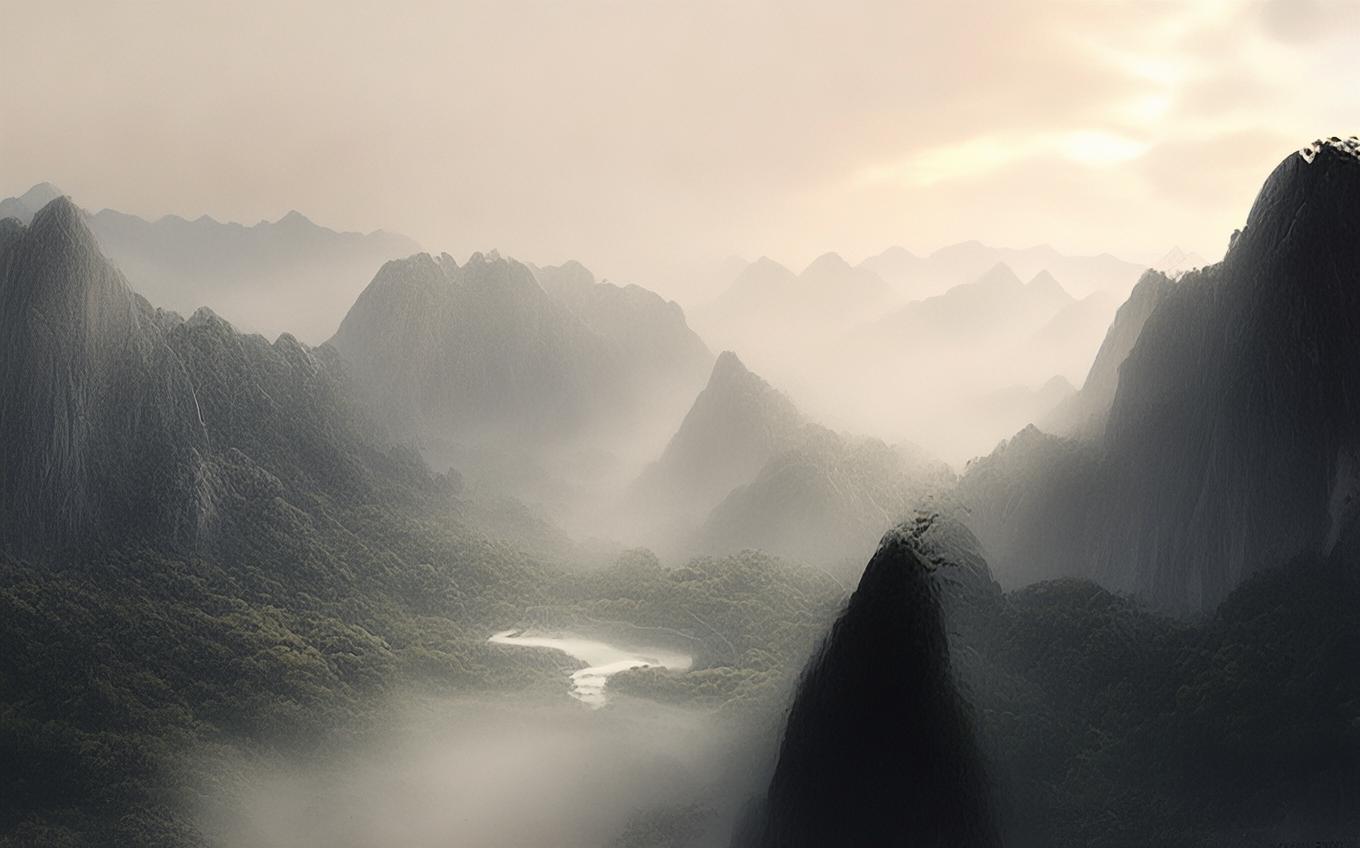
Mount Zhongnan (终南山), also known as the Southern Mountain, rises dramatically just south of Chang'an, the Tang capital. Its proximity to the seat of imperial power made it uniquely significant—it was close enough for courtiers to visit, yet wild enough to represent the ideal of eremitic withdrawal. Throughout Chinese history, countless hermits, monks, and poets sought refuge in its valleys and peaks. The mountain became a symbol of the alternative life, the road not taken by those who chose government service. In Tang poetry, Zhongnan appears again and again as a site of spiritual longing and natural beauty, most famously in the works of Wang Wei, who maintained a country estate there.
The Han Dynasty Allusion
The reference to Wuzha Palace (五柞宫) is a deliberate nod to the Han Dynasty (206 BCE–220 CE), which the Tang regarded as a golden age of imperial power and cultural achievement. The Wuzha Palace was one of several imperial palaces built in the Zhongnan region during the Han, used for hunting excursions and leisure. By the Tang Dynasty, these Han structures had long since fallen into ruin. The image of sparse flowers blooming around the ancient palace site carries a gentle huái gǔ (怀古, "meditation on the past") sentiment—a recognition that even the mightiest empires fade, while nature endures.
Daoist and Buddhist Resonance
The poem's emphasis on seclusion, natural beauty, and spiritual purity reflects the deep influence of both Daoism and Buddhism on Chinese landscape aesthetics. Daoism taught that the Dao (道, the Way) could be apprehended through contemplation of nature, while Buddhism brought to China a sophisticated vocabulary of emptiness, impermanence, and meditative awareness. The poet's journey from the imperial carriage into the "secluded thickets" can be read as a miniature spiritual pilgrimage, a movement from the world of human affairs toward the realm of natural truth.
Conclusion
Yang Shidao's "赋终南山用风字韵应诏" is a small gem of early Tang court poetry that rewards careful reading. On the surface, it is a graceful landscape description, painting a vivid picture of Mount Zhongnan's clouds, rain, rainbow, grass, flowers, and fragrant breezes. But beneath this surface lies a rich tapestry of cultural meaning: the tension between courtly duty and the hermit ideal, the symbolism of orchids and cassia as emblems of virtue, the elegiac meditation on the ruins of Han glory, and the subtle art of composing within formal constraints.
The poem's enduring appeal lies in its ability to transform a courtly exercise into a genuine moment of spiritual insight. As the sun sets and the fragrant wind rises, the boundary between the physical mountain and its symbolic meaning dissolves. The reader, like the poet, is invited to pause, to step away from the carriage of worldly concerns, and to breathe in the perfumed air of a landscape that is at once real and ideal. In our own age of constant motion and digital distraction, this invitation to denglin—to climb high, to look, and to breathe—feels more relevant than ever.
Sources and Verification
- Verified text and attribution: 杨师道, “赋终南山用风字韵应诏” (Tang dynasty).
- Primary dataset: Chinese Poetry open corpus.
- Source record:
5330d140-b84e-4b35-8e50-157998ac1ea8.
The Chinese source text and attribution are supplied from the verified record above. The English translation and commentary are educational explanations.
Comments (0)
No comments yet. Be the first to comment!