Introduction
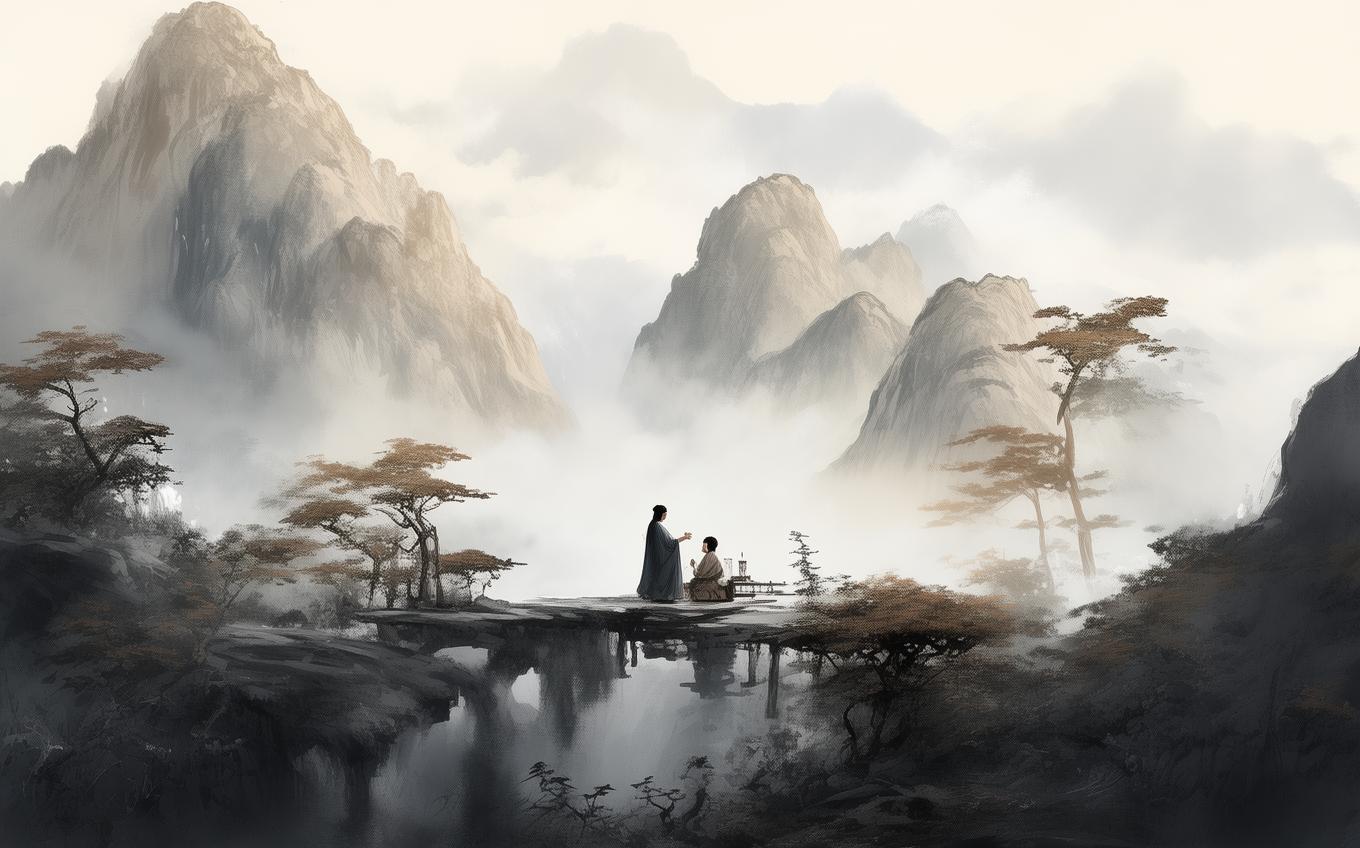
Li Bai (701–762), also known as Li Po, is one of the most celebrated poets in Chinese literary history. A leading figure of the High Tang period, he is famed for his romantic spirit, love of wine, deep connection with nature, and audacious imagination. His verse often exudes a sense of freedom and transcendence that has captivated readers for over a millennium. "山中与幽人对酌" (Drinking with a Recluse in the Mountains) is a quatrain that perfectly encapsulates Li Bai's carefree personality and Daoist-influenced outlook on life. Short and seemingly spontaneous, the poem transforms a casual drinking session into a celebration of friendship, simplicity, and harmony with the natural world. This piece remains a beloved gem, frequently quoted for its effortless charm and the vivid snapshot it provides of the poet’s idealised lifestyle among the hills.
The Poem: Full Text and Translation
两人对酌山花开,
Liǎng rén duì zhuó shān huā kāi,
We two drink face to face as the mountain flowers bloom;
一杯一杯复一杯。
Yī bēi yī bēi fù yī bēi.
One cup, another cup, and then one more cup.
我醉欲眠卿且去,
Wǒ zuì yù mián qīng qiě qù,
I am drunk and wish to sleep; you may take your leave now,
明朝有意抱琴来。
Míng zhāo yǒu yì bào qín lái.
If you feel like it tomorrow, come again, bringing your qin.
Line-by-Line Analysis
The first line, "两人对酌山花开," instantly sets the scene with elegant economy. Two friends are drinking together, not in a stuffy hall or noisy tavern, but deep in the mountains, surrounded by wild blossoms in full bloom. The phrase "对酌" (face-to-face drinking) implies intimacy and mutual understanding; there are no formalities, only genuine companionship. The blooming flowers suggest springtime, renewal, and the transient beauty of the moment. Right away, nature is not merely a backdrop but an active participant in the shared joy.
The second line, "一杯一杯复一杯," is almost childlike in its repetition. The poet deliberately avoids a more precise number, instead mimicking the rhythm of drinking itself—unhurried, one cup naturally following another. The phrase echoes folk song simplicity, turning the act of drinking into a kind of meditative flow. It conveys the sensation of time slowing down, of being so fully absorbed in the present that nothing else matters. There is no anxiety, no hurry, just the gentle, endless succession of wine cups passed between friends companionably amid the floral fragrance.
The third line, "我醉欲眠卿且去," is a delightful twist. Instead of a polite host urging the guest to stay longer, the intoxicated speaker directly tells his friend to leave because he is about to fall asleep. This candid self-indulgence would be unthinkable in a formal banquet, yet here it perfectly mirrors the sincerity of a true friendship that requires no pretence. The word "卿" (an affectionate, informal "you") reinforces the equality and warmth between them. Rather than offending, the directness shows absolute trust—the guest will understand, and there will be no hurt feelings.
The final line, "明朝有意抱琴来," softens the abrupt departure with a gentle invitation for the following day. "有意" (if you feel like it) leaves the decision to the friend, honouring their spontaneity and freedom. The request to "抱琴" (bring your zither/qin) reveals the nature of their bond: the qin, a seven-stringed zither, is an instrument associated with scholars, refinement, and spiritual cultivation in Chinese tradition. It is not a rowdy instrument but one whose quiet tones reflect inner harmony. By suggesting the friend come again with a qin, the speaker transforms their next meeting into a promise of music, poetry, and further communion with nature—an extension of the very mood they are already enjoying.
Themes and Symbolism
The poem’s central theme is the celebration of free and unadorned friendship, unburdened by social obligation or worldly ambition. The mountains and blossoms symbolise a retreat from the dusty world of officialdom and its endless complications—a recurring motif in Li Bai’s work, heavily influenced by Daoist philosophy. Wine serves as a catalyst for abandoning restraint and reaching a state of spontaneous authenticity, much like the Daoist ideal of "ziran" (naturalness). Sleep and intoxication are not signs of weakness here but emblematic of a pure existence that follows its own natural rhythms. The qin, promised for the next day, represents the unspoken understanding between kindred spirits and a shared love for the arts that elevates the spirit. Ultimately, the poem is a hymn to living in the moment, accepting transience, and finding profound joy in the simplest of human connections.
Cultural Context
Li Bai wrote during the Tang dynasty, a golden age of Chinese poetry when artistic expression flourished. He spent large parts of his life wandering, often seeking the company of Daoist hermits and recluses. The "幽人" (recluse or hermit) in the poem’s title is someone who has withdrawn from society to live a quiet life in nature, valuing wisdom, simplicity, and inner tranquillity over fame and profit. Associating with such figures was a way for Li Bai to assert his own distance from the political intrigues of the capital. The poem’s casual dismissal of etiquette when the host announces his drunkenness and desire to sleep has a famous precedent: it echoes a much-loved anecdote about Tao Yuanming (365–427), another revered poet-recluse, who was said to have told his guests, "I am drunk and wish to sleep; you may go now." By reworking this line, Li Bai pays homage to his predecessor while making the sentiment entirely his own. This interplay between tradition and personal expression is a hallmark of classical Chinese poetry. The qin itself carried deep cultural weight; playing it was considered an act of self-cultivation, and its music was thought to reflect the player’s moral character. To ask a friend to bring a qin was to invite not just entertainment, but a sharing of souls.
Conclusion
"山中与幽人对酌" is a miniature masterpiece that continues to enchant readers with its disarming sincerity and jubilant ease. In just twenty characters, Li Bai sketches a world where friendship needs no ceremony, time stretches leisurely between cups, and the mountain blossoms stand witness to human happiness. Its enduring appeal lies in this perfect balance of earthly pleasure and lofty ideals—the poem invites us to step away from the frantic demands of ambition and rediscover the quiet luxury of simply being, with good wine, a good friend, and nature’s gentle beauty. In today’s fast-paced world, Li Bai’s invitation to let go, to be wholly present, and to welcome tomorrow’s melody with an open heart feels more relevant than ever.

Comments (0)
No comments yet. Be the first to comment!