Introduction
Du Fu (712–770) is often hailed as China's greatest poet—a sage whose brush captured the collapsing Tang Dynasty with unflinching honesty. While his early verse delights in misty landscapes and the joys of friendship, his later work grows darker, shaped by the catastrophic An Lushan Rebellion and years of displacement. The poem "岁晏行" (Suì Yàn Xíng, roughly “Song of the Year’s End”) belongs to this mature period, written around 768 or 769, only a year or two before his death. It is winter; Du Fu is adrift in the lake region of modern-day Hunan, witnessing a society in ruins. The poem fuses biting social critique with visceral seasonal imagery, making it one of the most powerful examples of Du Fu’s “poetic history”—a verse that records the suffering of an entire era.
The Poem: Full Text and Translation
岁云暮矣多北风,潇湘洞庭白雪中。
Suì yún mù yǐ duō běi fēng, Xiāo Xiāng Dòngtíng bái xuě zhōng.
The year is drawing to its end, north winds blow strong; the Xiao–Xiang and Dongting waters lie within white snow.
渔父天寒网罟冻,莫徭射雁鸣桑弓。
Yúfǔ tiān hán wǎnggǔ dòng, Mòyáo shè yàn míng sāng gōng.
The fisherman’s nets are frozen in the bitter cold; the Mòyáo tribesmen shoot wild geese, their mulberry bows twang.
去年米贵阙军食,今年米贱太伤农。
Qùnián mǐ guì quē jūn shí, jīnnián mǐ jiàn tài shāng nóng.
Last year rice was dear—the army went hungry; this year rice is cheap—the peasants are cruelly wounded.
高马达官厌酒肉,此辈杼柚茅茨空。
Gāomǎ dáguān yàn jiǔ ròu, cǐ bèi zhùzhóu máocí kōng.
High steeds and grand officials are sated with wine and meat, while this lot have empty looms and bare thatched huts.
楚人重鱼不重鸟,汝休枉杀南飞鸿。
Chǔ rén zhòng yú bù zhòng niǎo, rǔ xiū wǎng shā nán fēi hóng.
The people of Chu prize fish, not fowl—do not needlessly kill the south-flying swan geese.
况闻处处鬻男女,割慈忍爱还租庸。
Kuàng wén chùchù yù nánnǚ, gē cí rěn ài huán zū yōng.
Worse, I hear that everywhere children are sold, parents cutting off love, enduring heartbreak, to pay tax and corvée.
往日用钱捉私铸,今许铅锡和青铜。
Wǎngrì yòng qián zhuō sīzhù, jīn xǔ qiān xī hé qīngtóng.
In the old days, private coinage was prosecuted; now lead and tin are allowed to mix with bronze.
刻泥为之最易得,好恶不合长相蒙。
Kè ní wéi zhī zuì yì dé, hǎo’è bù hé cháng xiāng méng.
Making coins by carving clay would be easiest of all—good and bad shouldn’t be forever confused.
万国城头吹画角,此曲哀怨何时终?
Wàn guó chéngtóu chuī huàjiǎo, cǐ qǔ āiyuàn hé shí zhōng?
From every city wall across the land painted bugles blow; this song of grief and lament—when will it ever end?
Line-by-Line Analysis
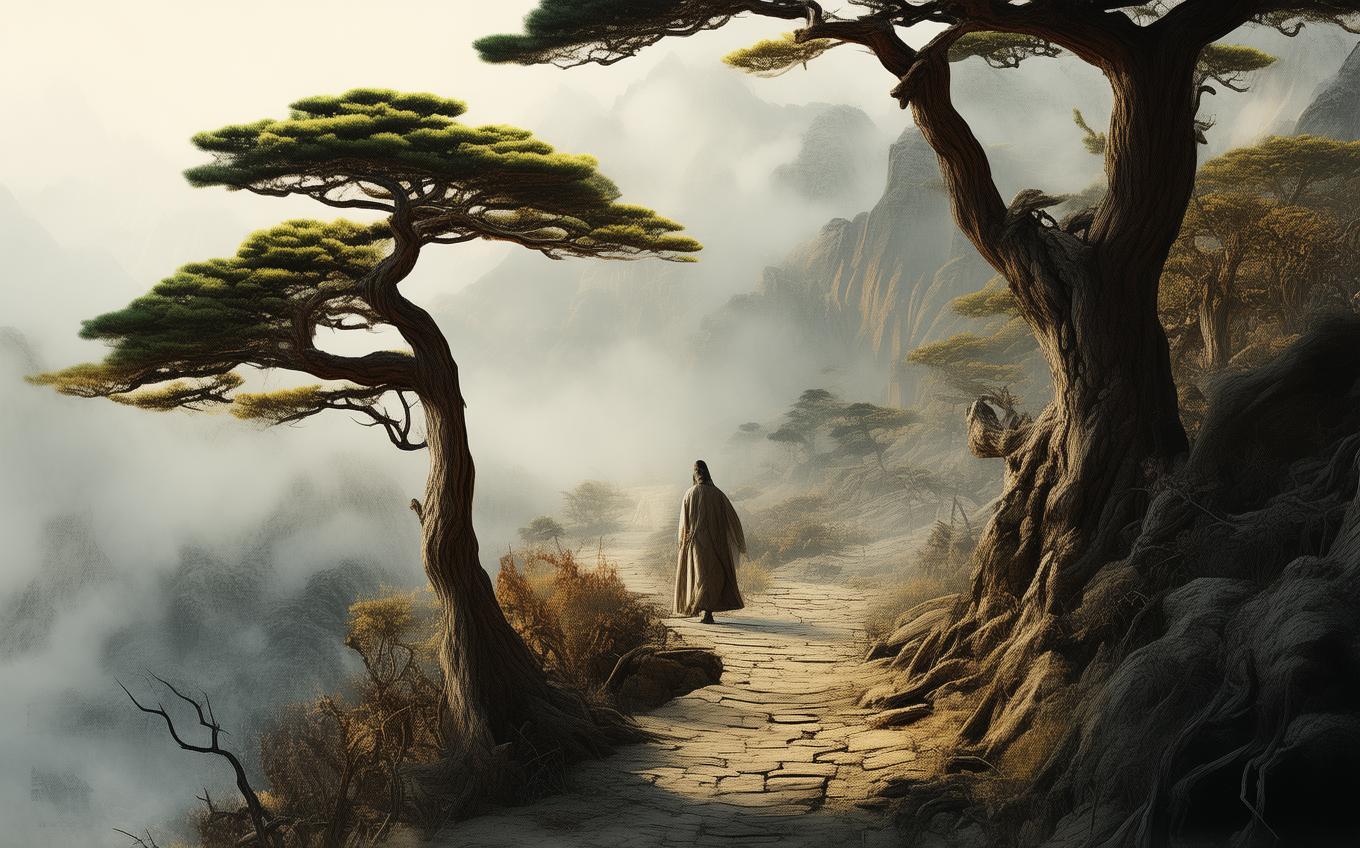
The opening couplet sets a vast, frozen stage. “岁云暮矣多北风” announces the end of the year with the insistent north wind—a natural force that in Chinese poetry often signals hardship and the passing of time. “潇湘洞庭白雪中” zooms out to the legendary Xiao, Xiang, and Dongting waters, now vanished under snow. The white expanse is not a pristine wonderland but a shroud of cold, isolating the figures about to appear.
Immediately, we see those figures: a fisherman and Mòyáo hunters. “渔父天寒网罟冻” paints the fisherman’s physical struggle—his nets stiff and useless in the icy water. The line echoes the old poetry of the recluse-fisherman, but here the ideal gives way to raw survival. “莫徭射雁鸣桑弓” introduces the ethnic Mòyáo (Yao) people, hunting geese with simple mulberry-wood bows. The “twang” (míng) is an audible cry against the muffled silence of snow, a desperate act of getting food, not sport.
The third couplet turns to economics with savage irony. “去年米贵阙军食” recalls the previous year’s high grain prices that starved the army; “今年米贱太伤农” sees the pendulum swing: now rice is so abundant and cheap that peasants are ruined. The seesaw of war-time grain policy crushes everyone—soldiers last year, farmers this year. Du Fu highlights a broken system where no one truly benefits.
Then comes the famous indictment: “高马达官厌酒肉,此辈杼柚茅茨空.” The rich officials, high on their horses, are sick of wine and meat—they’ve had more than enough. But “these people” (the peasants, fishermen, hunters) have empty looms (zhùzhóu, the shuttle and spool of a loom, standing for the entire weaving livelihood) and bare thatched huts. The parallel structure makes the injustice stark: overfed versus empty, high versus low.
Lines 9–10 swerve into a puzzling advice: “楚人重鱼不重鸟,汝休枉杀南飞鸿.” The folk of Chu (the region around the lakes) are said to value fish over goose meat. So, Du Fu tells the hunters, don’t kill the wild geese migrating south in vain. At one level, it’s a pragmatic note. At another, the swan goose (hóng) is a traditional messenger of letters and a symbol of displaced wanderers; killing them feels like destroying a last link of communication or even hope. There is also a possible subtext: why waste effort on hunting geese when the real predators are human?
The next couplet is the emotional abyss of the poem. “况闻处处鬻男女,割慈忍爱还租庸.” The adverb kuàng (moreover, worse still) tightens the screw. Not just poverty—children are being sold. The phrase “割慈忍爱” (cut off love, endure the pain of love) is a masterpiece of compressed agony; parents are literally severing the most natural bond to satisfy zū yōng, the tax and corvée obligations. This is a direct report from the poet-as-journalist, documenting a moral collapse where the state devours families.
Lines 13–16 shift to monetary corruption. Du Fu complains that in the past, counterfeiting coins was treated as a serious crime (“捉私铸”), but now the government itself debases the currency by mixing lead and tin with bronze. The money becomes worthless, and farmers are paid with dross. He sarcastically suggests “刻泥为之最易得”—just carve coins from clay, it would be easiest of all. The point: if you’re going to cheat with bad money, why bother with metal? Good and bad are hopelessly blurred, and “好恶不合长相蒙” (quality and shoddiness should not be perpetually confused) is a cry for moral and economic integrity.
The final couplet brings the scope universal. “万国城头吹画角”—on the ramparts of all the “ten thousand states” (i.e., the empire’s countless cities), painted bugles sound. The bugle calls likely signal curfew, troop movements, or alarm; they are the soundtrack of permanent warfare. The poet asks, “此曲哀怨何时终?”: When will this melody of grief and resentment end? The question hangs in the air, unanswered, as wintry as the snowscape that opened the poem.
Themes and Symbolism
Social Injustice and the Suffering of Common People
Du Fu is often called “the poet of the people,” and “岁晏行” shows why. He juxtaposes the bloated luxury of officialdom with the destitution of fishermen, hunters, and peasant families forced to sell their children. The poem is a catalog of economic wounds—frozen nets, empty looms, child trafficking, debased currency. The winter cold is a metaphor for a political climate that freezes the weak while insulating the powerful.
War and Its Costs
The background hum of the poem is the everlasting An Lushan Rebellion (755–763) and subsequent provincial wars. “万国城头吹画角” announces that the entire empire has become an armed camp. The war disrupts grain supplies, destabilizes currency, and demands endless taxes. Although the poem never shows a single battle, war is the invisible engine behind the misery.
Nature as Witness and Mirror
The vast, white landscape is not just setting but a moral mirror. The snow blankets everything equally, yet it also reveals the economy’s fractures: frozen nets betray the fisherman’s paralysis. The geese, symbols of migration and separation, become victims themselves—mirroring the displaced families. Nature does not comfort; it amplifies the bleakness.
Moral Decay and the Blurring of Good and Bad
The adulteration of coinage serves as a powerful metaphor for a world where authentic value is lost. Du Fu’s attack on “铅锡和青铜” is a complaint against the shoddy replacement of substance with counterfeit. This extends to the social fabric: officials who should provide care gorge themselves while those they should protect are eaten by the state. The poet’s plea that “好恶不合长相蒙” is a call for moral clarity in a time when all distinctions—rich and poor, worth and waste—are deliberately obscured.
Cultural Context
Du Fu lived through the cataclysm of the An Lushan Rebellion, which killed millions and toppled the Tang Dynasty from its golden peak. By the time he wrote “岁晏行,” he was in his late fifties, wracked by illness, and traveling through the south where he witnessed the aftermath. The poem’s title, “岁晏,” uses yàn (late, peaceful) with a terrible irony—there is no peace at year’s end, only desperation. The “xíng” (song or ballad) genre is often narrative and socially conscious, tracing back to Han Dynasty folk ballads, and Du Fu reinvigorates it as high art.
The economic details are startlingly specific. Tang Dynasty taxation included land tax, household tax, and corvée labor; after the rebellion, local warlords often levied additional exactions. The debasement of currency was a real problem: the government minted inferior coins that fueled inflation, punishing the poor. “鬻男女” was a documented horror, with parents selling children to pay debts or survive. Du Fu’s poetry thus serves as a primary source for the social history of the eighth century.
Philosophically, the poem reflects a Confucian vision turned to ash. A central Confucian ideal is that the ruler and his magistrates should act as parents to the people, providing security and moral example. Here, parents are literally forced to give up their children because the state devours them. The natural order (tiānlǐ) is inverted; heaven’s mandate seems absent. This is Du Fu’s tragic humanism: he never loses his loyalty to the Tang, but he cannot ignore its crimes.
For English readers familiar with the Western tradition, “岁晏行” can be placed alongside the satirical grimness of Juvenal or the social realism of Charles Dickens. There is no heroic redemption, only the raw cry “此曲哀怨何时终?”—a question for the ages.
Conclusion
“岁晏行” endures because it refuses to look away. Du Fu took the conventional “year’s end” poem—traditionally a time for reflection, reunion, and hope for renewal—and turned it into an unflinching chronicle of shattered lives. The cold that freezes nets also freezes hearts; the snow that blankets Dongting also covers a child sold to pay a tax. Yet within this lament lies a profound act of witness. To name the suffering, to frame it in such exquisite and terrible verse, is itself a form of resistance.
More than twelve centuries later, the poem still asks its final question. The painted bugles of our own troubled world may sound different, but the melody of grief and the longing for justice remain exactly the same. Du Fu’s winter song is not a comfort—it is a challenge, as sharp and cold as the north wind.
Comments (0)
No comments yet. Be the first to comment!