Analysis of "經破薛舉戰地" - Classical Chinese Poetry
Introduction
In the rich tapestry of classical Chinese poetry, few voices blend the steel of a conqueror with the sensitivity of a philosopher as seamlessly as that of Emperor Taizong of Tang (唐太宗, Táng Tàizōng), born Li Shimin (李世民, Lǐ Shìmín). One of the most dynamic rulers in Chinese history, he was both the military genius who consolidated the Tang dynasty and a cultivated patron of the arts. His poem "經破薛舉戰地" (Jīng pò Xuē Jǔ zhàn dì), “Passing by the Battlefield Where Xue Ju Was Defeated,” offers a rare window into the mind of an emperor revisiting the site of a pivotal early victory. Written years after the battle, the poem moves from exhilarating memories of martial glory to a somber meditation on transience, memory, and inner peace. It stands as a defining example of how personal reflection and historical consciousness are woven into Chinese lyricism.
The Poem: Full Text and Translation
經破薛舉戰地
Jīng pò Xuē Jǔ zhàn dì
Passing by the Battlefield Where Xue Ju Was Defeated
昔年懷壯氣,提戈初仗節。
Xī nián huái zhuàng qì, tí gē chū zhàng jié.
In bygone years, I harbored heroic spirit, grasping a halberd, first upholding my sovereign’s command.
心隨朗日高,志與秋霜潔。
Xīn suí lǎng rì gāo, zhì yǔ qiū shuāng jié.
My heart soared with the bright sun, my resolve pure as autumn frost.
移鋒驚電起,轉戰長河決。
Yí fēng jīng diàn qǐ, zhuǎn zhàn cháng hé jué.
Shifting spearpoints startled like lightning rising; turning battles, the long river burst its banks.
營碎落星沈,陣卷橫雲裂。
Yíng suì luò xīng chén, zhèn juǎn héng yún liè.
Encampments shattered like falling stars sinking; formations rolled up, splitting the sprawling clouds.
一揮氛沴靜,再舉鯨鯢滅。
Yī huī fēn lì jìng, zài jǔ jīng ní miè.
One sweep, the miasmal pestilence was stilled; another strike, the great whales were destroyed.
於茲俯舊原,屬目駐華軒。
Yú zī fǔ jiù yuán, zhǔ mù zhù huá xuān.
Here now, I look down upon the old plain, fixing my gaze, halting the ornate carriage.
沈沙無故跡,減竈有殘痕。
Chén shā wú gù jī, jiǎn zào yǒu cán hén.
In the sunken sands, no former traces remain; reduced stoves still bear faint scars.
浪霞穿水淨,峰霧抱蓮昏。
Làng xiá chuān shuǐ jìng, fēng wù bào lián hūn.
Wave-like rosy clouds pierce the limpid waters; peak mists enfold the lotus in dimness.
世途亟流易,人事殊今昔。
Shì tú jí liú yì, rén shì shū jīn xī.
The world’s path swiftly flows and changes; human affairs differ now from then.
長想眺前蹤,撫躬聊自適。
Cháng xiǎng tiào qián zōng, fǔ gōng liáo zì shì.
Long I ponder, gazing at former tracks; touching my own person, I find some ease.
Line-by-Line Analysis
The poem opens with a vigorous flashback. “In bygone years, I harbored heroic spirit” immediately sets the poet’s youthful ardor at center stage. The phrase “提戈初仗節” (grasping a halberd, first upholding my sovereign’s command) is rich with political and personal meaning—Li Shimin was not yet emperor at the time of the battle; he carried the imperial mandate from his father, the founding emperor Gaozu. The pair of lines that follow—“心隨朗日高,志與秋霜潔”—elevates this martial confidence into a moral and spiritual plane. Comparing one’s heart to the high, luminous sun and one’s resolve to pristine autumn frost is a classic technique in Chinese poetry, blending inner purity with cosmic grandeur. The crispness of autumn frost also hints at the ruthless clarity needed in war.
The next four lines explode into action. “移鋒驚電起” (shifting spearpoints startled like lightning rising) and “轉戰長河決” (turning battles, the long river burst its banks) use superlative natural images—lightning and river floods—to convey the speed and overwhelming force of the Tang army. The battlefield is not merely a physical place; it becomes a cosmos in upheaval. “營碎落星沈,陣卷橫雲裂” continues this cosmic metaphor. Shattering enemy camps are falling stars plunging into darkness; rolling up battle formations tears asunder the clouds themselves. The poet paints war not as a human squabble but as a cataclysm reshaping heaven and earth.
The crescendo arrives with “一揮氛沴靜,再舉鯨鯢滅.” Here, the miasmal atmosphere (氛沴, fēn lì) symbolizes the chaotic, noxious force of the rebel leader Xue Ju, while “鯨鯢” (jīng ní), literally male and female whales, is a conventional metaphor for ferocious, man-devouring foes. In two strokes—a wave of the hand, a second raising of arms—order is restored and the monstrous threat is annihilated. The rhythm achieves a sense of divine finality.
Abruptly, the poem shifts to the present. “於茲俯舊原” (here now, I look down upon the old plain) returns us to the poet’s current vantage point. The “華軒” (ornate carriage) signals his imperial status; he is no longer the young general dashing into battle, but a ruler surveying the landscape of memory. What he sees is a world washed clean of his former deeds. “沈沙無故跡” (In the sunken sands, no former traces remain) suggests that the literal marks of combat have been swallowed by time. Yet the next line, “減竈有殘痕,” inserts a subtle, learned allusion. “減竈” (reduced stoves) refers to the stratagem of the Warring States general Sun Bin, who ordered his troops to decrease the number of cooking fires night by night to feign desertion and lure the enemy into a trap. That ghostly tactic still leaves “殘痕” (faint scars) on the landscape, showing that while physical traces vanish, the cunning of human action lingers in memory.
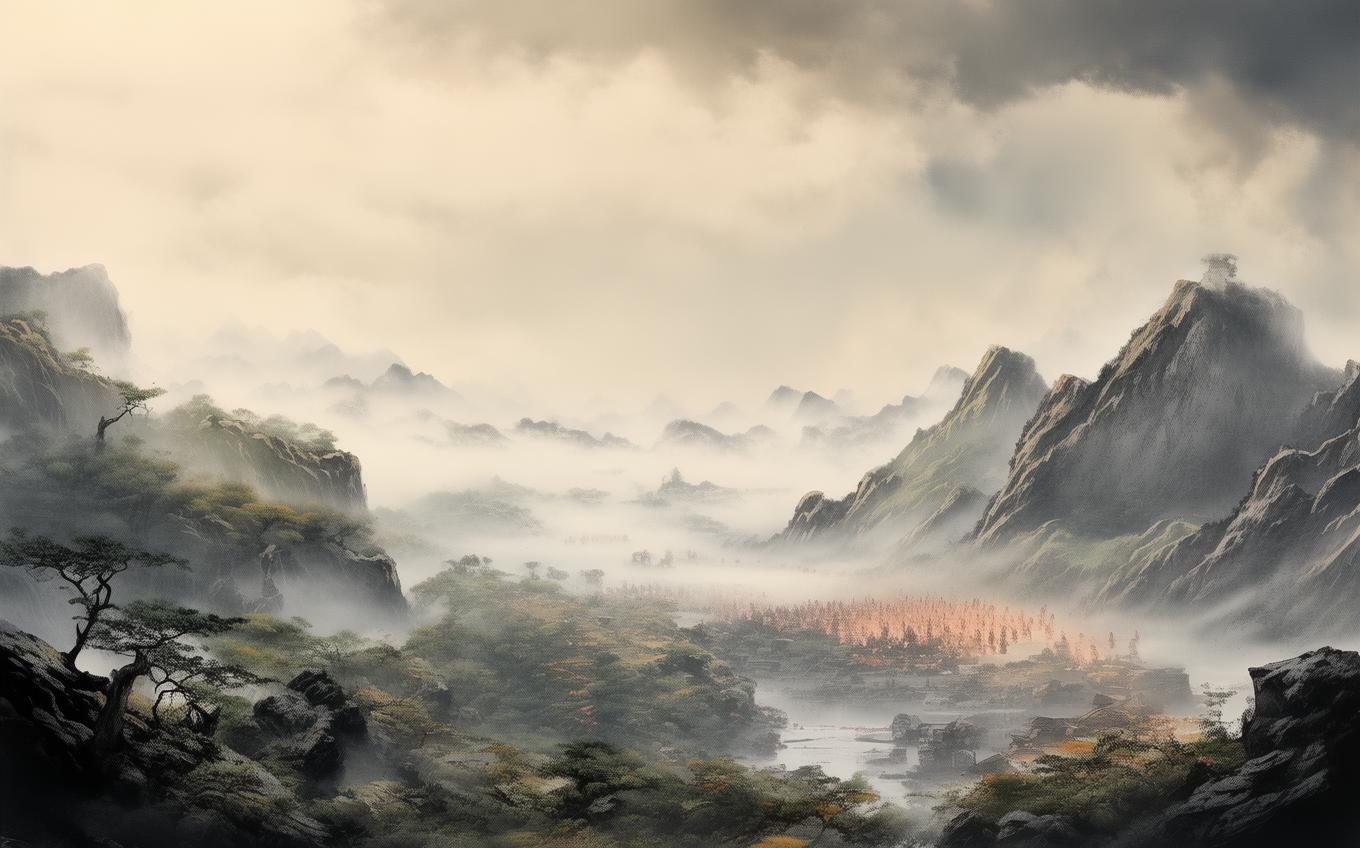
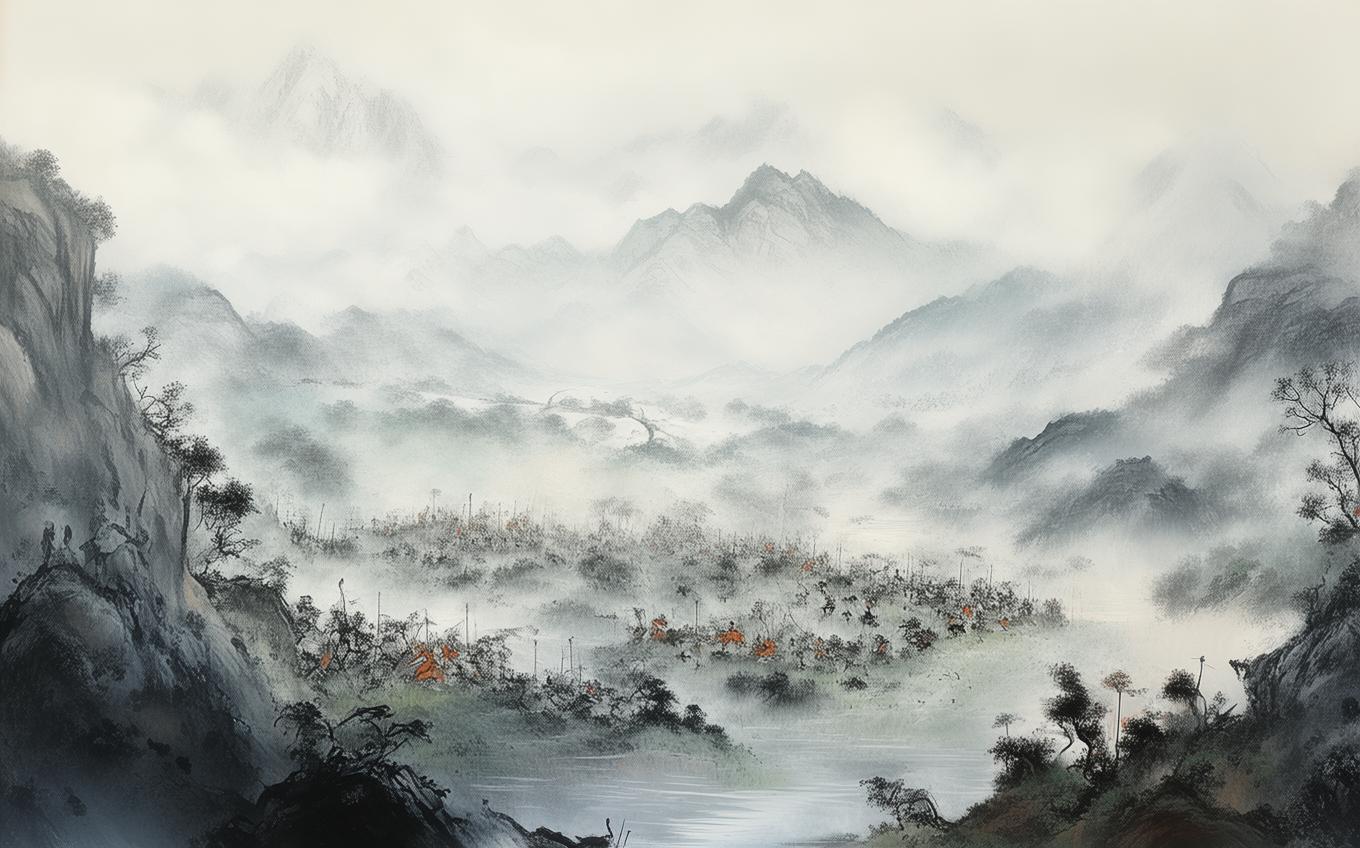
The landscape itself becomes a serene canvas: “浪霞穿水淨,峰霧抱蓮昏.” Wave-like rosy clouds piercing clear water and mist-shrouded peaks embracing a lotus in dim light are images of exquisite natural beauty. The lotus, often a Buddhist symbol of purity emerging from mire, may hint at spiritual cleansing after the bloodshed. The world is peaceful now, but its very tranquility underscores the poem’s central sorrow—how quickly the past dissolves.
The final four lines deliver the philosophical core. “世途亟流易,人事殊今昔” (The world’s path swiftly flows and changes; human affairs differ now from then) is a universal lament on impermanence, echoing the Buddhist and Daoist sense of flux that permeates much Chinese poetry. Yet the closing couplet offers a personal resolution: “長想眺前蹤,撫躬聊自適.” The emperor stands on the old battlefield, long lost in thought, gazing at the vestiges of his own footsteps. Instead of despair, he “touches his own person” and finds a measure of ease (自適). This is not bravado but a quiet acceptance: he has lived his part, the world has moved on, and inner peace comes from acknowledging that truth.
Themes and Symbolism
The poem’s central theme is the transience of heroic achievement. Li Shimin’s
Comments (0)
No comments yet. Be the first to comment!