Introduction
"入潼關" (Rù Tóng Guān, "Entering Tong Pass") is a majestic poem by Emperor Taizong of the Tang Dynasty (Li Shimin, 598–649 CE), one of China’s greatest rulers. Written during a military campaign or a triumphant return to the capital, the poem captures the formidable landscape of the strategic Tong Pass while reflecting the emperor’s soaring ambition and philosophical depth. In just fourteen lines, Li Shimin masterfully blends rugged scenery with historical allusions, creating a work that is both a personal manifesto and a celebration of imperial power. For English-speaking readers, this poem offers a window into the Tang golden age, where poetry was not merely art but a direct expression of statecraft, vision, and the Chinese concept of the "Son of Heaven."
The Poem: Full Text and Translation
崤函稱地險,襟帶壯兩京。
Xiáo Hán chēng dì xiǎn, jīn dài zhuàng liǎng jīng.
The Xiao and Hangu passes are known as perilous terrain; like a collar and belt they fortify the two capitals.
霜峰直臨道,冰河曲繞城。
Shuāng fēng zhí lín dào, bīng hé qū rào chéng.
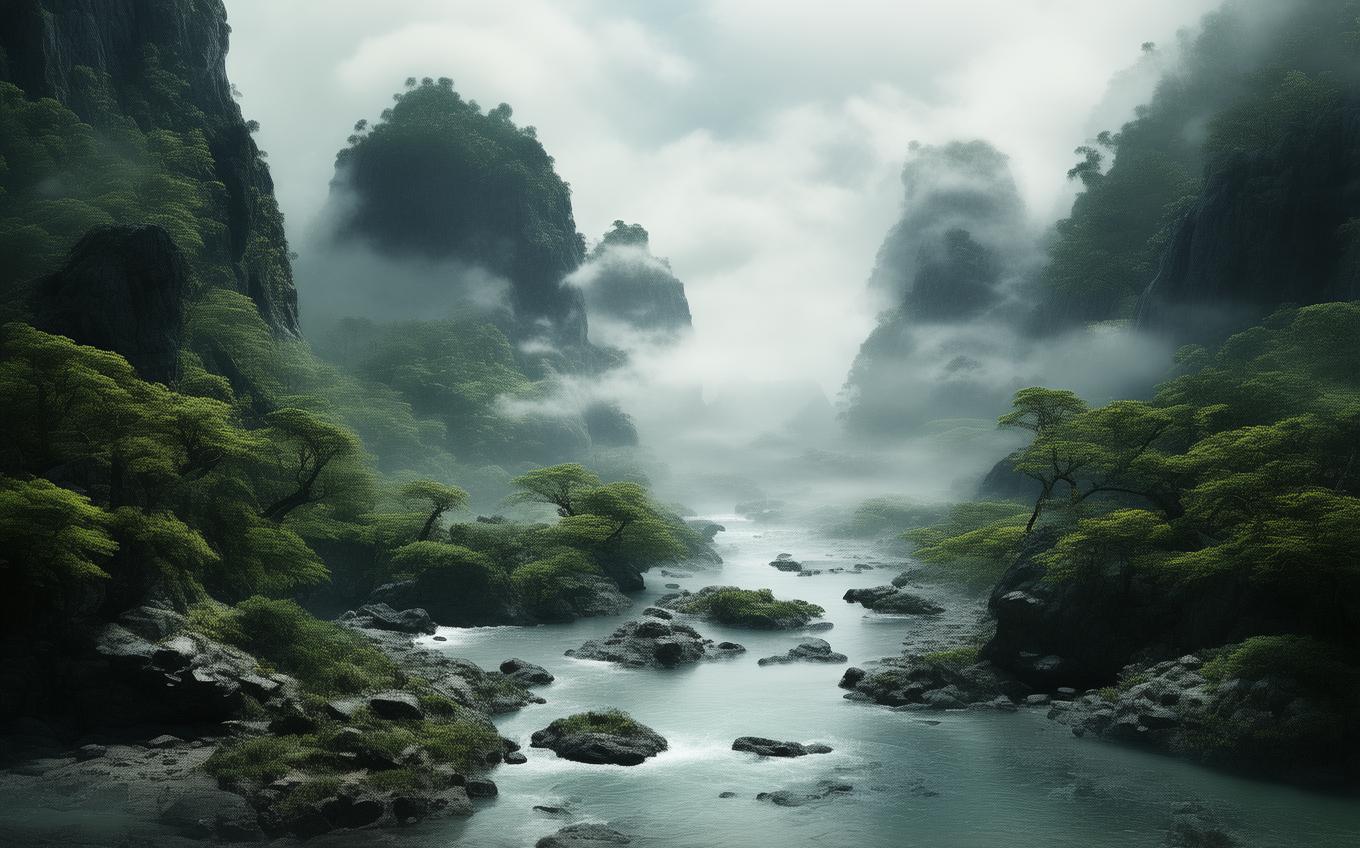
Frosty peaks overlook the road directly; icy rivers meander around the fortress city.
古木參差影,寒猿斷續聲。
Gǔ mù cēn cī yǐng, hán yuán duàn xù shēng.
Ancient trees cast jagged, uneven shadows; cold gibbons’ calls rise and fade, now broken, now continuous.
冠蓋往來合,風塵朝夕驚。
Guān gài wǎng lái hé, fēng chén zhāo xī jīng.
Officials in caps and carriage canopies converge in transit; windblown dust startles at dawn and at dusk.
高談先馬度,偽曉預雞鳴。
Gāo tán xiān mǎ dù, wěi xiǎo yù jī míng.
Lofty conversations spur the horses forward; a false dawn anticipates the rooster’s crow.
棄繻懷遠志,封泥負壯情。
Qì xū huái yuǎn zhì, fēng ní fù zhuàng qíng.
Throwing away the silk travel pass, I cherish a far-reaching ambition; sealing the pass with clay, I carry a heroic sentiment.
別有真人氣,安知名不名。
Bié yǒu zhēn rén qì, ān zhī míng bù míng.
Yet there is an aura of a True Man here; how can one tell what is fame and what is obscurity?
Line-by-Line Analysis
“崤函稱地險,襟帶壯兩京。”
The poem opens with a grand geographical and strategic statement. “崤函” (Xiáo Hán) refers to the Xiao Mountain and the Hangu Pass, a narrow corridor that historically guarded the heartland of China. By pairing these two names, Li Shimin immediately invokes centuries of military lore. He then uses the vivid metaphor “襟帶” (“collar and belt”) to describe how the pass secures the two Tang capitals, Chang’an (modern Xi’an) and Luoyang. Just as a collar wraps the neck and a belt cinches the waist, the pass tightly protects the empire’s center. This double image merges clothing with topography, suggesting both comfort and strength. The emperor positions himself as the wearer of this protective garment.
“霜峰直臨道,冰河曲繞城。”
A cinematic shift moves from grand strategy to a close-up of the winter landscape. Frost-covered peaks “直臨” (directly overlook) the road—an intimidating vertical presence. The “ice river” snakes in a winding curve around the fortress city. The contrast between the straight, sheer mountain and the sinuous river creates a dynamic tension: nature itself seems to be both a guardian and an obstacle. The cold imagery also reinforces the harshness of the campaign season and the resilience required of the ruler and his army.
“古木參差影,寒猿斷續聲。”
Li Shimin adds auditory and visual texture with ancient trees and gibbon cries. “參差” (cēn cī) describes the irregular, jagged shadows cast by the old trees, evoking a sense of age and wildness. Gibbons in Chinese poetry often symbolize melancholy, solitude, or the longing of a wanderer. Here their intermittent calls (“斷續聲”) pierce the cold air, a broken soundtrack that echoes the ruggedness of the journey. The landscape is not merely scenic; it is alive with history and emotion.
“冠蓋往來合,風塵朝夕驚。”
From the natural world, the lens turns to human activity. “冠蓋” (caps and canopies) is a synecdoche for officials and dignitaries traveling through the pass. Their comings and goings converge here, highlighting Tong Pass as a vital artery of the empire. Yet this bustle is shadowed by “風塵” (wind and dust), a classical metaphor for the chaos of war and the turmoil of mortal affairs. “朝夕驚” (startled at dawn and dusk) suggests that even in moments of apparent order, the pass remains a place of sudden alarms—a fitting reminder of the emperor’s constant vigilance.
“高談先馬度,偽曉預雞鳴。”
This couplet captures the urgency and ambition of the traveler. “高談” (lofty talk) implies confident strategy sessions or morale-boosting words that seem to drive the horses onward. “偽曉預雞鳴” describes a false dawn that arrives before the rooster crows—an illusion of daybreak that propels the party to rise early and press forward. The lines hint at Li Shimin’s restless drive: he cannot wait for the natural order; he shapes his own destiny, turning night into day through sheer will.
“棄繻懷遠志,封泥負壯情。”
Here, Li Shimin folds in two rich historical allusions. “棄繻” refers to the Han dynasty official Zhong Jun, who tore up his travel pass at the Hangu Pass and declared he would return only in triumph—a gesture of unwavering ambition. “封泥” recalls the ancient practice of sealing a pass with clay to defend against invaders, bearing “壯情” (heroic sentiment). The emperor self-consciously embodies both roles: the young visionary who abandons safety for greatness, and the guardian who seals the realm. The parallel structure perfectly balances personal aspiration with imperial duty.
“別有真人氣,安知名不名。”
The concluding couplet elevates the poem to a Daoist-infused philosophical plane. “真人” (True Man) denotes a perfected being, an enlightened sage, or in imperial context, the “Son of Heaven” who rules through virtue rather than mere might. Li Shimin claims that this aura (“氣”) transcends the worldly distinction between fame and anonymity. Whether history remembers his name or not becomes irrelevant; the genuine ruler’s power lies in an inner essence that aligns with the cosmos. It is a startlingly modest yet confident closure from a conqueror—a reminder that true greatness resists being trapped by reputation.
Themes and Symbolism
Strategic Geography as Imperial Body
The poem repeatedly links landscape and sovereignty. The mountains and passes become an extension of the emperor’s own body, with the “collar and belt” metaphor suggesting an intimate, almost clothing-like protection. This fusion of self and territory is a core Chinese political concept: the ruler’s virtue secures the land just as the land secures the people.
Ambition and Restless Motion
Motion pervades the poem—horses crossing, officials rushing, dust swirling, dawn looming. This kinetic energy mirrors Li Shimin’s own life of constant campaign and consolidation. The allusions to Zhong Jun and the false dawn celebrate proactive striving, not passive waiting.
The Transience of Fame vs. Inner Authenticity
The final lines introduce a Daoist paradox: the “true man” does not need a name. For a ruler who had fought bitterly for the throne, this might be read as a serene afterthought, or a profound realization that legitimacy ultimately rests on spiritual authority, not political propaganda.
Cultural Context
Emperor Taizong reigned from 626 to 649, a period often regarded as the pinnacle of Chinese imperial glory. He was not only a brilliant military strategist but also a patron of the arts and a poet himself. “入潼關” was likely composed around 621, when Li Shimin returned from a victorious campaign against warlords in the east. Tong Pass, located in present-day Shaanxi, was the eastern gateway to the capital Chang’an; entering it meant returning home in triumph. In Chinese literary tradition, mountain passes are liminal spaces—thresholds where historical memory, personal ambition, and cosmic order intersect. Li Shimin’s poem participates in a long tradition of “pass poems” (e.g., Du Fu’s “潼關吏”) while infusing it with imperial authority. The blend of Confucian duty (guarding the realm), Daoist detachment (the True Man’s aura), and literary elegance reflects the sophisticated synthesis that defined Tang culture.
Conclusion
“入潼關” endures because it operates on multiple levels: a travelogue of a harsh winter crossing, a strategic hymn to the empire’s defenses, a personal declaration of exceptional ambition, and a philosophical riddle on fame. For modern readers, the poem’s vivid imagery still conjures the biting cold, the echoing gibbons, and the dust of anxious travelers. But its true power lies in the voice of a ruler who could conquer both a pass and his own ego, who could see in a rugged mountain gate a mirror of his own divine mandate. In an age of noisy self-promotion, Li Shimin’s final question—how can one tell what is fame and what is obscurity?—remains a quiet, regal whisper worth hearing.
Comments (0)
No comments yet. Be the first to comment!