Analysis of "春日玄武門宴羣臣" - Classical Chinese Poetry
Introduction
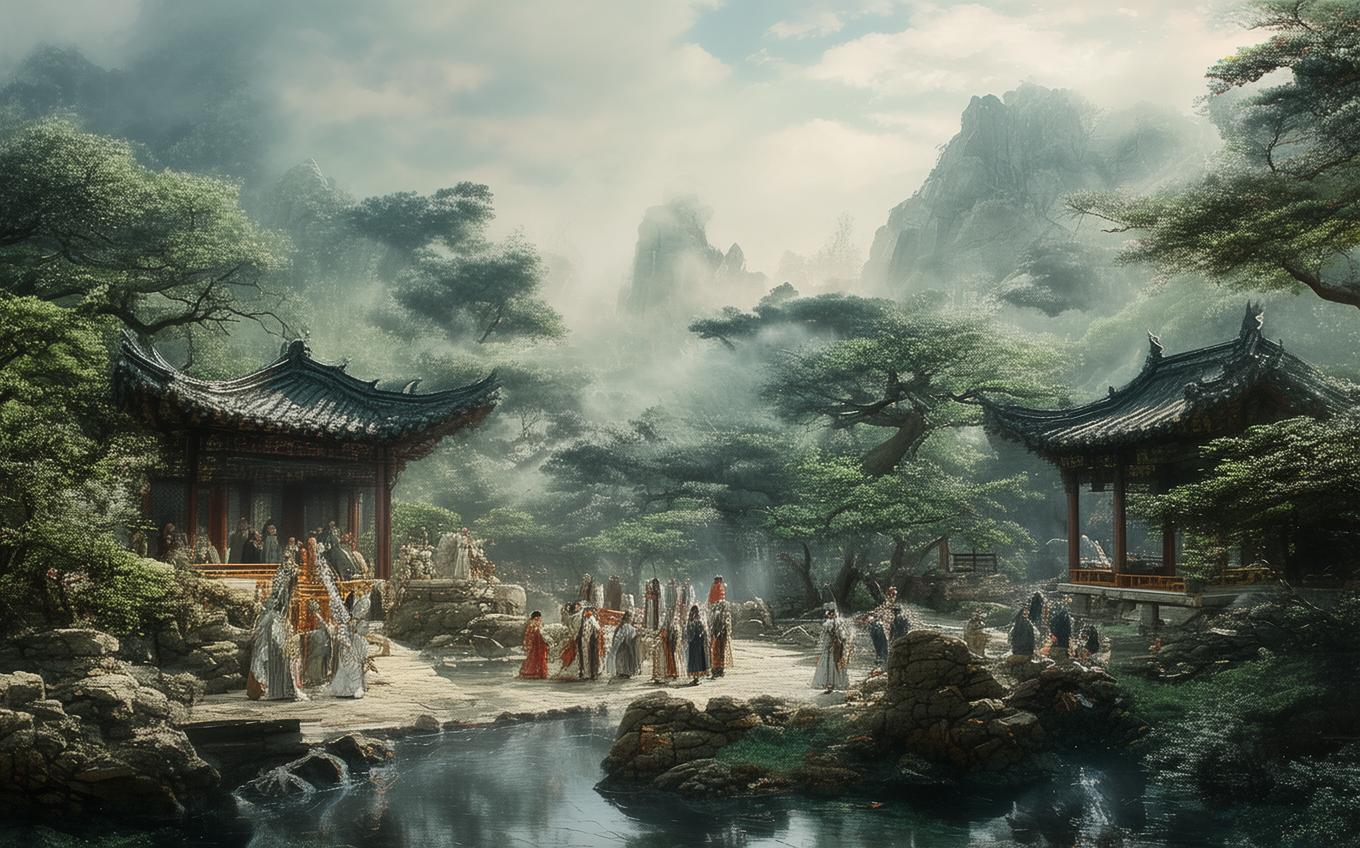
The poem Chunri Xuanwumen Yan Qunchen (Spring Day Banquet for Officials at the Xuanwu Gate) was composed by Emperor Taizong of Tang (Li Shimin, 598–649), one of the most celebrated rulers in Chinese history. His reign, known as the Zhenguan Era, is often idealized as a golden age of peace, prosperity, and good governance. The poem was written for a grand court banquet held at the Xuanwu Gate in the imperial palace, a location heavy with political history — it was here that Li Shimin had once seized power in a bloody coup. By hosting a spring feast at this same gate, the emperor transformed a site of conflict into one of harmony, renewal, and cosmopolitan splendor. This poem is a refined expression of imperial authority, cultural confidence, and the Confucian ideal of a humble ruler who seeks worthy ministers. It stands as a landmark of early Tang dynastic poetry, blending vivid imagery with moral reflection.
The Poem: Full Text and Translation
韶光開令序
sháo guāng kāi lìng xù
Beautiful spring light opens the seasonal order;
淑氣動芳年
shū qì dòng fāng nián
gentle air stirs the fragrant year.
駐輦華林側
zhù niǎn huá lín cè
The imperial carriage halts by the Flowery Forest;
高宴柏梁前
gāo yàn bǎi liáng qián
a lofty banquet is set before the Cypress Beam Terrace.
紫庭文珮滿
zǐ tíng wén pèi mǎn
In the purple courtyard, patterned jade pendants fill the scene;
丹墀衮紱連
dān chí gǔn fú lián
on the vermilion steps, dragon robes and ribbons are arrayed.
九夷簉瑤席
jiǔ yí zào yáo xí
The nine eastern tribes gather at the jade-like mats;
五狄列瓊筵
wǔ dí liè qióng yán
the five northern tribes line up at the gem-like feast.
娛賓歌湛露
yú bīn gē zhàn lù
To delight the guests, they sing “Heavy Dew”;
廣樂奏鈞天
guǎng yuè zòu jūn tiān
grand music performs the “Heavenly Harmony.”
清尊浮綠醑
qīng zūn fú lǜ xǔ
Clear goblets float with green vintage wine;
雅曲韻朱絃
yǎ qǔ yùn zhū xián
elegant melodies harmonize with vermilion strings.
粵余君萬國
yuè yú jūn wàn guó
Ah, I rule over ten thousand states,
還慚撫八埏
hái cán fǔ bā yán
yet I am ashamed to govern the eight frontiers.
庶幾保貞固
shù jī bǎo zhēn gù
I can only hope to preserve steadfast integrity;
虛己厲求賢
xū jǐ lì qiú xián
emptying myself, I strive to seek the worthy.
Line-by-Line Analysis
Lines 1–2: Spring’s Arrival
The poem begins with a classic evocation of early spring. “韶光” (beautiful light) is a poetic term for the season’s gentle radiance, while “令序” refers to the orderly progression of the months. The phrase “淑气动芳年” suggests that the very air is infused with mildness (“淑气”), stirring the fragrance of a prosperous year. This opening establishes a tone of natural harmony that mirrors the political harmony the emperor wishes to project at the banquet.
Lines 3–4: The Imperial Setting
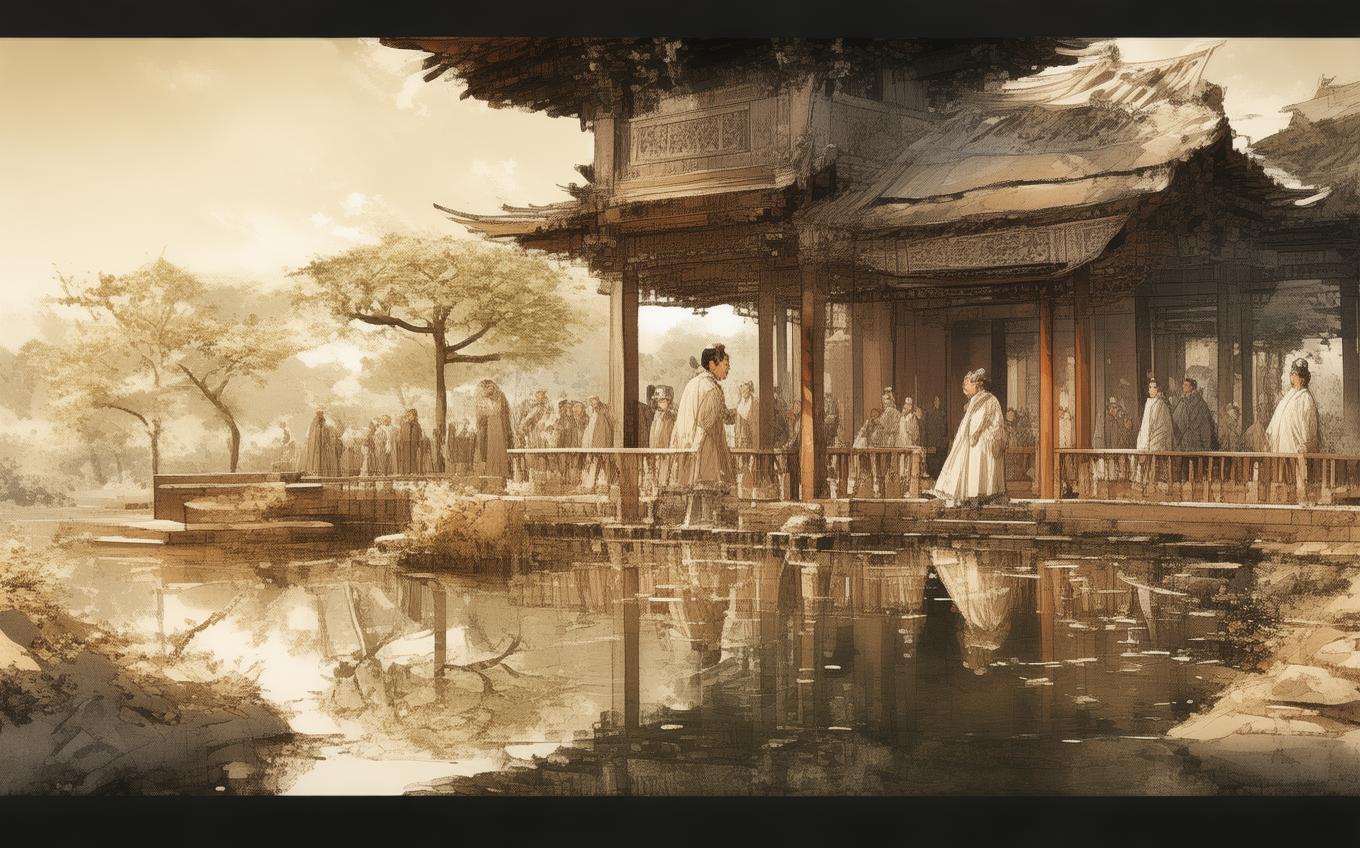
Emperor Taizong places his carriage beside the “华林” (Flowery Forest), the imperial garden famous for its beauty, and the banquet is set “before the Cypress Beam Terrace” (“柏梁”). The Cypress Beam Terrace was a legendary site where Emperor Wu of Han hosted grand feasts and encouraged his ministers to compose poems. By invoking this historical allusion, Taizong aligns himself with the hero-kings of the past, signaling that this gathering will be both elegant and politically meaningful.
Lines 5–6: The Splendor of the Court
The “purple courtyard” and “vermillion steps” denote the sacred spaces of the imperial palace, traditionally associated with the celestial realm. The courtiers wear jade pendants (“文珮”) that clink softly as they move, and their “衮紱” — embroidered dragon robes and ceremonial ribbons — create a continuous display of rank and dignity. The imagery of “满” (filling) and “连” (connecting) conveys a sense of abundance and unity among the officials, a visual representation of a well-ordered dynasty.
Lines 7–8: A Cosmopolitan Empire
The poem expands outward to show foreign envoys from the four directions. The “九夷” (nine eastern tribes) and “五狄” (five northern tribes) are archaic terms for non-Chinese peoples, here seated on precious mats (“瑶席”, “琼筵”). The use of the verbs “簉” (gathered side by side) and “列” (lined up) emphasizes peaceful coexistence and inclusion. This image of barbarian chieftains attending the imperial feast is a powerful statement of the Tang Empire’s cultural magnetism and military supremacy.
Lines 9–10: Music of Celebration
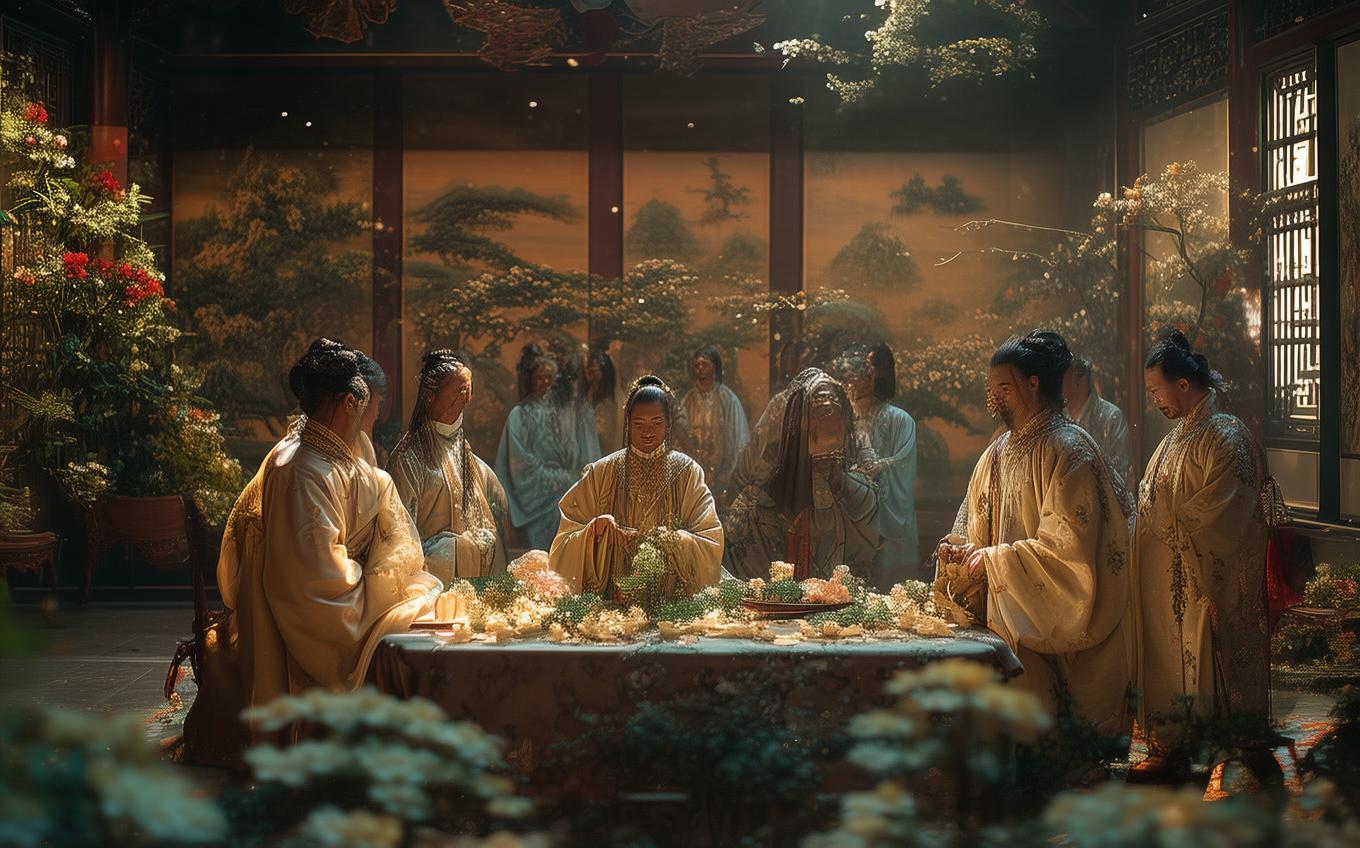
Entertainment at the banquet draws on deep cultural roots. “湛露” (“Heavy Dew”) is a poem from the Book of Songs that describes a lord feasting his guests and exhorting them to virtue and loyalty. By singing this ancient ode, the emperor reminds his court that genuine partnership endures only through shared moral commitment. “钧天” (“Heavenly Harmony”) refers to music of the central heaven, a divine melody heard only by sages. The pairing suggests that this feast bridges earthly joy and celestial perfection.
Lines 11–12: Wine and Strings
The sensory pleasures continue with “清尊浮绿醑” — clear drinking vessels floating with a green, unfiltered wine prized in medieval China. The adjective “绿” (green) carries connotations of freshness and vitality. The music’s “雅曲” (elegant melodies) resonate with “朱弦” (vermilion strings), instruments often used in Confucian ritual. Every detail, from the color of the wine to the hue of the strings, reinforces a sense of refinement and ritual order.
Lines 13–14: The Emperor’s Self-Reflection
A sudden shift into
Comments (0)
No comments yet. Be the first to comment!