Introduction
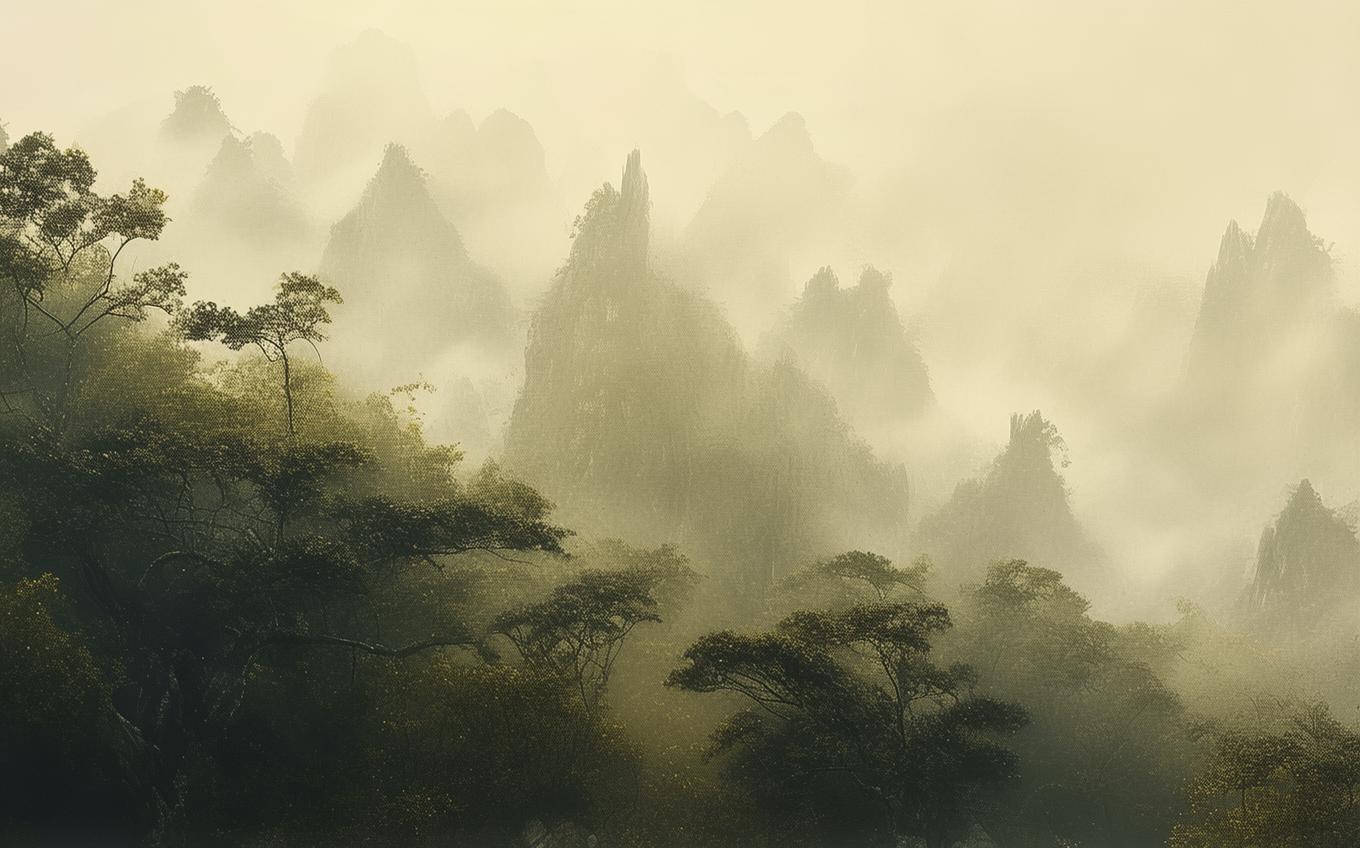
Li Bai (701–762), one of the most celebrated poets of the Tang dynasty, is renowned for his romantic spirit, love of nature, and Daoist inclinations. In the poem “望終南山寄紫閣隱者” (Wàng Zhōngnán Shān Jì Zǐgé Yǐnzhě — “Gazing at Mount Zhongnan, Sent to the Hermit of Purple Pavilion”), he turns his gaze toward the Zhongnan Mountains, a range long revered as a dwelling place for recluses and immortals. This poem is both a landscape depiction and a deeply personal meditation: Li Bai admires the mountain’s beauty from a distance, then voices a longing to abandon worldly cares and join a hermit friend in that pristine realm. Through deceptively simple language, the poem reveals the Tang dynasty aesthetics of reclusion, the spiritual dialogue between man and nature, and Li Bai’s own unquenchable desire for freedom.
The Poem: Full Text and Translation
出門見南山,
Chū mén jiàn nán shān,
Stepping outside my gate, I see the South Mountain,
引領意無限。
Yǐn lǐng yì wú xiàn.
I crane my neck — my thoughts boundless.
秀色難為名,
Xiù sè nán wéi míng,
Its exquisite beauty — words fail to name it,
蒼翠日在眼。
Cāng cuì rì zài yǎn.
Deep green and azure blue fill my eyes each day.
有時白雲起,
Yǒu shí bái yún qǐ,
Sometimes white clouds rise up,
天際自舒捲。
Tiān jì zì shū juǎn.
Unfurling and curling at the sky’s edge, all of their own accord.
心中與之然,
Xīn zhōng yǔ zhī rán,
My heart moves in harmony with them,
託興每不淺。
Tuō xìng měi bù qiǎn.
The inspiration I entrust to them is never shallow.
何當造幽人,
Hé dāng zào yōu rén,
When shall I visit that recluse,
滅跡棲絕巘?
Miè jì qī jué yǎn?
Erase my tracks, and dwell on those sheer cliffs?
Line-by-Line Analysis
Opening couplet: “出門見南山,引領意無限。”
The poem begins with an act of spontaneous perception — simply stepping out the door, the poet sees the Zhongnan Mountains (referred to as “South Mountain,” a common metonym). The phrase “引領” (yǐn lǐng), literally “stretch the neck,” conveys an eager, almost instinctive longing. “意無限” (yì wú xiàn — thoughts/feelings without limit) immediately expands a simple glance into an emotional and philosophical experience. Li Bai does not yet name what he feels; instead, he lets the boundlessness of the moment speak. The mountain is more than a view — it is a summons to the soul.
Describing beauty: “秀色難為名,蒼翠日在眼。”
Here the poet admits the inadequacy of language. “秀色” (xiù sè — elegant beauty) is so profound that it “cannot be named,” echoing the Daoist idea that true reality eludes description. The mountain’s colors — “蒼翠” (cāng cuì), deep green blending into blue — are not a one-time spectacle but a daily presence: “日在眼” (rì zài yǎn), “every day before my eyes.” This familiarity does not breed contempt; rather, it deepens the bond. The mountain becomes a constant, almost meditative companion.
The clouds’ freedom: “有時白雲起,天際自舒捲。”
White clouds are a classic symbol of Daoist reclusion — insubstantial, drifting without purpose, free from human constraints. Li Bai watches them rise and move “自舒捲” (zì shū juǎn), unfurling and rolling up by themselves, a word that emphasizes natural spontaneity (zìrán, 自然). Nothing forces them; they simply unfold. The poet’s eye follows them to the far horizon, merging the immediate landscape with the infinite sky.
Heart’s response: “心中與之然,託興每不淺。”
The poem now turns inward. “心中與之然” — his heart becomes “thus” with the clouds and the mountain, a state of resonance where inner and outer landscapes mirror each other. The character “然” (rán) implies a natural accord, an unforced alignment. “託興” (tuō xìng) means entrusting one’s inspirations or poetic feelings to the scene. Li Bai asserts that this borrowed inspiration is “每不淺” (měi bù qiǎn) — never shallow, always profound. Nature for him is not mere decoration; it is the source of his deepest creative and spiritual stirrings.
Wish for reclusion: “何當造幽人,滅跡棲絕巘?”
The closing couplet reveals the poem’s addressee: a “幽人” (yōu rén), a hermit or hidden person, living on Purple Pavilion (Zige), a peak in the Zhongnan range. “何當” (hé dāng) — “when shall I” — is filled with yearning and uncertainty. “滅跡” (miè jì) — “erase my tracks” — implies a complete vanishing from the world of men, while “棲絕巘” (qī jué yǎn) — “perch on sheer cliffs” — paints a picture of sublime isolation. The poem ends not with resolution but with a question, leaving the longing suspended like the clouds at the sky’s edge.
Themes and Symbolism
- Nature as Spiritual Mirror: The mountain and clouds are not just scenery; they reflect the poet’s inner state. The “boundless thoughts” find echo in the limitless mountain views, and the self-unfurling clouds embody the Daoist ideal of spontaneous, unattached existence.
- Reclusion and the Ideal Hermit: “幽人” (the hidden one) represents an escape from officialdom, social roles, and the taint of worldly ambition. The Zhongnan Mountains had been famous since early times as a haven for such men, and Li Bai’s wish to “erase his tracks” expresses the perennial Chinese literati dream of retreat.
- The Limits of Language: “難為名” (hard to name) touches on a key concept in both Daoism and Chinese poetics — the recognition that ultimate beauty or truth exceeds verbal description. The poet can only gesture toward it and let the reader inhabit the feeling.
- Unity of Heart and World: The phrase “心中與之然” echoes the Neo-Daoist and Chan Buddhist idea that when the mind is still, the world’s nature is immediately perceived. There is no gap between observer and observed; inspiration flows directly.
Cultural Context
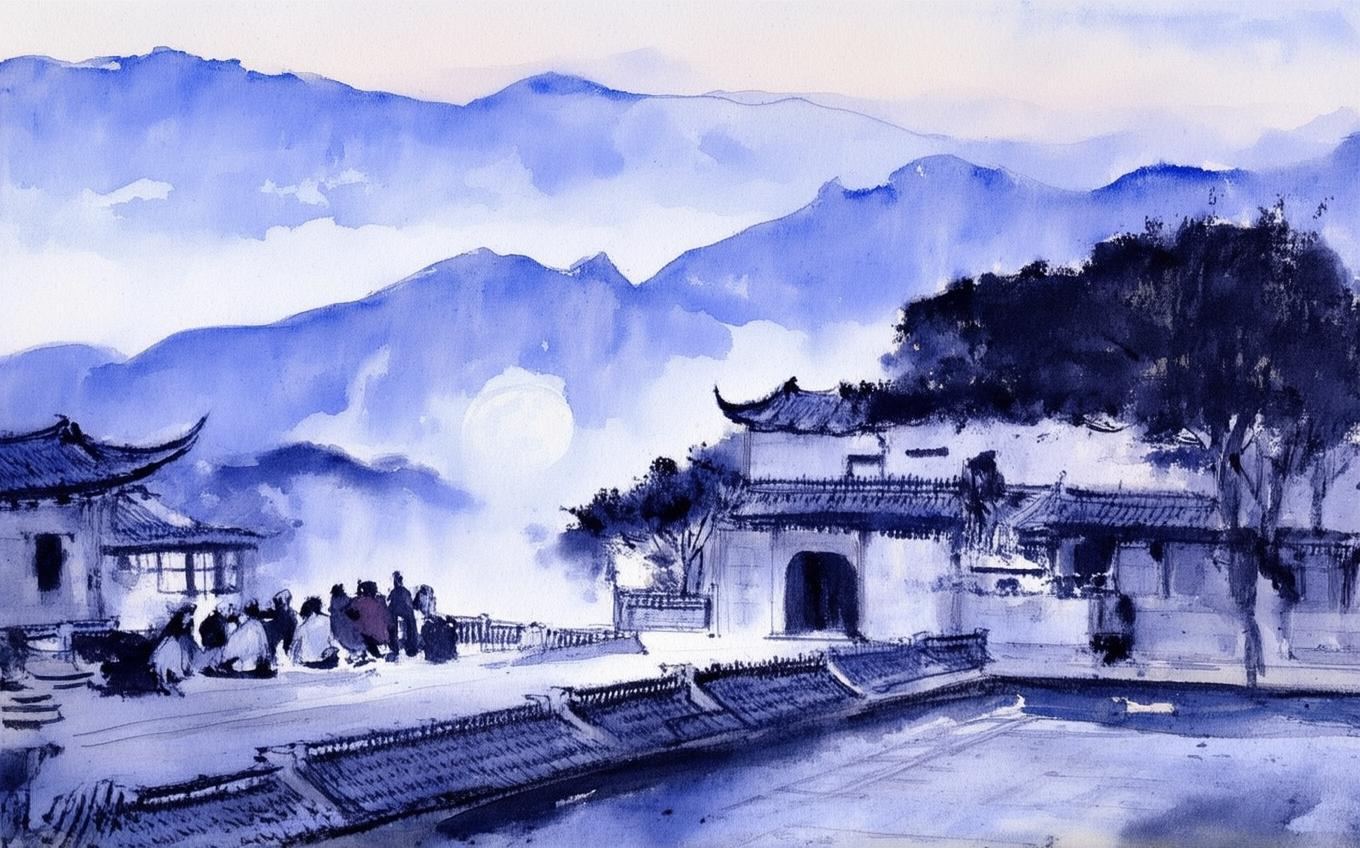
Li Bai lived during the High Tang, an era of cosmopolitan culture, yet also a time when the imperial examination system and court politics created a tension between public service and private freedom. The Zhongnan Mountains, located south of the capital Chang’an (modern Xi’an), were a real and symbolic destination for scholar-officials who wished to retire from the “dusty world.” The poem is dedicated to a hermit of the Purple Pavilion, one of the mountain’s scenic peaks, indicating a network of like-minded friends who chose the life of a recluse. By addressing a “hidden person,” Li Bai participates in a long epistolary tradition: sending poems to absent friends was a way to bridge physical distance and share spiritual aspirations.
Furthermore, the Daoist resonance is unmistakable. The self-so movement of clouds (“自”) and the word “然” (natural, so-of-itself) invoke the core Daoist concept of ziran (自然). For Li Bai, the mountain landscape is not only beauty but a teacher of how to live. His longing to “extinguish tracks” echoes the Daoist sage who obliterates all traces of egotistical striving.
Conclusion
“望終南山寄紫閣隱者” captures a fleeting moment — a gaze at a familiar mountain — and expands it into a meditation on language, nature, and the life well-lived. With its effortless imagery and spare language, the poem demonstrates Li Bai’s unique ability to make the cosmic feel intimate. The white clouds that rise and unroll remain a perfect emblem of freedom, and the final unanswered question still vibrates with longing. For a modern reader, the poem is a quiet invitation: to step outside, look up, and let the heart move in harmony with the view — even if just for a moment, words become unnecessary.
Comments (0)
No comments yet. Be the first to comment!