Introduction
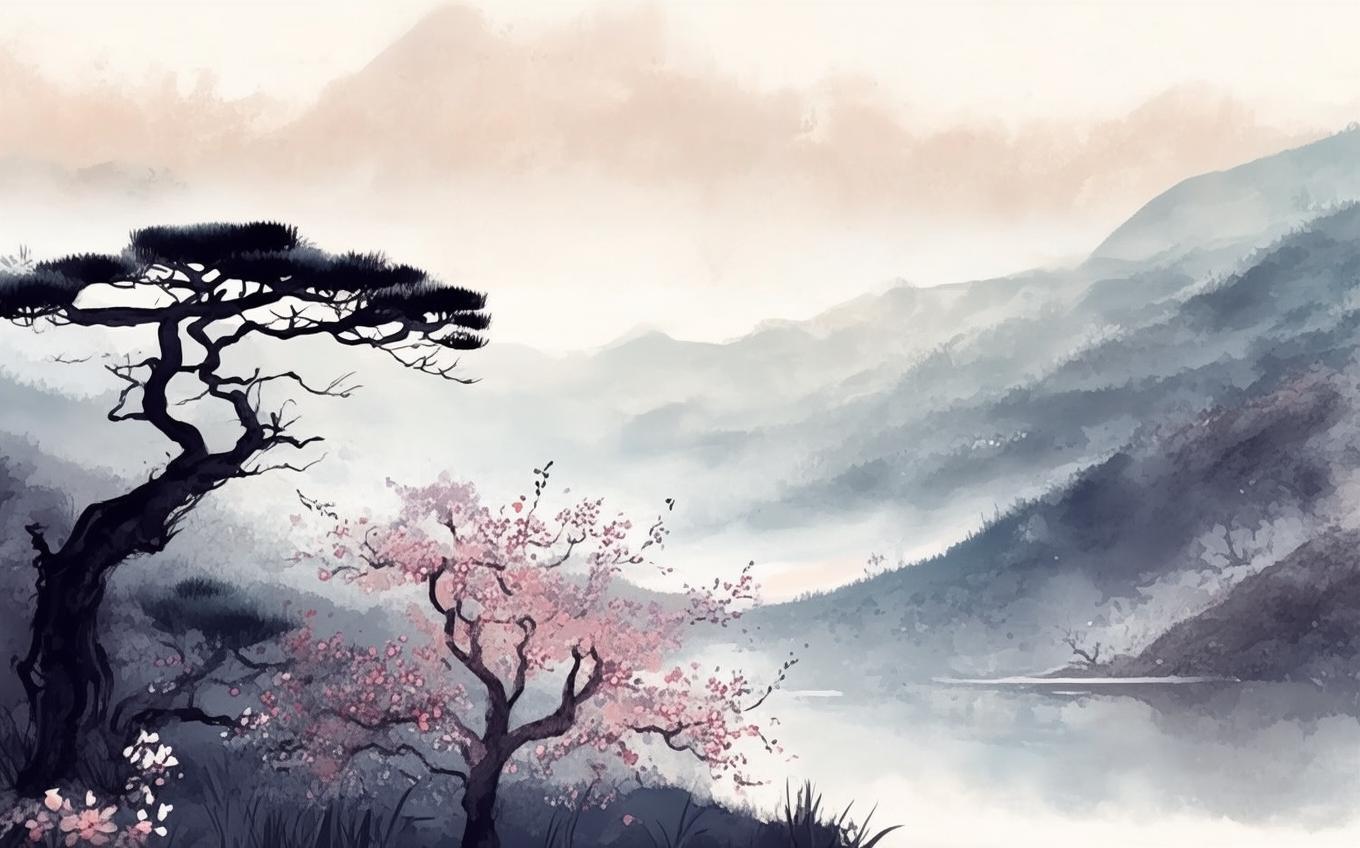
Among the many gems of Tang Dynasty poetry, the theme of early spring (首春, shǒu chūn) holds a special place. One of the most beloved expressions of this fleeting season comes from Han Yu (韩愈, 768–824 CE), a towering literary figure of the Tang era. A master of both prose and verse, Han Yu was a leading advocate of the Classical Prose Movement, championing clarity and moral seriousness. Yet his poem "早春呈水部张十八员外" (Zǎo Chūn Chéng Shuǐ Bù Zhāng Shíbā Yuánwài, "Early Spring Presented to Zhang Ji, Assistant at the Water Department") reveals a gentle, observant side—a delicate ode to the first stirrings of spring. Written as a friendly invitation to a colleague, the poem captures a moment of transient beauty that has enchanted readers for over a millennium.
The Poem: Full Text and Translation
天街小雨润如酥,
Tiān jiē xiǎo yǔ rùn rú sū,
The imperial avenue’s fine rain moistens like butter;
草色遥看近却无。
Cǎo sè yáo kàn jìn què wú.
Grass color seen from afar, up close it disappears.
最是一年春好处,
Zuì shì yī nián chūn hǎo chù,
Truly this is the year’s finest spring moment,
绝胜烟柳满皇都。
Jué shèng yān liǔ mǎn huáng dū.
Far surpassing misty willows filling the capital.
Line-by-Line Analysis
Line 1: 天街小雨润如酥
The poem opens with a tactile, almost decadent image. "天街" (tiān jiē) refers to the broad, majestic avenues of the imperial capital Chang’an, the heart of Tang civilization. The "小雨" (xiǎo yǔ) is a fine, gentle drizzle, not a downpour. The simile "润如酥" (rùn rú sū)—moistening like butter or rich cream—elevates this simple rain into something luxurious and nourishing. It suggests a softness that seeps into the earth, awakening life. The word "润" (rùn) carries connotations of nurturing, a moisture that benefits without overwhelming, a hallmark of early spring.
Line 2: 草色遥看近却无
Here lies the poem’s most celebrated observation. From a distance, the ground seems veiled in a faint wash of green—the first shoots of grass. Yet as one approaches, the color vanishes into the bare earth. This optical illusion captures the tentative, almost shy emergence of spring. The phrase "遥看…近却无" (yáo kàn… jìn què wú) creates a gentle paradox that speaks to the nature of early beauty: it is best appreciated from the right perspective, a truth that extends beyond mere botany. Han Yu trains the reader’s eye to value subtlety over obvious splendor.
Line 3: 最是一年春好处
In this line, the poet makes a bold judgment. "最是" (zuì shì), meaning "truly this is," leaves no room for doubt. The "一年春好处" (yī nián chūn hǎo chù) is the "best moment of spring in the entire year." Rather than festive blossoms or warm breezes, Han Yu insists that this nascent phase—when life is barely visible—is the pinnacle of the season. The line functions as a pivot, shifting from description to declaration, and invites the reader to share in his conviction.
Line 4: 绝胜烟柳满皇都
The final line seals the comparison. "烟柳满皇都" (yān liǔ mǎn huáng dū) evokes a later stage of spring when the capital becomes a sea of hazy willow catkins—a scene of classic, lush beauty, often celebrated in poetry. Yet Han Yu dismisses it with "绝胜" (jué shèng), "absolutely surpasses." The early spring moment is not merely equal to that famous splendor; it triumphs over it. By juxtaposing the delicate, nearly invisible grass with the flamboyant willows, the poet champions understated elegance and the precious, ephemeral quality of beginnings.
Themes and Symbolism
The Appreciation of Subtlety
The central theme is a cultivated taste for the barely-there. Han Yu rejects the obvious in favor of the nuanced, a perspective deeply rooted in the Chinese literati tradition. The poem becomes a gentle lesson in perception: true beauty often requires patience and an attuned eye.
The Fleeting Nature of Time
Early spring symbolizes the brief, fragile inception of all things. By declaring it the "best" moment, the poet urges mindfulness of the present and a carpe diem awareness. Once the grass grows thick, the magic of its first appearance is lost forever.
Friendship and Shared Experience
The poem’s full title indicates it was "presented" to Zhang Ji, a friend and fellow official. It functions as a warm, poetic nudge—an invitation to step outside, to notice, to share in a moment of pure delight. This underscores the role of poetry in Tang literati culture as a medium of personal connection.
Key Symbols
- Fine Rain (小雨): Nourishment, gentleness, the life-giving force of spring.
- Distant Grass Green (草色遥看): Potential, hope, beauty perceived through distance and perspective.
- Misty Willows (烟柳): Conventional beauty, the fullness of spring that paradoxically lacks the charm of its early scarcity.
Cultural Context
Han Yu composed this poem around 823 CE, during a period of relative stability in the late Tang Dynasty. He was a Confucian scholar and a high-ranking official, yet his poetry often reveals a warm, human side. The poem was written to cheer up Zhang Ji, who was then in his seventies and had declined social outings due to age and illness. Thus, the verse carries a tender subtext: "Come, my friend, there is still wonder to be found."
The aesthetic preference for "less" over "more" also echoes Daoist and Chan (Zen) Buddhist influences that permeated Tang art. The grass that is "seen yet not seen" resembles the philosophical concept of the Dao—present but elusive, best grasped indirectly. Moreover, the poem reflects the traditional Chinese reverence for the cycle of seasons, where each transition holds its own irreplaceable value.
Conclusion
Han Yu’s "Early Spring" endures because it captures a universal moment of quiet revelation—the instant we notice the world stirring back to life. In just four lines, the poem distills a philosophy of attention, humility, and friendship. It challenges our usual longing for the grand and the obvious, urging us instead to find joy in a half-seen patch of green. More than a thousand years later, in a world that often demands the bold and the instant, Han Yu’s whisper still invites us to pause, look closely, and discover that the barest hint of spring can indeed outshine a city full of blossoms.

Comments (0)
No comments yet. Be the first to comment!