Introduction
Composed by Emperor Taizong of Tang (Li Shimin, 598–649), "初春登樓即目觀作述懷" (Climbing a Tower in Early Spring, Observing and Expressing My Feelings) is a refined example of early Tang court poetry. As both a formidable ruler and a cultivated poet, Taizong played a pivotal role in shaping the literary tastes of his era. This poem embodies the fusion of personal reflection, seasonal beauty, and imperial ambition that marks much of his verse. Written in a regulated verse form with extended couplets, it captures a moment of stillness and vision at the beginning of spring, while subtly articulating a philosophy of governance rooted in harmony rather than martial conquest.
The Poem: Full Text and Translation
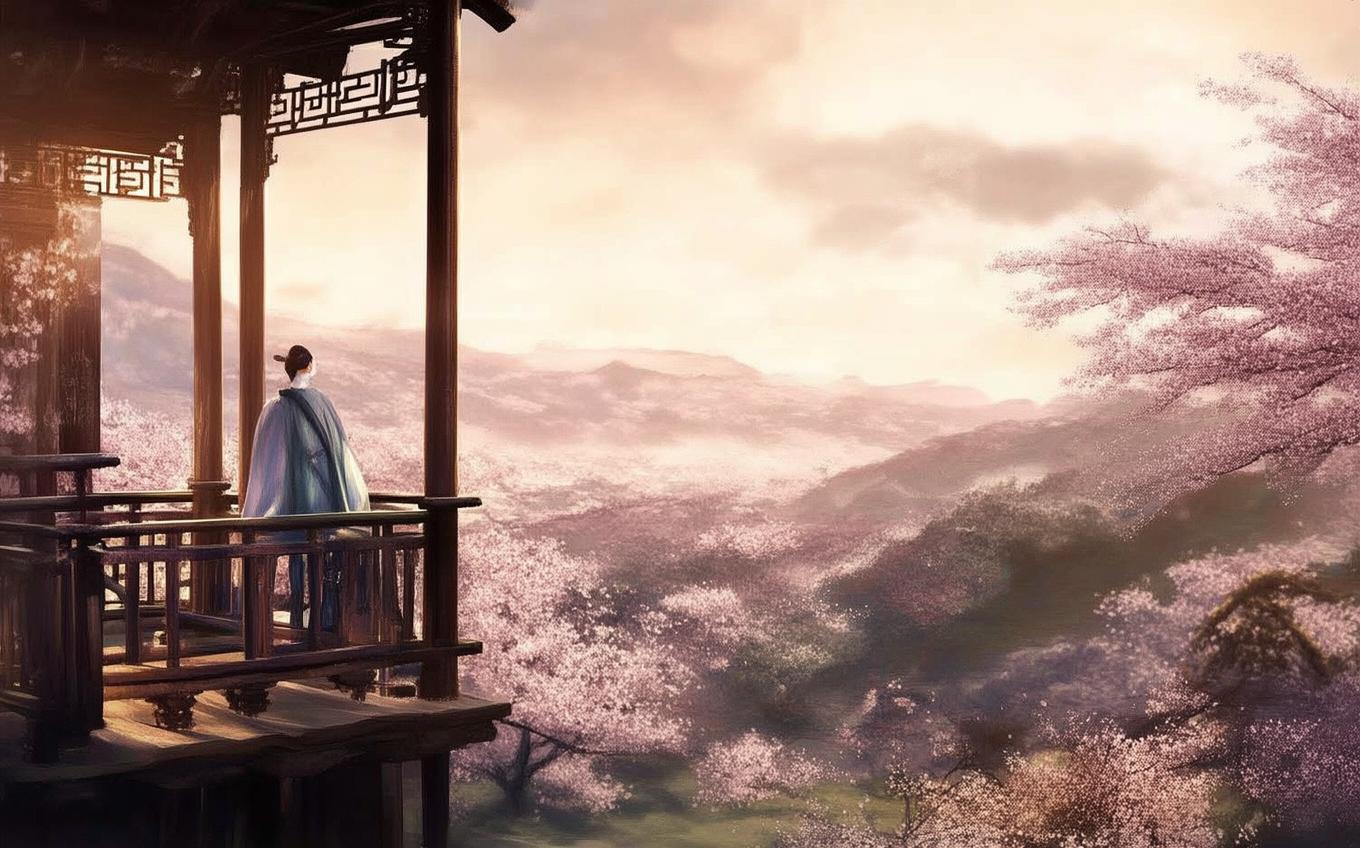
憑軒俯蘭閣,眺矚散靈襟。
Píng xuān fǔ lán gé, tiào zhǔ sàn líng jīn.
Leaning on the railing, I gaze down at the orchid pavilion; my far‑reaching sight scatters my restless spirit.
綺峰含翠霧,照日有餘清。
Qǐ fēng hán cuì wù, zhào rì yǒu yú qīng.
Ornate peaks enfold emerald mist; under the shining sun there is clarity in abundance.
拂霧朝青閣,日暉映芳甸。
Fú wù cháo qīng gé, rì huī yìng fāng diàn.
Brushing aside the mist, I face the blue pavilion at dawn; sunlight glows upon the fragrant fields.
初鶯命曉囀,殘霞斂夕霏。
Chū yīng mìng xiǎo zhuàn, cán xiá liǎn xī fēi.
The first oriole announces its morning song; the waning sunset glow gathers the evening mist.
崇情符遠迹,淳化洽歸心。
Chóng qíng fú yuǎn jì, chún huà qià guī xīn.
Lofty sentiments align with the traces of ancient worthies; pure transformation brings the returning heart into perfect accord.
何必燕然石,方稱瀚海功。
Hé bì Yān Rán shí, fāng chēng hàn hǎi gōng.
Why must one wait for a stone inscription on Mount Yanran before claiming great merit across the boundless desert?
Line-by-Line Analysis
Couplet 1: The View from Above
The poem opens with a physical and psychological posture. “憑軒” (leaning on the railing) places the poet at a height, a classic vantage point in Chinese landscape verse. The “蘭閣” (orchid pavilion) is no ordinary building; orchids symbolize refinement and virtue, hinting that this is an imperial retreat. The verb “散” (scatter, disperse) applied to “靈襟” (the spiritual self) suggests that the act of looking far into the distance liberates the mind from petty concerns. In these two lines, seeing and emotional release are already intertwined.
Couplet 2: Spring Mountains in Clarity
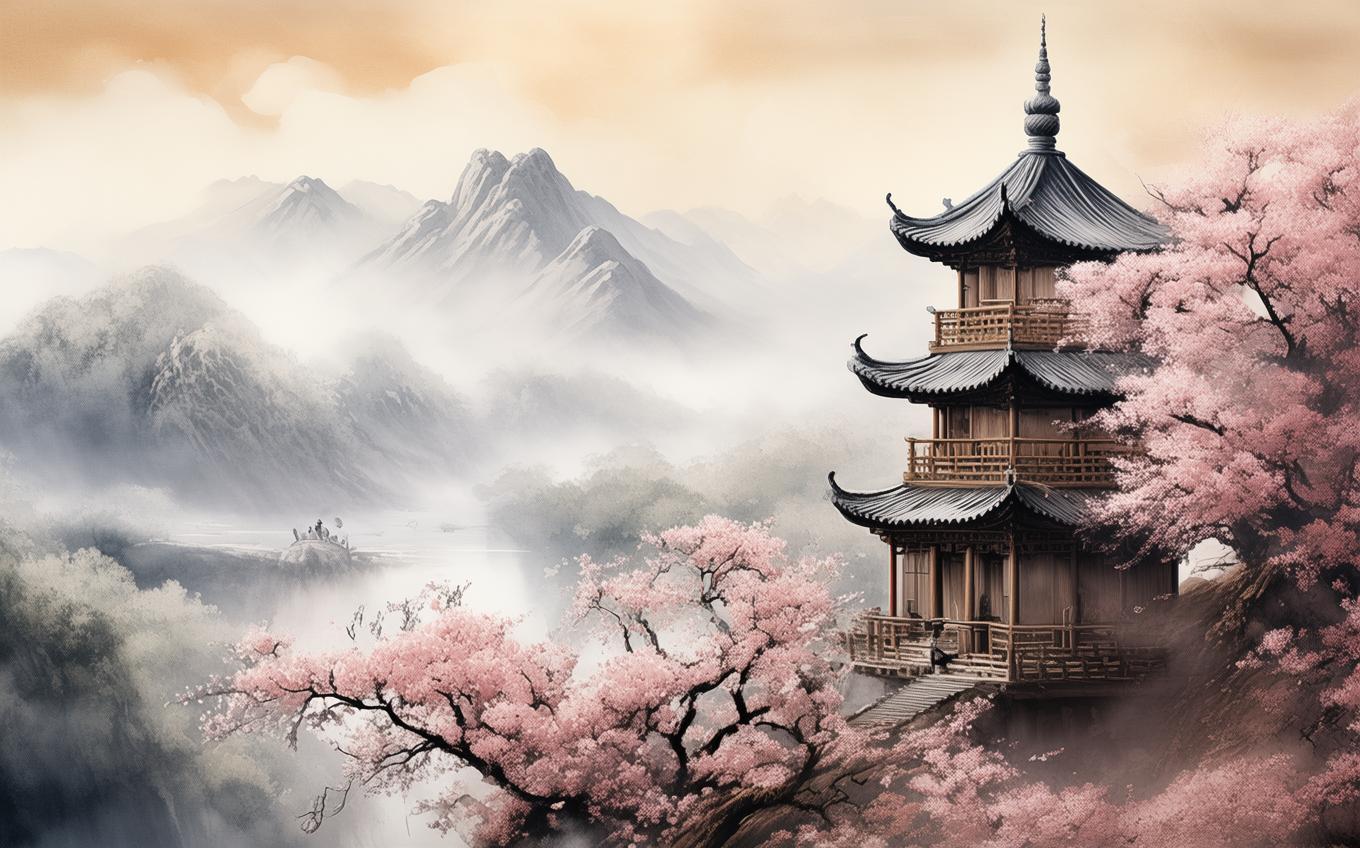
The description shifts to the distant landscape. “綺峰” (ornate peaks) personifies the mountains as if they were decorated silk, evoking the richness of early spring. The phrase “含翠霧” (hold emerald mist) conveys a scene where mist and new greenery merge into a soft, almost dreamlike veil. But the sun dispels obscurity: “照日有餘清” asserts that under this light, the world possesses surplus purity. There is a quiet confidence here—the emperor sees his realm bathed in radiant order, a reflection of his own enlightened rule.
Couplet 3: Dawn Light and Fragrant Fields
The third couplet moves from the general panorama to specific actions and light. “拂霧朝青閣” could be read both as “I brush away the mist while facing the blue pavilion” and as “the morning mist parts before the blue pavilion”. “青閣” (blue/green pavilion) again emphasizes an imperial structure nestled in nature. “日暉映芳甸” completes the bright scene: sunlight spills onto fragrant fields (芳甸), signaling fertility and renewal. The couplet is intensely visual, full of motion as the day clears, and it mirrors the ruler’s active engagement with the world.
Couplet 4: Sounds of Spring and Fading Dusk
Time seems to stretch from morning to evening in this couplet. “初鶯” (the first oriole) is a traditional messenger of spring; its “命曉囀” (commanding the dawn song) suggests that nature itself obeys a seasonal mandate. On the other side of the day, “殘霞斂夕霏” (remnant rosy clouds gathering the evening mist) paints a gentle closure. The juxtaposition of “朝” (dawn) and “夕” (dusk) condenses an entire day’s beauty into two lines, implying that the poet has lingered long on the tower, absorbed in meditation. This temporal sweep also hints at the endurance of the empire—day after day, spring returns in harmony.
Couplet 5: The Heart of a Ruler
Here the poem turns inward. “崇情” (lofty feelings) are no mere emotions but an elevated state of mind, one that “符遠迹” (matches the traces left by distant sages or historical exemplars). Taizong was deeply aware of history and often measured himself against virtuous rulers of the past. “淳化” (simple, genuine transformation) is a loaded Daoist and Confucian term: it refers to the civilizing influence of a sage‑king who governs not by force but by moral example. “洽歸心” (harmonizes with the heart that returns) implies a peaceful convergence of the people’s hearts toward their sovereign. The line reveals the emperor’s ideal: rule through transformation, not coercion.
Couplet 6: Redefining Merit
The final couplet delivers a sharp rhetorical turn. “燕然石” refers to an inscription carved on Mount Yanran after the Han general Dou Xian defeated the Xiongnu in 89 CE—a classical emblem of military glory. “瀚海功” (achievement across the boundless desert) amplifies this martial imagery. By asking “何必” (why must it be), Taizong challenges the traditional obsession with conquest. He suggests that true merit does not require monuments on distant mountains; it lies in the peaceful, flourishing landscape he has just described. For a ruler who had himself led campaigns to unify China, this is a strikingly mature reflection — a preference for the quiet work of cultivation over the clamor of war.
Themes and Symbolism
Spring as Renewal and Imperial Order
The poem is saturated with spring imagery: emerald mist, fragrant fields, the first oriole, and clear sunlight. In Chinese poetry, spring represents not just natural beauty but also the proper ordering of the world under Heaven’s mandate. For an emperor, a harmonious spring landscape is a mirror of successful governance. The poem thus merges the personal joy of observing nature with a political statement: the realm is at peace, and that peace is the highest achievement.
The Tower as Meditative Space
Climbing a tower (登樓) is a time‑honored poetic gesture, from Wang Can to Du Fu. It lifts the poet above mundane affairs and offers a prospect that stimulates reflection on history, fate, and duty. Here,
Comments (0)
No comments yet. Be the first to comment!