Introduction
Wang Changling (698–757) was one of the most celebrated poets of China’s Tang Dynasty, often grouped with Li Bai and Du Fu as a master of both frontier ballads and palace-style poetry. His work captures the elegance, melancholy, and fleeting beauty of court life, as well as the raw vastness of the borderlands. The poem “三层阁上置音声” (Sān Céng Gé Shàng Zhì Yīn Shēng), which translates to “Placing Music on the Three-Story Pavilion,” is a delicate example of his shorter lyrical poems. Written during a high point of Tang culture, when music, dance, and verse intertwined in aristocratic gatherings, this poem evokes a moment of suspended enjoyment and invites a friend to shared revelry. It reflects the era’s appreciation for refined leisure and the poignant awareness that such moments are all too brief.
The Poem: Full Text and Translation
三层阁上置音声
Sān céng gé shàng zhì yīn shēng
On the three-story pavilion music is set to play,
一曲云和按小伶
Yī qǔ Yúnhé àn xiǎo líng
A melody of Cloud Harmony performed by young musicians.
日暮笙歌君驻马
Rì mù shēng gē jūn zhù mǎ
At dusk, with reed pipes and song, you halt your horse;
几时同醉凤凰城
Jǐ shí tóng zuì Fènghuáng Chéng
When shall we together be drunk in Phoenix City?
Line-by-Line Analysis
Line 1:
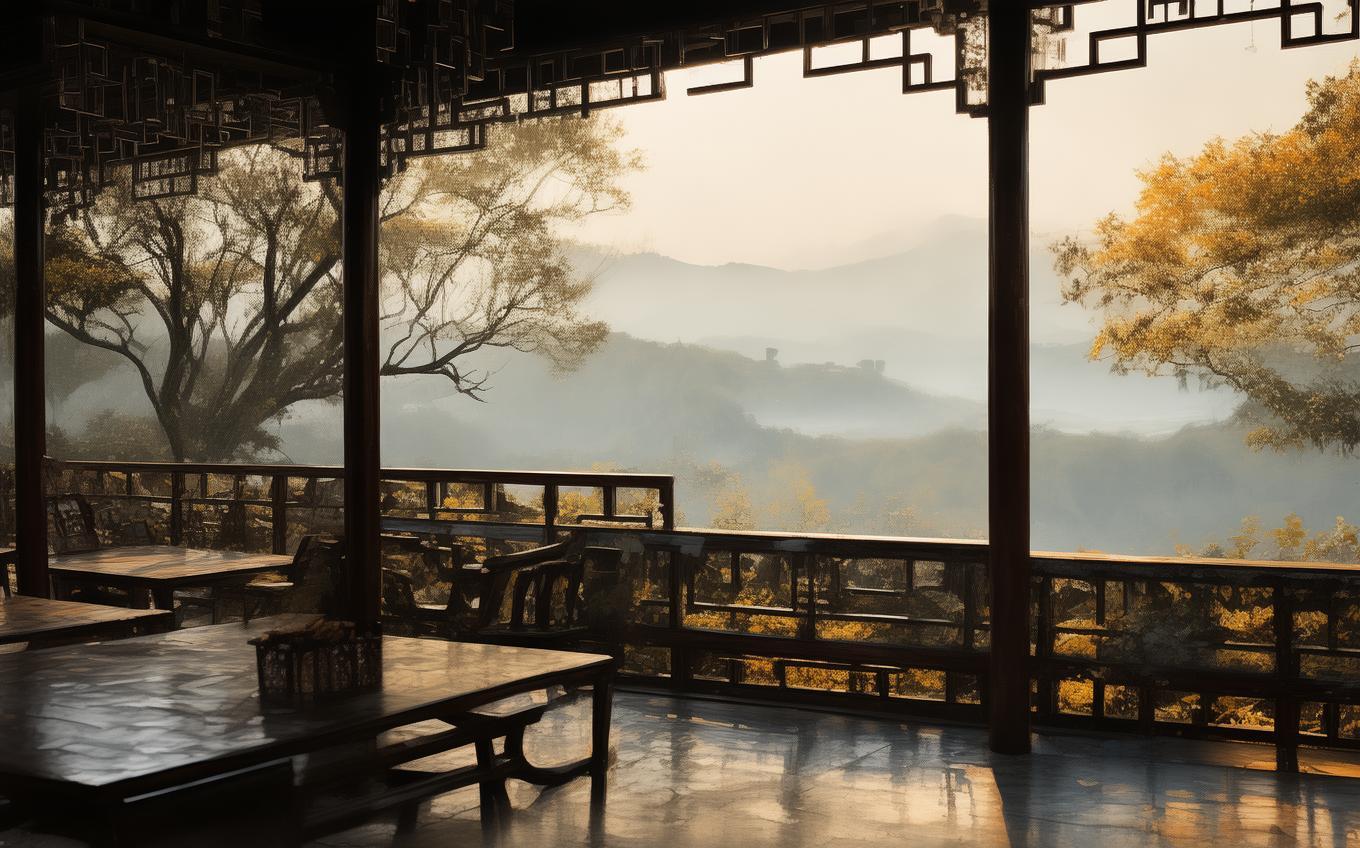
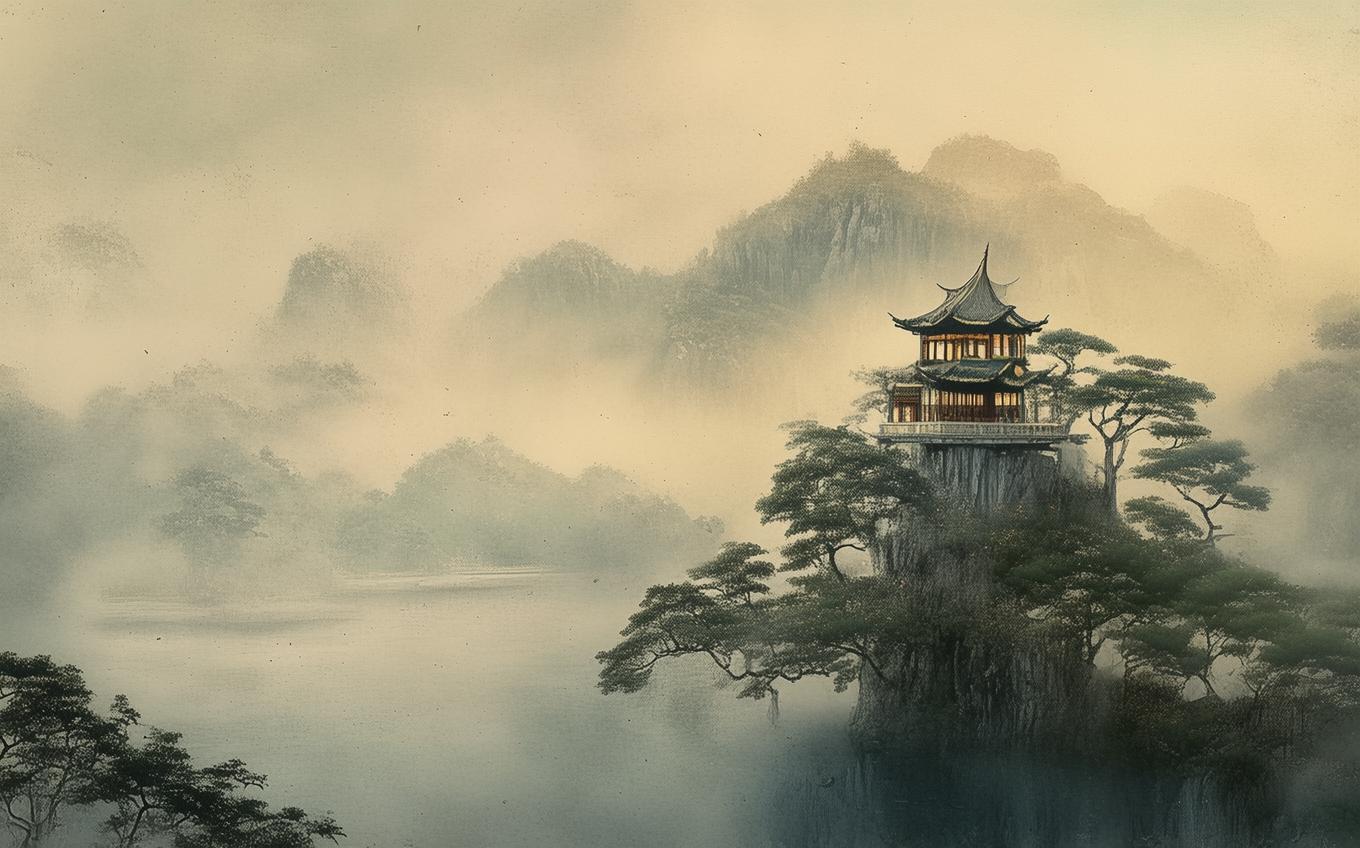
The opening line sets the scene with architectural precision and sensory promise. The “three-story pavilion” is not merely a building but a symbol of cultural elevation—a place where sight and sound converge. To “place music” (zhì yīn shēng) implies a deliberate arrangement, as if music itself is an offering or a crafted decoration. The image suggests a formal yet intimate performance, likely at a noble residence or within palace grounds, where guests look down from the upper levels and the notes rise upward. There is a sense of refinement, of art being consciously inserted into a beautiful space.
Line 2:
“Cloud Harmony” (Yúnhé) carries multiple associations. Yunhe was a fabled place in ancient China known for producing trees whose wood made excellent lutes; by extension, it became a metonym for exquisite music. The phrase “pressed by young performers” (àn xiǎo líng) indicates that the piece is being interpreted by child or adolescent musicians—xiǎo líng can mean young actors or dancers. Their youthfulness adds a layer of poignancy: the freshness of talent, the innocence of the performers, enhancing the fleeting charm of the scene. Together, the line paints a picture of rare beauty, music of legendary quality rendered by the slightest of hands.
Line 3:
As the sun begins to set, someone important arrives. The poet addresses “you” (jūn), perhaps a friend or a beloved, who reins in their horse at the sound of reed pipes (shēng) and singing. The act of stopping a horse mid-journey underscores the irresistible pull of music. Dusk softens the world, blurring distances and heightening emotions; it is the liminal hour when day turns to nostalgia. The poet doesn’t describe the friend’s face—only the halted horse and the implied listening. This economy of detail lets the reader feel the magnetism of the performance.
Line 4:
A direct question closes the poem, shifting from description to invitation. “Phoenix City” (Fènghuáng Chéng) is a poetic name for the Tang capital, Chang’an, a city of cosmic order and earthly pleasures, where divine birds seemed to linger. To be “drunk together” is not a call to reckless excess but to the kind of shared intoxication that breaks down formal barriers, allowing true companionship. The phrase “when shall we?” (jǐ shí) introduces uncertainty—the regret that such meetings are rare. The poet doesn’t say “let’s drink tonight” but looks toward an indefinite future, heightening the sense of longing even within a moment of apparent joy.
Themes and Symbolism
The central theme is the transience of beauty and friendship. Music, youth, sunset, and the halted horse all point to moments that cannot last. The poem celebrates sensory delight while acknowledging its brevity.
Symbols weave throughout:
- The three-story pavilion: a vertical separation from the mundane world, a place where art elevates the spirit.
- Cloud Harmony: music of mythical quality, linking human craft to nature and ancient lore.
- Dusk: the threshold between light and darkness, echoing life’s impermanence.
- The horse halted: a pause in ordinary movement, a surrender to aesthetic experience.
- Phoenix City: the ideal of civilization, a place of reunion and shared happiness, yet tinged with the question “when”—it remains a hope, not a certainty.
Cultural Context
In Tang China, music and poetry were inseparable. Aristocrats and literati often gathered in multi-story halls for banquets where professional musicians played string and wind instruments while guests composed verses. The “little performers” (xiǎo líng) recall a tradition of training young entertainers from childhood, their innocence prized as a contrast to the sophisticated adults who watched.
The poem’s conversational tone, with its direct appeal to “you,” exemplifies the Tang ideal of zèng shī (赠诗)—a poem presented to a friend as a gift. To write such a piece was to continue the conviviality in words, ensuring that the moment lived on in memory and ink. The reference to getting drunk together also aligns with the Daoist-influenced fēng liú (风流) aesthetic: an elegant, slightly rebellious free-spiritedness that embraced spontaneity and emotional openness.
Conclusion
“三层阁上置音声” distills the essence of a Tang evening into four short lines. Wang Changling gives us music so enchanting it stops a traveler, a pavilion that lifts art toward the sky, and a question that bridges present and future. The poem’s enduring appeal lies in its gentle balance of joy and melancholy—the awareness that the most beautiful moments are already passing, even as we live them. For modern readers, it is an invitation to pause, listen, and cherish the fleeting harmonies of our own lives, and perhaps to ask a friend: “When will we share another perfect evening?”
Comments (0)
No comments yet. Be the first to comment!