Analysis of "赋得弱柳鸣秋蝉" - Classical Chinese Poetry
Introduction
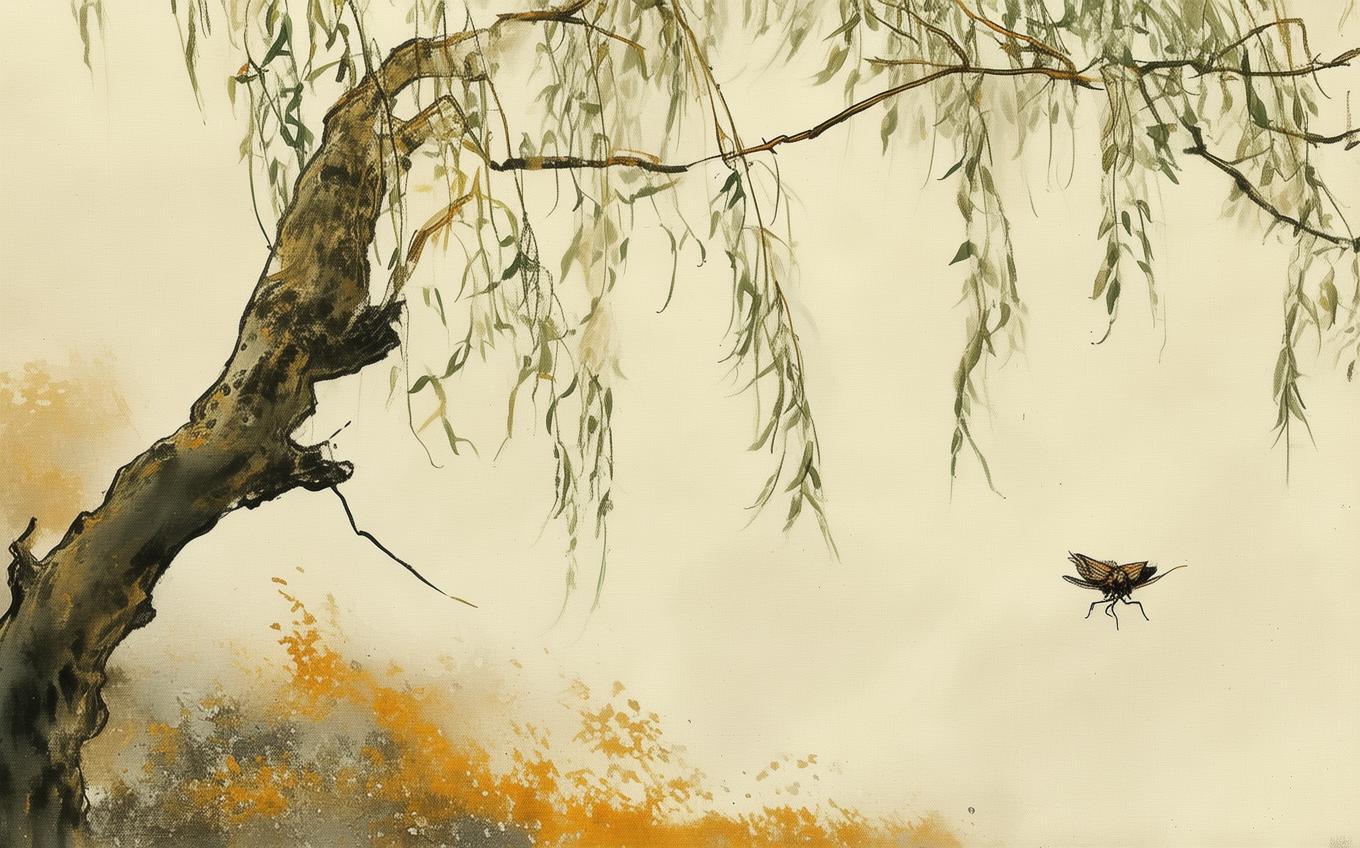
The poem “赋得弱柳鸣秋蝉” (Fù dé ruò liǔ míng qiū chán), which translates roughly to Composed on the Theme “Slender Willows and Singing Autumn Cicadas,” is a fine example of early Tang court poetry. It was written by Emperor Taizong of Tang (Tang Taizong, 唐太宗), personal name Li Shimin (李世民, reigned 626–649), one of China’s greatest rulers and a passionate patron of literature. During his reign, the empire enjoyed unprecedented stability and cultural brilliance, and the court became a gathering place for scholars, poets, and artists. A “赋得” (fù dé) poem was a social or examination piece composed on a set poetic topic, often drawn from a classical line. This particular poem is an elegant reflection on an autumnal garden scene, blending keen observation of nature with the refined atmosphere of imperial gatherings, and it shows an emperor’s desire to place his own reign within the grand continuum of Chinese literary tradition.
The Poem: Full Text and Translation
散影玉阶柳,
Sàn yǐng yù jiē liǔ,
Scattered shadows of willows on the jade steps,
含辉隐翠蝉。
Hán huī yǐn cuì chán.
Their hidden sheen veils the emerald cicadas.
迎秋声已切,
Yíng qiū shēng yǐ qiè,
Facing autumn, their voices already keen,
入夜响逾偏。
Rù yè xiǎng yú piān.
As night falls, the sound grows ever more plaintive.
断续因风起,
Duàn xù yīn fēng qǐ,
Intermittent as the wind stirs,
悠扬杂管弦。
Yōu yáng zá guǎn xián.
Melodious, it mingles with pipes and strings.
幸承瑶池曲,
Xìng chéng yáo chí qǔ,
Fortunate to carry on the tune of the Jade Pool,
得奉柏梁篇。
Dé fèng bǎi liáng piān.
I can offer a poem at the Cypress Beam Terrace.
Line-by-Line Analysis
First Couplet (lines 1–2): 散影玉阶柳,含辉隐翠蝉。
The

Comments (0)
No comments yet. Be the first to comment!