
Introduction
Emperor Taizong of Tang (Li Shimin, 598–649 CE) is renowned not only as one of China’s greatest rulers but also as a gifted poet who helped shape early Tang literary culture. Under his reign, the empire flourished, and poetry became a refined expression of both statecraft and personal sentiment. “咏小山” (Ode to a Little Hill) is a short, exquisite nature poem that reflects the emperor’s sensitive eye for landscape and the Daoist-infused aesthetics of the early Tang. Though brief, the poem encapsulates a profound appreciation for the beauty of the natural world — a central theme in Chinese classical verse.
The Poem: Full Text and Translation
近谷交萦蕊
Jìn’gǔ jiāo yíng ruǐ
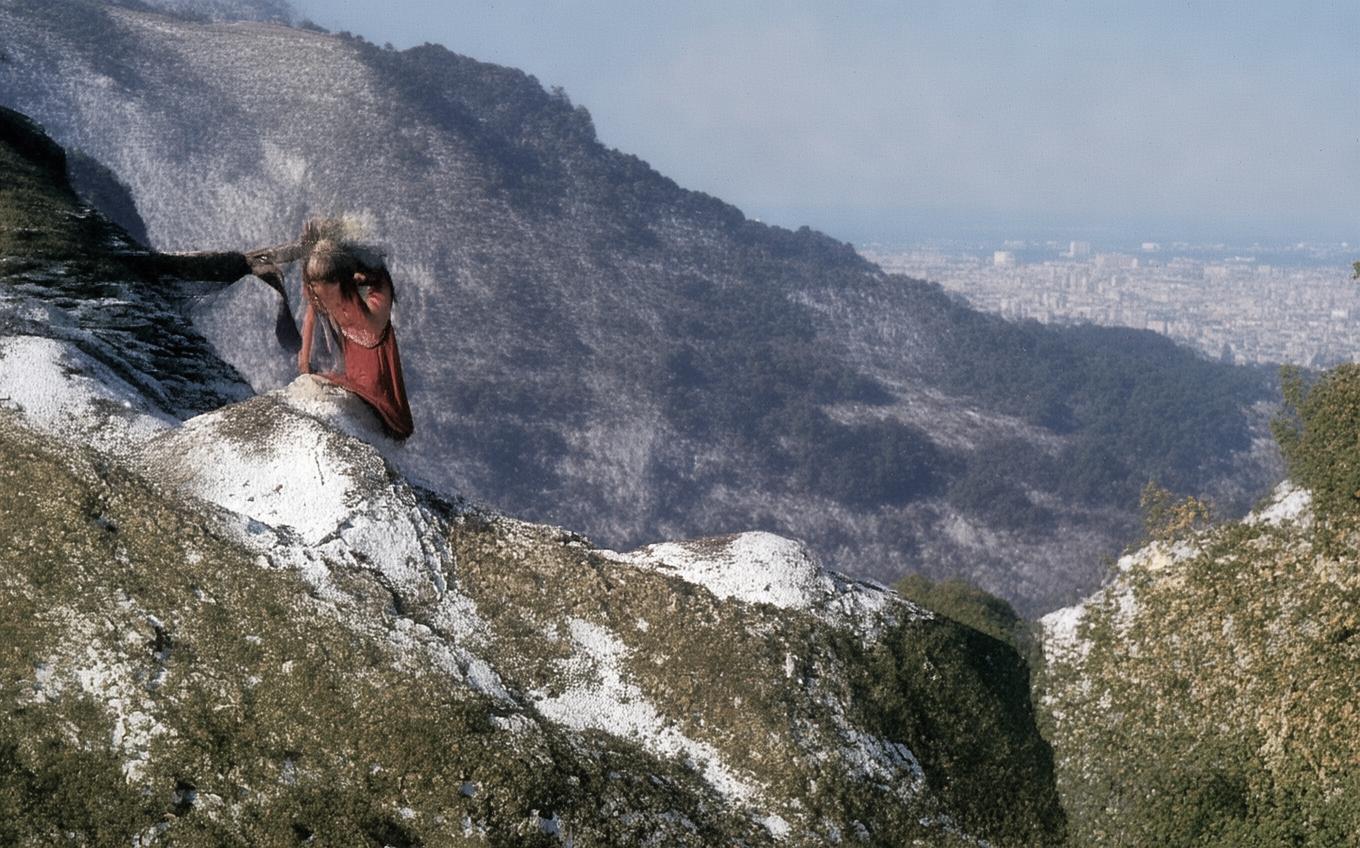
Near the valley, intertwining buds and blossoms;
遥峰对出莲
Yáo fēng duì chū lián
Distant peaks confront each other, emerging like lotus petals;
径细无全磴
Jìng xì wú quán dèng
The path so narrow, no complete stone steps remain;
松小未含烟
Sōng xiǎo wèi hán yān
The pines are small, not yet embracing mist.
Line-by-Line Analysis
Line 1: The opening immediately plunges the reader into a scene of intimate natural detail. The “valley” is near, and the phrase “交萦蕊” suggests a dense interlacing of delicate flower buds and tendrils. The verb “交” (intertwine) conveys a sense of organic entanglement, as if the vegetation itself is alive and wrapping around one another. This closeness contrasts with the distant peaks to come, creating a foreground of miniature, intricate beauty. There is an almost painterly focus, typical of classical Chinese shanshui poetry, where small details invite quiet contemplation.
Line 2: Shifting vision to the far horizon, the poet describes distant peaks that “对出” — literally “face each other and emerge.” The image is of mountains rising in opposition, yet their forms are likened to the petals of a lotus flower. In Chinese poetry, lotus often symbolizes purity and spiritual elevation, emerging unsullied from muddy water. Here, the mountains themselves become a cosmic blossom, linking the earthly and the transcendent. This line introduces a vertical, majestic dimension that balances the horizontal intimacy of the first line.
Line 3: Returning to the immediate environment, the poet observes a path so slight and worn that no complete stone steps remain. “无全磴” suggests both a physical reality — a rugged, barely accessible trail — and a metaphorical one: the path to true appreciation of nature is not paved with ease. The fragmentary steps evoke the passage of time, impermanence, and perhaps the idea that the little hill is untouched by heavy human traffic, preserving its pristine character.
Line 4: The final line turns to the pine trees, which are “小” (small, young) and “未含烟” — they do not yet hold or embrace mist. In Chinese landscape art, pines are often ancient, gnarled, wrapped in clouds and mist, symbolizing longevity and the lofty spirit of the recluse. Here, their youth signals a hill in a state of becoming, a landscape still growing into its full mystery. There is a gentleness in this incompleteness; the little hill is not grand, but it holds quiet promise.
Themes and Symbolism
The poem embodies several interlocking themes central to Chinese aesthetics:
- Miniature and Grandeur: The juxtaposition of near and far, small buds and lotus-like mountains, reflects the Daoist principle that the microcosm mirrors the macrocosm. The little hill contains the same truths as a great mountain range.
- Impermanence and Potential: The broken path and young pines emphasize transience and unfilled potential, reminding the reader that beauty exists in process as much as in completion.
- Harmony with Nature: The poet’s gaze rests gently on the scene without imposing human ambition. There is no desire to conquer or alter the hill — only to observe and appreciate its quiet existence.
- Symbolism of the Lotus and Pine: The lotus represents spiritual purity emerging from the mundane world; the pine, even when young, hints at eventual steadfastness and longevity. Together they frame the hill as a sacred, evolving space.
Cultural Context
In early Tang China, poetry was a critical tool for cultivating moral and aesthetic sensitivity. Emperor Taizong himself composed numerous nature poems, using them to demonstrate the Confucian ideal of the ruler as a cultivated person in tune with the cosmos. The quiet, restrained tone of “咏小山” contrasts with the military and political vigor of his reign, revealing a private, contemplative side. This duality—active statecraft and inner stillness—mirrors the Chinese philosophical balance between doing and non-doing, heavily influenced by Daoism and Chan Buddhism. The little hill, unassuming and incomplete, becomes a metaphor for the humble mind open to the Dao.
Conclusion
“咏小山” is a gem of early Tang nature poetry, compressing a complete aesthetic worldview into twenty characters. Through its delicate imagery and layered resonance, it invites readers to pause and find meaning in the small, the unadorned, and the unfinished. In our own age of constant noise and ambition, this silent little hill reminds us that beauty and wisdom often lie in the quiet spaces we overlook — in the intertwining buds, the distant lotus mountains, the path broken by time, and the young pines dreaming of mist.


Comments (0)
No comments yet. Be the first to comment!