Introduction
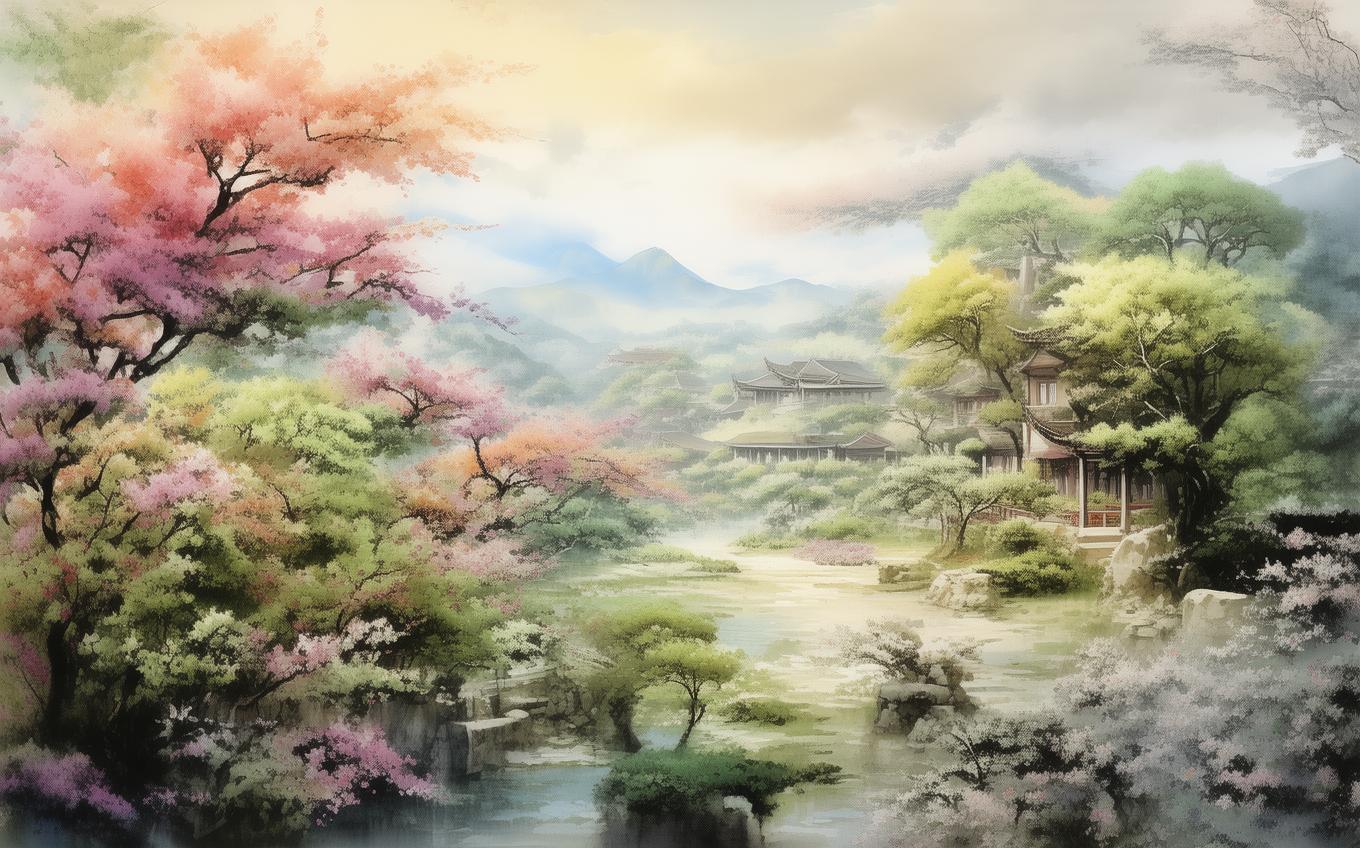
In the golden age of the Tang Dynasty, the imperial court not only patronized the arts but actively participated in poetic creation. One of the most fascinating figures in this milieu was Emperor Xuanzong (唐玄宗), also known as Minghuang, a ruler whose love for music, dance, and literature left an indelible mark on Chinese culture. The poem “春日出苑游瞩” (Spring Day Excursion in the Imperial Park) is traditionally attributed to him, though some sources suggest it may have been composed by a courtier responding to an imperial command. Regardless of its exact authorship, the poem embodies the elegant fusion of nature, statecraft, and personal longing that characterized Tang court poetry. This regulated verse (律诗, lǜshī) offers a serene tableau of early spring in a royal garden, while simultaneously voicing a wish for the emperor’s longevity—a subtle political gesture wrapped in delicate imagery. For English readers, it opens a window onto a world where the beauty of blossoms and the duties of the throne were inseparable.
The Poem: Full Text and Translation
三阳丽景早芳辰,
Sān yáng lì jǐng zǎo fāng chén,
The Triple Yang brings radiant scenery and an early season of fragrance;
四序佳园物候新。
Sì xù jiā yuán wù hòu xīn.
In the finest garden of the four seasons, all living things renew their cycle.
梅花百树障去路,
Méi huā bǎi shù zhàng qù lù,
Hundreds of plum trees stand like a screen, blocking the path ahead;
垂柳千条暗回津。
Chuí liǔ qiān tiáo àn huí jīn.
A thousand hanging willow branches darken the winding ford.
鸟飞直为惊风叶,
Niǎo fēi zhí wèi jīng fēng yè,
Birds take sudden flight, startled by wind‑stirred leaves;
鱼没都由怯岸人。
Yú méi dōu yóu qiè àn rén.
Fish vanish beneath the surface, all because they shy from figures on the bank.
惟愿圣主南山寿,
Wéi yuàn shèng zhǔ nán shān shòu,
My only wish is that the sage ruler may live as long as the Southern Mountain;
何愁不赏万年春。
Hé chóu bù shǎng wàn nián chūn.
How could one worry then, when we may enjoy ten thousand years of spring?
Line-by-Line Analysis
Couplet 1 (lines 1–2): The poem opens with a cosmic flourish. “三阳” (Triple Yang) refers to the first month of the lunar calendar, when the yang energy of spring begins to wax after the winter solstice. This allusion to the Book of Changes infuses the scene with a sense of natural order and rebirth. “丽景” (radiant scenery) and “芳辰” (fragrant morning) immediately engage the senses. The second line broadens the perspective to the garden as a microcosm of the four seasons, where the “物候” (phenology) turns new. The couplet establishes the imperial garden not merely as a pleasure ground, but as a space where the rhythms of the cosmos are perfectly mirrored.
Couplet 2 (lines 3–4): Tang poetry loves to lushly depict spring boughs. Here, plum blossoms—emblematic of purity and endurance—form a living barrier, as if nature itself curates the emperor’s path. The willow, with its graceful, drooping strands, “darkens the winding ford” (暗回津), a phrase that evokes both the density of foliage and a mysterious, almost meditative twilight. The repetition of numbers (“百树,” “千条”) is typical hyperbole in classical verse, magnifying the garden’s abundance while hinting at a realm so vast one could lose oneself in it.
Couplet 3 (lines 5–6): The focus shifts to the garden’s wildlife, and the tone grows more intimate—almost playful. Birds that “fly straight because they are startled by windy leaves” are described with a charming literalism that makes the miniature drama feel immediate. Similarly, the fish “sink due to fear of people on the bank” injects a note of gentle anthropomorphism. Both images convey the delicate balance between the human presence and the natural world: the emperor and his retinue are keen observers, yet they are also interlopers whose very existence momentarily disturbs the peace. There is a quiet humility in this acknowledgment.
Couplet 4 (lines 7–8): The final two lines pivot gracefully from landscape to political sentiment. “圣主南山寿” is a formulaic yet deeply resonant wish for the emperor’s longevity; the Southern Mountain (南山, the Zhongnan Mountains) is a conventional metaphor for steadfastness and eternal life. The closing rhetorical question—“Why worry about not enjoying ten thousand years of spring?”—reconciles the personal delight in the season with a larger hope for dynastic permanence. If the poem is indeed by a courtier, it is a masterful compliment: the natural beauty of the garden becomes a promise of perpetual renewal under a wise ruler. Even if Emperor Xuanzong himself authored the lines, the “sage ruler” would be a third‑person self‑reference, blending humility with an almost divine expectation of continuity.
Themes and Symbolism
Spring and Renewal: Spring is not simply a season here; it is a state of moral and political rejuvenation. The awakening garden mirrors the ideal of a well‑governed empire, where everything follows its natural order.
Nature as Court: The imperial park is a controlled landscape where wild beauty is harnessed into an aesthetic experience. Plum blossoms represent cultured nobility, while willows suggest the yielding grace expected of courtiers. The startled birds and shy fish introduce a sense of spontaneity—nature’s gentle rebuke to human intrusion, which also underscores the ruler’s need for restraint and sensitivity.
Longevity and the Ideal Ruler: The closing wish for “南山寿” (life as enduring as the Southern Mountain) transforms the outing into a ritual affirmation of the emperor’s virtue. In classical Chinese thought, a long‑lived ruler signified a harmonious relationship between heaven and earth. The poem thus projects an unworried future where spring—both literal and metaphorical—never ends.
Cultural Context
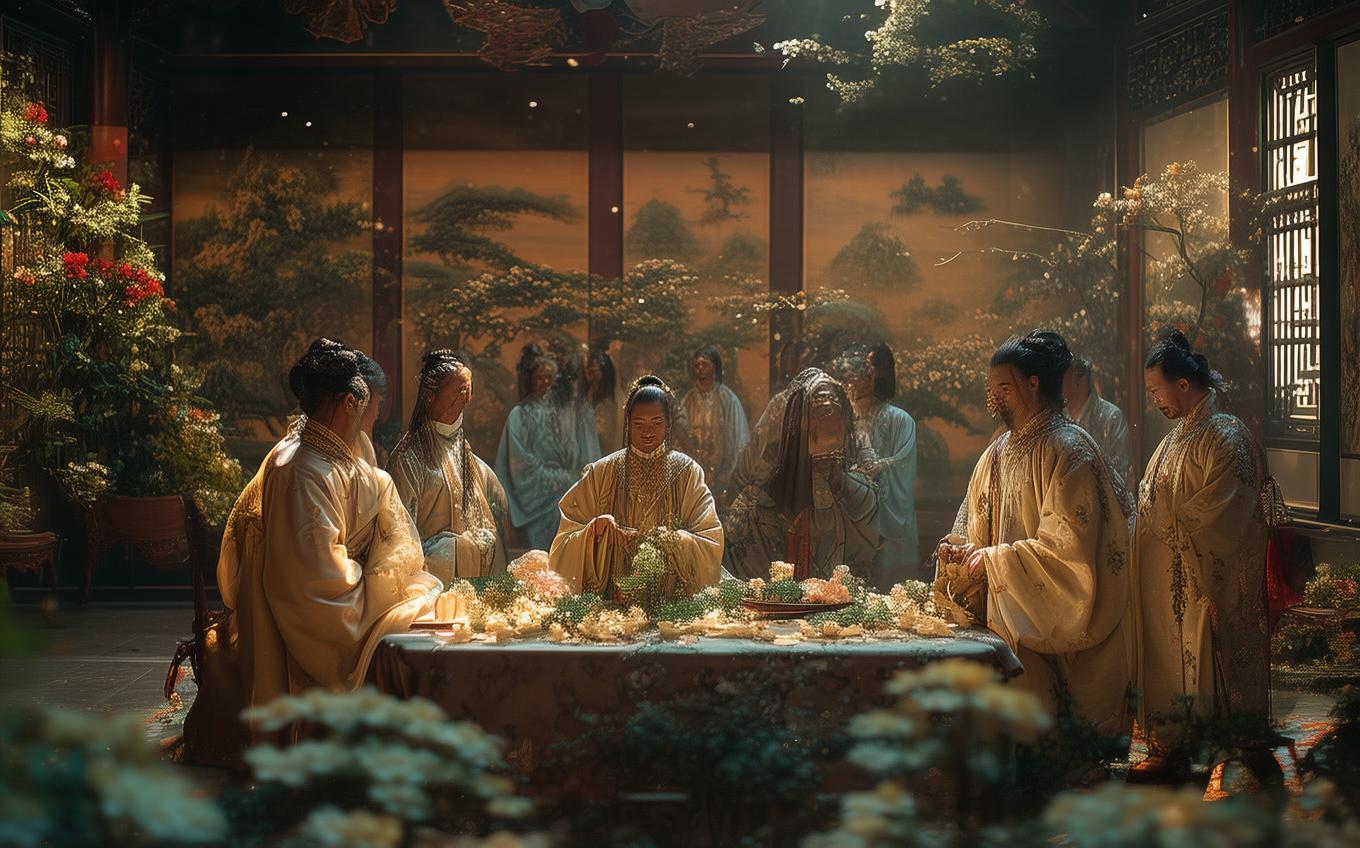
The Tang Dynasty (618–907 CE) was a high point of imperial pageantry and literary culture. Emperors frequently invited their entourage to compose poems during excursions, a practice known as “应制” (yìngzhì, “responding to the imperial command”). Even if a poem is attributed to the emperor himself, it often served the same function: to model the refined sensibility that the court aspired to. Spring outings to the imperial parks—such as the Forbidden Garden (禁苑) in Chang’an—were occasions for both relaxation and the performance of shared cultural values. The images of plum blossoms and willows, drawn from a deep reservoir of poetic tradition, would have been instantly recognizable signals of elegance and renewal. The final couplet’s evocation of “ten thousand years of spring” echoes the ceremonial language of state, yet it remains intimate—a wish whispered among flowers.
Conclusion
“春日出苑游瞩” is a jewel of courtly nature poetry, where every leaf and ripple does double duty as aesthetic delight and political metaphor. It invites the reader not merely to admire a spring scene but to inhabit a moment where personal pleasure, cosmic order, and the welfare of the state are one. For a modern English‑speaking audience, the poem offers a refreshing antidote to the idea that art and power must be at odds. Instead, it reveals a civilization in which a walk through a flowering garden could be as profound a statement as any edict. In its quiet way, the poem continues to wish us all a spring that never fades.
Comments (0)
No comments yet. Be the first to comment!