Introduction
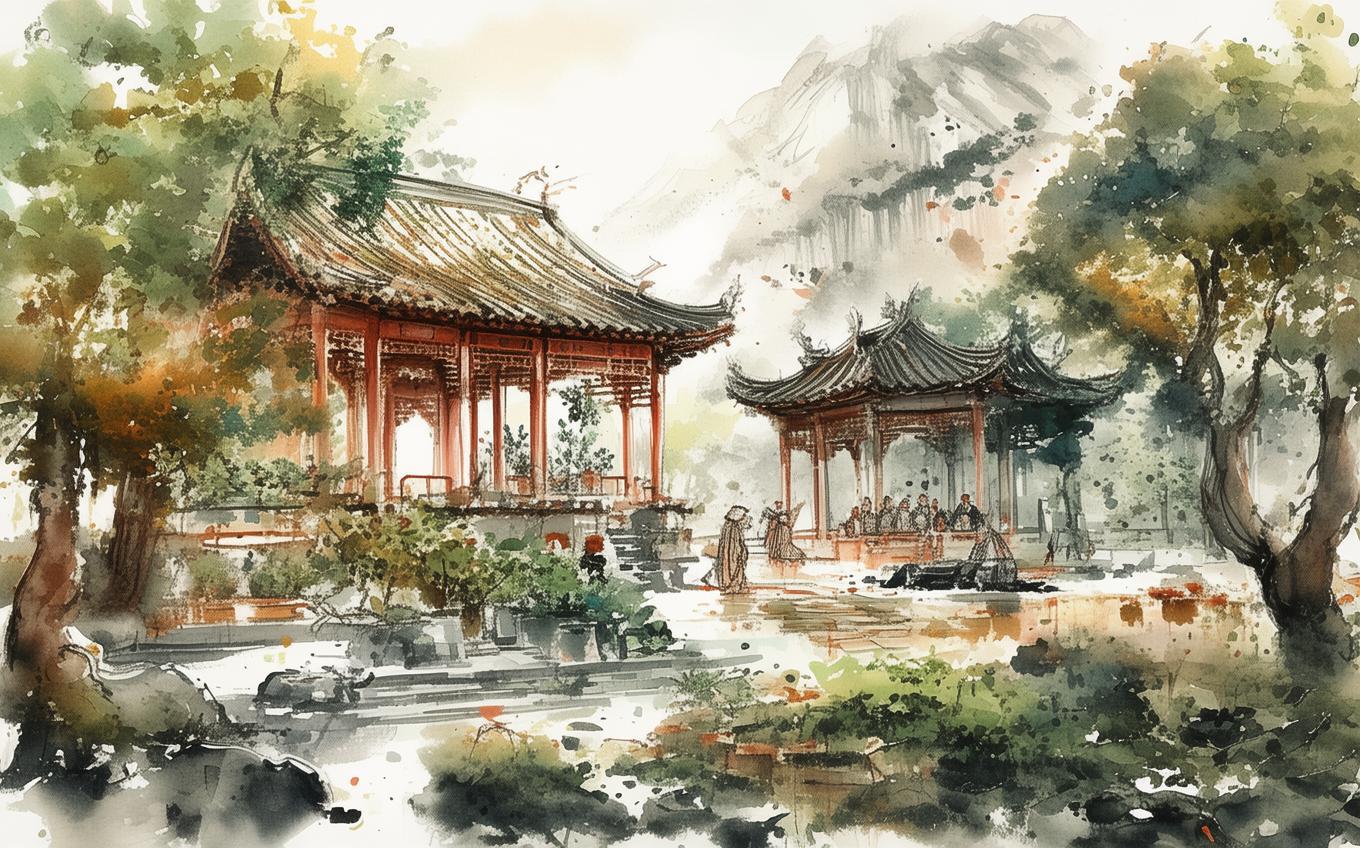
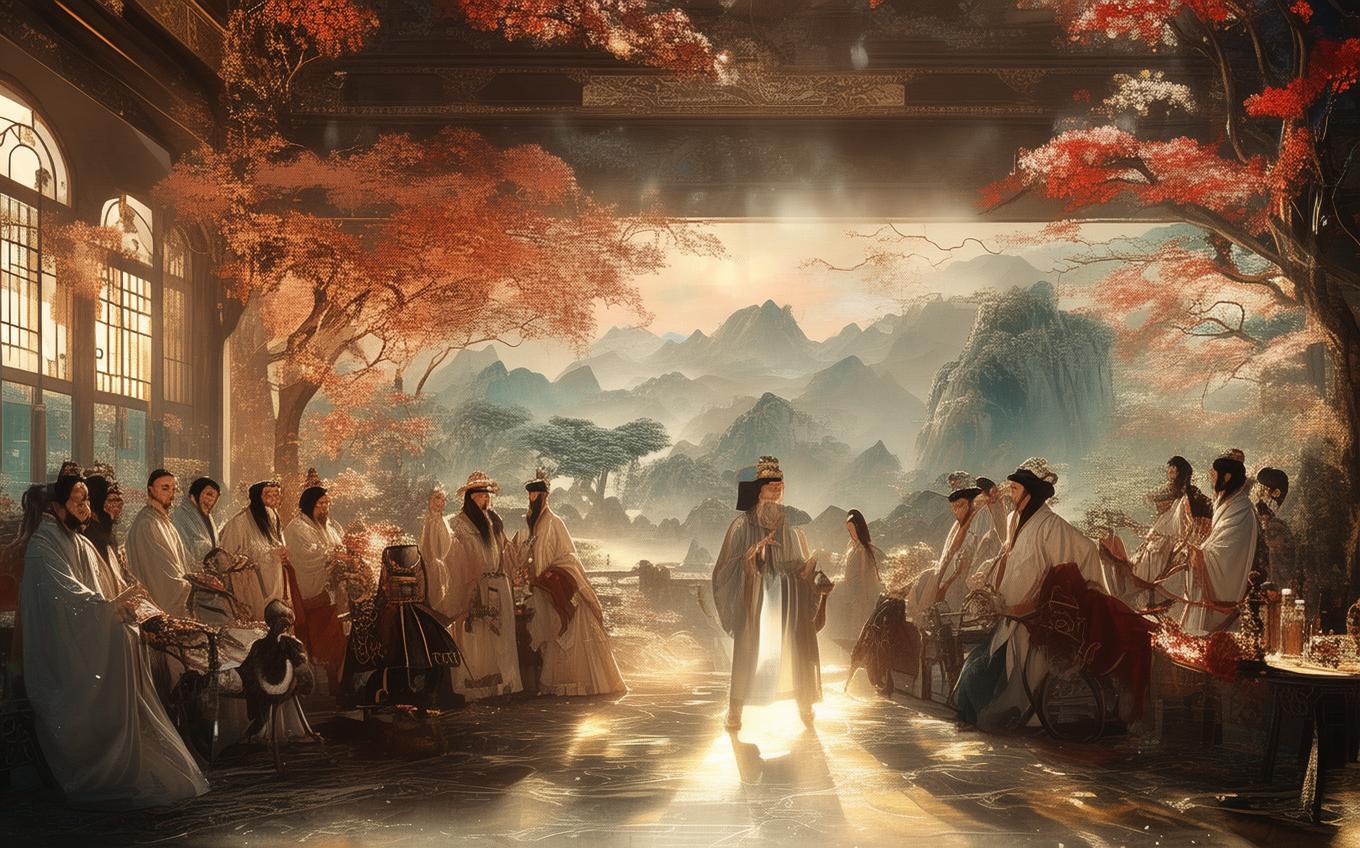
Emperor Xuanzong of Tang (唐玄宗, Lǐ Lōngjī), who reigned from 712 to 756 AD, was not only one of the most celebrated monarchs in Chinese history but also a gifted poet and patron of the arts. His long reign saw the zenith of Tang culture, an era of unprecedented prosperity, openness, and literary brilliance. Among his surviving works, "同二相已下群官乐游园宴" (Accompanying the Two Chancellors and All Officials Below at the Leyou Garden Banquet) stands out as a fine example of imperial verse—a poem that blends majestic court ceremony with intimate landscape appreciation, and betrays the ruler's thoughtful engagement with Confucian ideals of governance. The poem records a sumptuous banquet at Leyou Garden (乐游园), a scenic high ground in the Tang capital Chang’an famed for its panoramic views, and gathers the entire court in a moment of shared leisure. Its lines move from the ritualistic gathering of all under Heaven to the quiet fading of the feast, ending with the emperor’s willingness to hear remonstrance—a rare glimpse into the self-awareness of an absolute ruler.
The Poem: Full Text and Translation
撰日岩廊暇,
zhuàn rì yán láng xiá,
On a chosen day, with leisure among the palace corridors,
需云宴乐初。
xū yún yàn lè chū.
As the hexagram “Waiting” says, the banquet’s pleasures first unfold.
万方朝玉帛,
wàn fāng cháo yù bó,
From every quarter they pay court with jade and silk,
千品会簪裾。
qiān pǐn huì zān jū.
A thousand ranks assemble, hairpins and robes in splendor.
地入南山近,
dì rù nán shān jìn,
The land reaches close to the Southern Mountains,
城分北斗余。
chéng fēn běi dǒu yú.
The city’s plan traces the remnants of the Northern Dipper.
池塘垂柳密,
chí táng chuí liǔ mì,
By pools and ponds, drooping willows grow thick,
原隰野花疏。
yuán xí yě huā shū.
On high plains and low marshes, wildflowers bloom in scattered dots.
帟幕看逾暗,
yì mù kàn yú àn,
The silken tents appear ever darker as we gaze,
歌钟听自虚。
gē zhōng tīng zì xū.
The music of bells and songs sounds distant, almost hollow.
兴阑归骑转,
xìng lán guī qí zhuǎn,
When joy wanes, the returning horsemen wheel about,
还奏弼违书。
huán zòu bì wéi shū.
Once more they present memorials to correct my faults.
Line-by-Line Analysis
The opening couplet situates the feast in a carefully chosen moment of imperial leisure and auspicious symbolism. “撰日” (chosen day) suggests deliberate selection, perhaps by divination, while “岩廊” (rocky corridors) evokes the grandeur and solidity of the palace. The second line deploys a learned allusion to the Book of Changes (I Ching): Hexagram 5, Xū (需, “Waiting”), depicts clouds rising to heaven, and its commentary advises “the gentleman eats, drinks, and takes joy.” By citing “需云” (the waiting clouds), Xuanzong frames the banquet as both ritually sanctioned and cosmically attuned—the feast is a natural moment in the flow of Heaven’s patterns, not mere indulgence.
The next two lines zoom out to the vast human landscape of the Tang Empire. “万方朝玉帛” draws on an ancient formula for universal submission: jade and silk were the traditional tributes brought by vassal states. Under Xuanzong, Chang’an truly was the center of a multi-ethnic, multi-cultural world, and this line proudly claims that “all directions” gather. “千品会簪裾” narrows the gaze to the ranked officials present; “簪裾” (hairpins and the front pieces of robes) stand metonymically for the civil and military elite. The juxtaposition of “万方” and “千品” creates a sweeping, almost cinematic scale—from the edges of the known world to the very texture of courtly dress.
A sharp turn moves to the physical setting. Leyou Garden was celebrated for its elevated position overlooking the city and the mountains to the south. “地入南山近” points to the nearness of the Zhongnan Mountains (Southern Mountains), a traditional retreat for immortals and hermits, now folded into the imperial landscape. “城分北斗余” is a more esoteric touch: Chang’an’s grid was famously modeled on the constellations, especially the Big Dipper, and the phrase suggests that from this height the city itself seems to trace out a celestial map. The Tang capital’s southernmost wards were less densely built, leaving open ground that echoed the Dipper’s handle—thus “余” (remainder or surplus). The emperor sees his capital not merely as a human construct but as a mirror of cosmic order.
From grand geography, the poem turns to intimate botanical details. “池塘垂柳密” draws the eye down to the lush, shaded banks of imperial ponds, where willows droop thickly—a classic emblem of courtly beauty and transience. In contrast, “原隰野花疏” opens onto the wilder margins: high plains and marshes are dotted sparingly with wildflowers. The pairing “密” (dense) and “疏” (sparse) balances cultivated order against natural simplicity, a typical Tang aesthetic that prizes both refinement and spontaneity.
As evening deepens, the sensory texture shifts. “帟幕” are the large silk awnings spread for the feast; in gathering dusk they seem to soak up the remaining light, growing almost black to the eye. At the same moment, the music of “歌钟” (song and bells) recedes into a hollow, ethereal hush. The word “虚” (emptiness) is crucial—it suggests not silence but a thinning of sound, as if the melodies have escaped the instruments and become part of the darkening air. This subtle erosion of sensory clarity marks the turning point from fullness to decline, from vibrant celebration to reflective quiet.
The penultimate couplet announces the end. “兴阑” is a conventional phrase for the waning of inspiration or delight, and “归骑转” shows the horsemen wheeling for home. There is no pathos here, only a gentle, inevitable dispersal. But the final line is extraordinary. Instead of closing with a wistful sigh or a boast of magnificence, Xuanzong records that returning officials will once more submit “弼违书”—memorials that point out the ruler’s errors. “弼” means to assist or correct, “违” means deviation or fault. This is a direct nod to the Confucian ideal of the minister who dares to remonstrate with his sovereign. By ending a poem of grandeur with this gesture, the emperor publicly embraces the virtue of self-criticism and the proper function of his court: not just to feast harmoniously, but to constantly steer governance back to the right path.
Themes and Symbolism
The central theme is imperial harmony—the vision of a perfectly ordered world in which the cosmos, the capital, the social hierarchy, and the natural landscape all resonate together. The banquet unfolds under an auspicious cosmic sign (the waiting clouds), gathers tribute from the four quarters, mirrors the stars in urban planning, and balances cultivated and wild beauty. The emperor stands at the center of this order, yet the poem’s crucial turn is toward self-examination.
Several symbols deepen this theme. Jade and silk (玉帛) represent not just tribute but the civilized bonds of peace and ritual; they evoke an ancient tradition of virtuous kingship. The Big Dipper (北斗) was seen as the pivot of heaven, and by linking Chang’an’s layout to it, Xuanzong implies that his rule participates in the cosmic pivot. Willows (柳) are timeless emblems of parting and fleeting beauty in Chinese poetry, while wildflowers (野花) on the marshes suggest the untamed edges even within an empire. The silken tents and distant music symbolize the fragile, ephemeral quality of earthly splendor—magnificent but destined to fade. Finally, the “memorials to correct faults” (弼违书) function as a moral symbol: the true banquet ends not in revelry but in a return to duty, with the ruler open to reproof.
Cultural Context
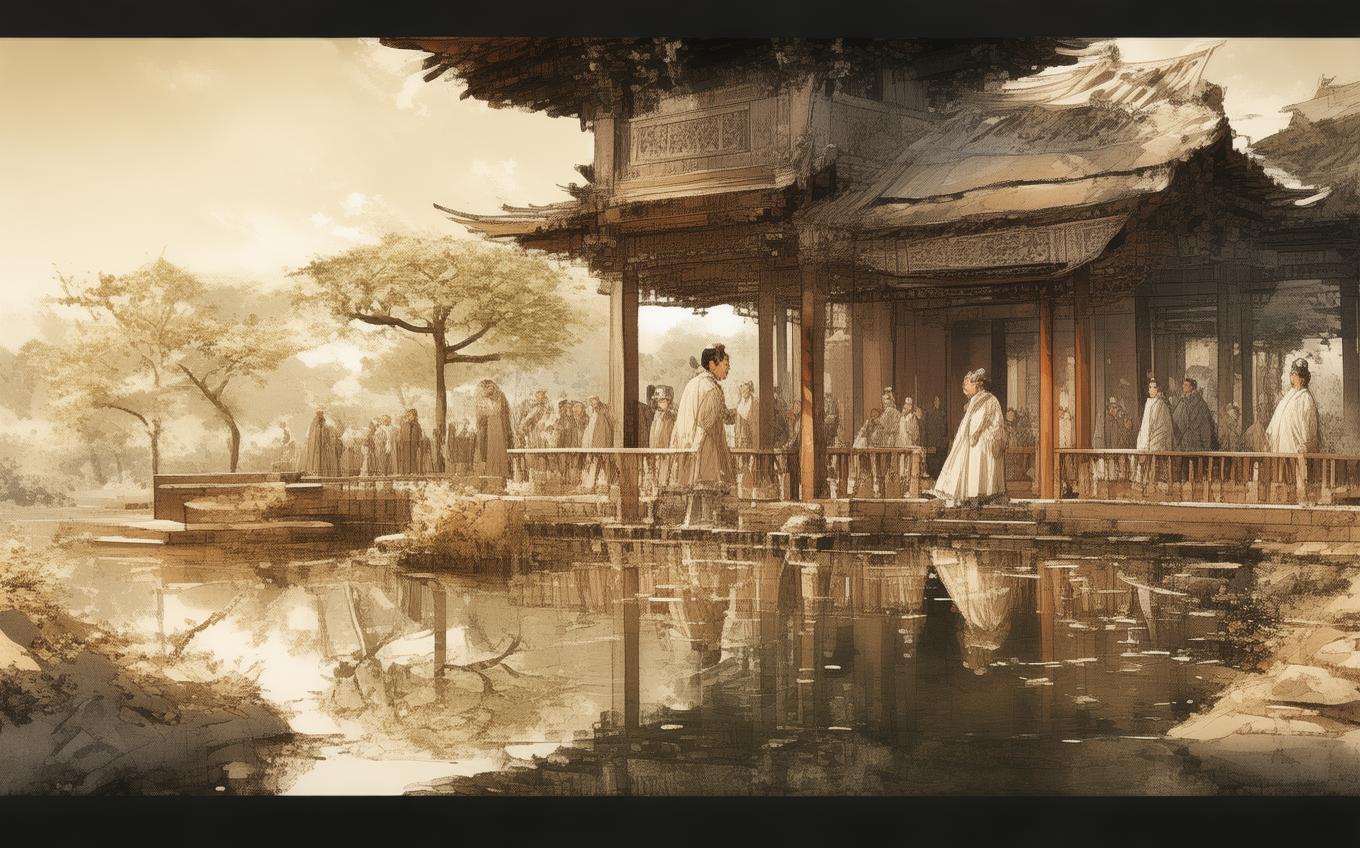
Emperor Xuanzong’s reign marked the High Tang, a golden age of poetry, painting, music, and cosmopolitan exchange. Chang’an was the largest city in the world, its population reaching over a million, and the imperial court was a magnet for Japanese monks, Persian merchants, Indian astronomers, and Turkic generals. The Leyou Garden was a beloved site for court outings, famous enough that later poet Li Shangyin would write wistfully of its sunset views. An imperial banquet there was a carefully choreographed event, mixing political display, artistic performance, and landscape appreciation.
The poem’s reference to the I Ching is typical of Tang literati culture, where the classics were woven seamlessly into personal expression. By opening with the hexagram of “Waiting,” Xuanzong casts his feast as an act of patient, virtuous enjoyment, not reckless luxury. The closing reference to remonstrance draws on a long Confucian tradition that venerated ministers who spoke truth to power—an ideal memorably embodied by Wei Zheng in the court of Xuanzong’s great-grandfather, Taizong. Xuanzong’s own early reign was famously open to criticism, and
Comments (0)
No comments yet. Be the first to comment!