Introduction
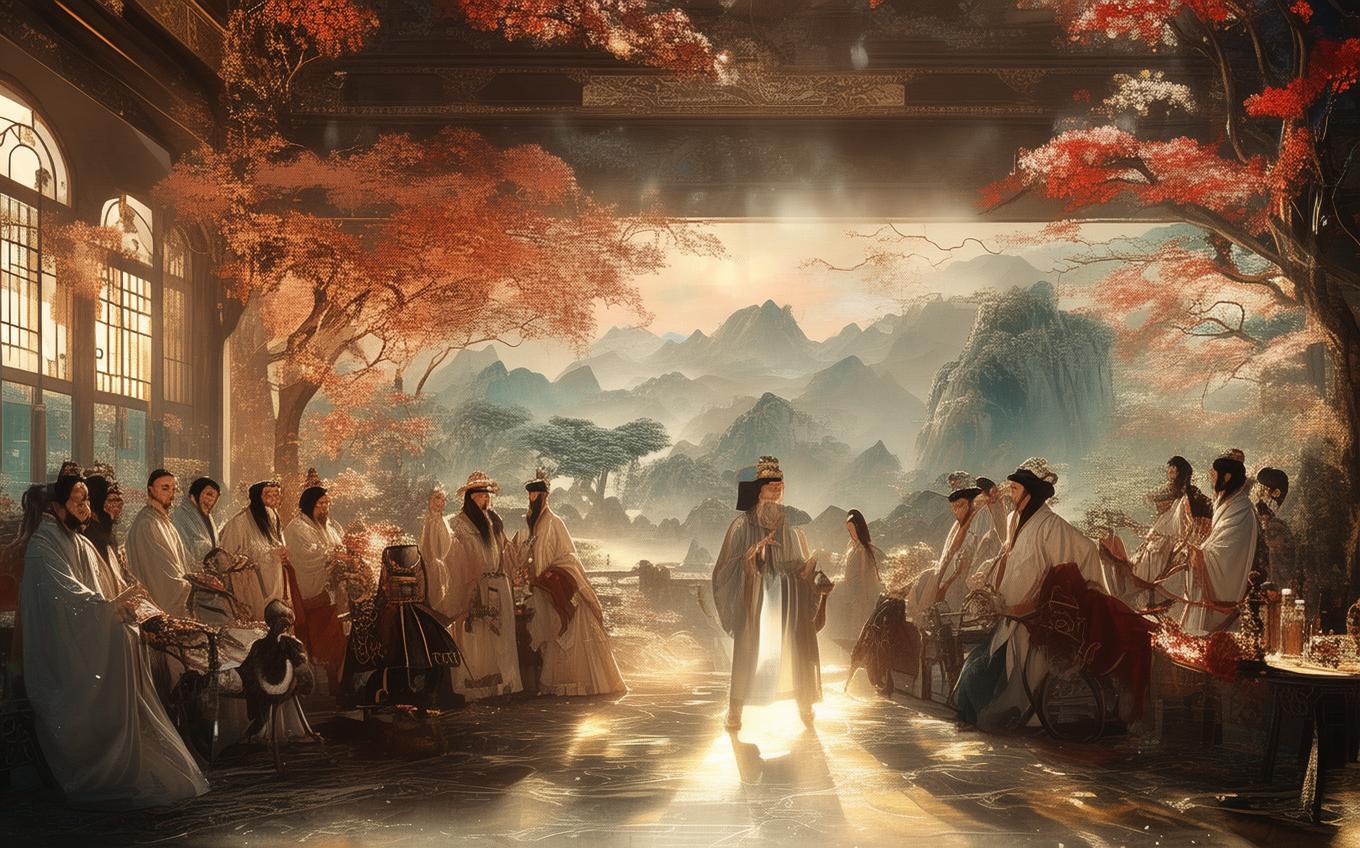
Tang Emperor Xuanzong (Li Longji, reigned 712–756) presided over a cultural golden age when poetry, music, and scholarship flourished under imperial patronage. In the spring of an unspecified year, the emperor hosted a banquet for his two chief ministers, ritual officials, and scholars of the newly established Lijian Academy (丽正殿). The evening’s entertainment included a customary courtly game: drawing a single character to determine the rhyme of a collective poem. The character drawn was feng (风, wind). The emperor composed the following poem, a refined testament to cosmic harmony, benevolent governance, and the convivial spirit of spring. Though composed for an elite gathering, its imagery and sentiments offer a window into Tang ideals of harmony between heaven, ruler, and realm.
The Poem: Full Text and Translation
乾道运无穷,
Qián dào yùn wú qióng,
The way of Heaven revolves without end;
恒将人代工。
Héng jiāng rén dài gōng.
Forever it relies on human hands to carry on its work.
阴阳调历象,
Yīn yáng tiáo lì xiàng,
Yin and yang harmonize the calendar’s celestial signs;
礼乐报玄穹。
Lǐ yuè bào xuán qióng.
Rites and music repay the dark-blue vault of sky.
介胄清荒外,
Jiè zhòu qīng huāng wài,
Armor and helmets sweep the wild frontiers clean;
衣冠佐域中。
Yī guān zuǒ yù zhōng.
Robed officials lend their aid within the realm.
言谈延国辅,
Yán tán yán guó fǔ,
Our conversation welcomes pillars of the state;
词赋引文雄。
Cí fù yǐn wén xióng.
Our verse-making draws the boldest literary minds.
野霁伊川绿,
Yě jì Yī chuān lǜ,
After rain, the fields clear and the Yi River runs green;
郊明巩树红。
Jiāo míng Gǒng shù hóng.
The outskirts brighten; trees at Gong glow red with blossoms.
冕旒多暇景,
Miǎn liú duō xiá jǐng,
The imperial crown enjoys abundant scenes of peace;
诗酒会春风。
Shī jiǔ huì chūn fēng.
Poetry and wine come together with the spring breeze.
Line-by-Line Analysis
Couplet 1 — Cosmic order and human agency
Xuanzong opens with a grand cosmological statement. The “way of Heaven” (qián dào) — patterned on the Qian (Heaven) trigram of the Yijing — is an endless, self-renewing principle. Yet it does not operate alone: “恒将人代工” suggests that Heaven continually requires human effort to “substitute” or carry out its work on earth. The emperor positions himself and his officials as vital participants in this cosmic process, a classic Confucian notion of the ruler as the pivot between Heaven and the human world.
Couplet 2 — Harmonising the times, honouring the heavens
“阴阳调历象” refers to the meticulous adjustment of the lunar-solar calendar according to the interplay of yin and yang. In Tang China, calendar-making was a sacred state function, ensuring that human activities aligned with cosmic rhythms. The line “礼乐报玄穹” couples ritual and music as offerings to the deep, mysterious firmament (xuán qióng). Li yue, the twin pillars of Confucian statecraft, are not merely social instruments but acts of gratitude toward the universe.
Couplet 3 — Civil and military virtue
The emperor then balances the two essential arms of the empire. “介胄清荒外” conjures soldiers in armour (jiè zhòu) bringing order to distant frontiers — a mild euphemism for military campaigns that pacify the barbarian periphery. “衣冠佐域中” turns to the robed scholar-officials (yī guān, literally “clothes and cap”) who assist in governing the interior. This neat parallelism reflects the ideal sovereign who harmonises wen (civil refinement) and wu (martial strength).
Couplet 4 — The company of the banquet
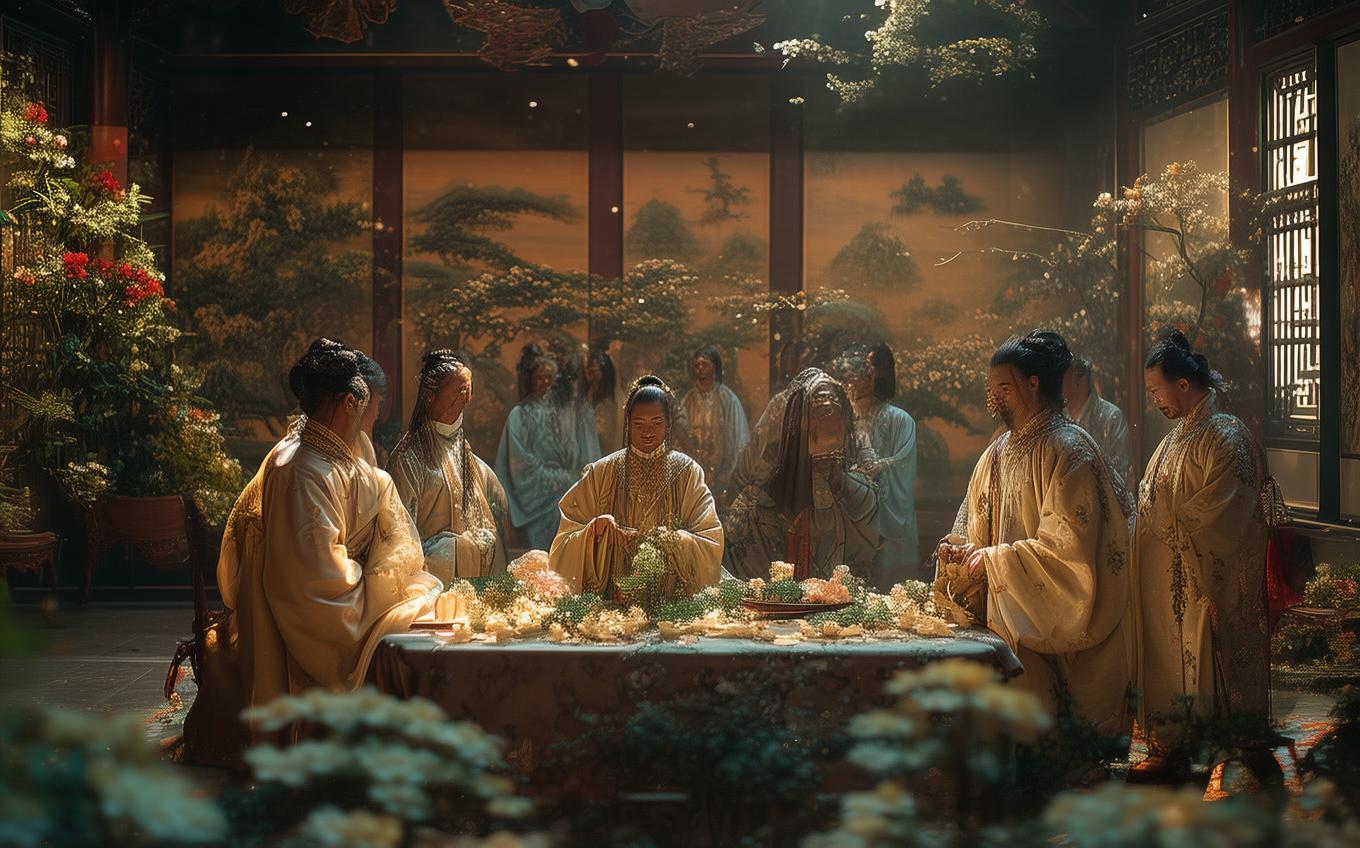
The poem shifts to the immediate occasion. “言谈延国辅” celebrates the conversation that welcomes “pillars of the state” — the two chancellors and ritual officers named in the title. “词赋引文雄” extends the praise to the Lijian academicians, whose compositions draw forth the “heroes of letters”. The banquet is thus both a political and a literary symposium, uniting statecraft and art.
Couplet 5 — Spring landscape after rain
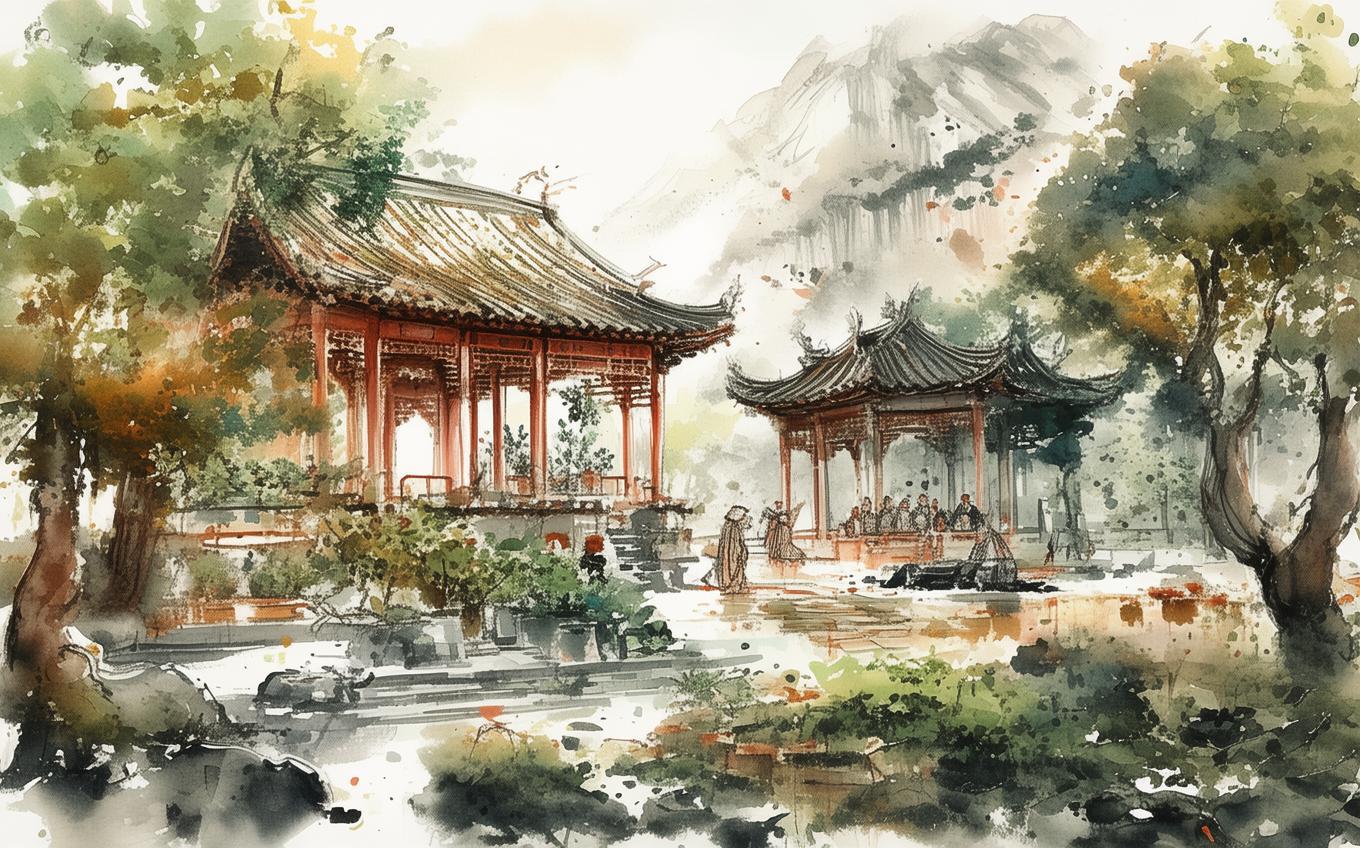
A sudden turn to landscape offers the evening’s atmospheric backdrop. “野霁伊川绿” pictures the Yi River (in modern Henan, near Luoyang) turning vividly green after a rain has cleared. “郊明巩树红” describes the trees around Gong County (巩县, close to Luoyang) glowing red, likely peach or plum blossoms catching the last light. These bright colours convey a world freshly washed, alive, and auspicious — a mirror of the well-governed state.
Couplet 6 — Imperial leisure and the spring breeze
“冕旒多暇景” refers to the ceremonially crowned emperor enjoying “many leisure scenes” — a phrase that dignifies idleness as a sign of a peaceful era. The final line, “诗酒会春风”, fulfills the rhyme-character feng (风) and unites the poem’s themes: poetry and wine, twin consolations of cultivated life, now merge with the spring breeze. This closing breeze is more than a season; it is the gentle, transforming influence of a sage ruler, echoing the ancient belief that the monarch’s virtue spreads like wind over grass.
Themes and Symbolism
Cosmic harmony and sage kingship
The poem is undergirded by the concept of tianren heyi (天人合一), the unity of Heaven and humanity. The emperor, as Son of Heaven, mediates between cosmic patterns and human affairs. From calendar adjustments to rites, from frontier pacification to literary cultivation, every act mirrors the orderly movement of the Dao.
Civil-military complementarity
The juxtaposition of armoured soldiers and robed officials makes visible the Tang ideal of a ruler who wields both the sword and the brush. This balance was especially prized in Xuanzong’s early reign, when military expansion coexisted with a magnificent cultural flowering.
Spring as renewal and moral influence
Spring is never mere weather in classical Chinese poetry. It signifies renewal, vitality, and — in a political context — the warmth of benevolent governance. The final breeze (chun feng) is loaded with Confucian resonance: a wise ruler’s virtue touches his people as easily and universally as the spring wind stirs the grass.
The “wind” (feng) as structure and symbol
The poem’s very form is bound to feng, the drawn rhyme. By making it the closing word, Emperor Xuanzong both obeys the banquet game and transforms feng into the poem’s symbolic nucleus — the unseen, life-giving force that unites cosmos, landscape, and human community.
Cultural Context
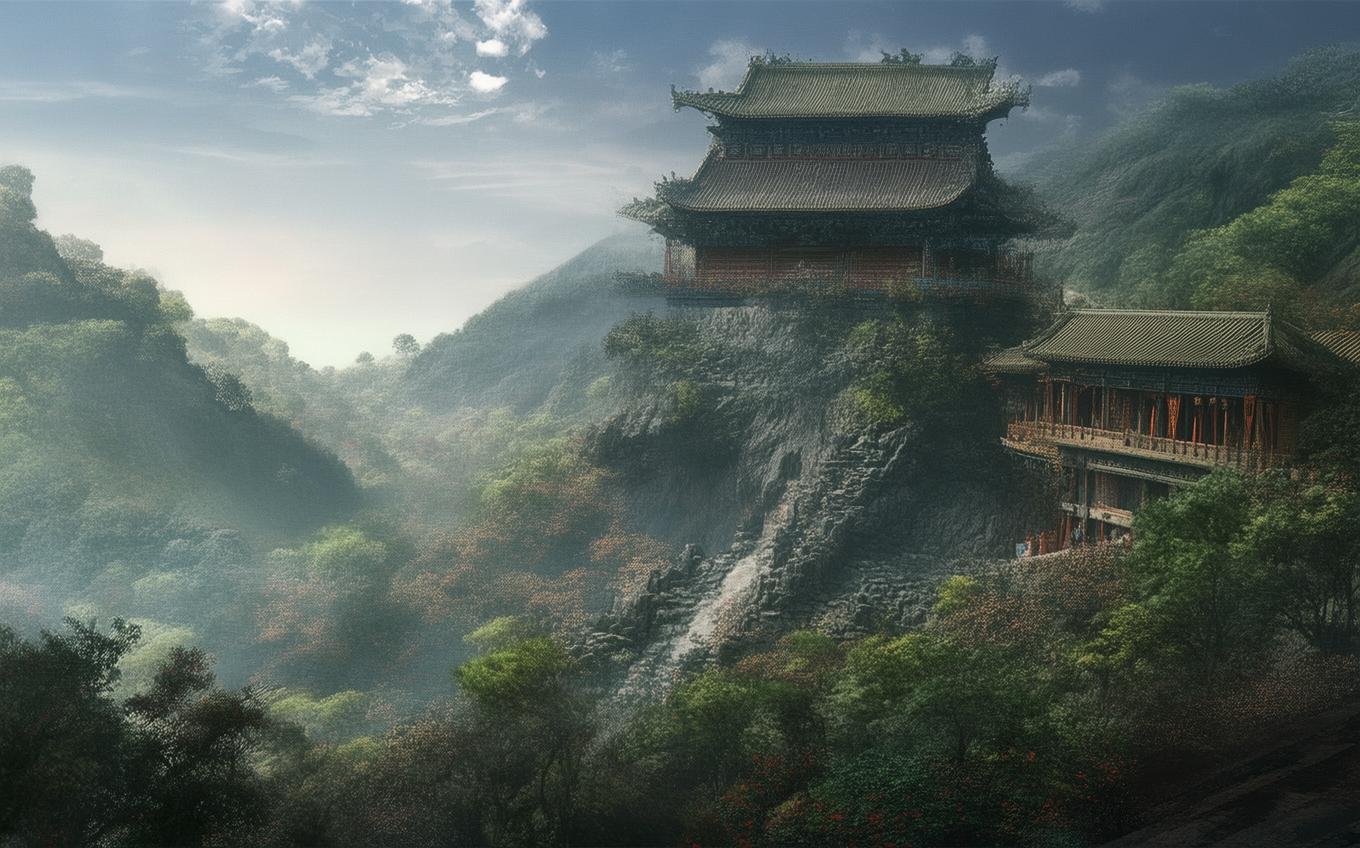
The banquet took place at the Lijian Hall (丽正殿), an institution founded by Xuanzong in 717 as an imperial library and academy. It later evolved into the famous Hanlin Academy. The “two chancellors” were likely high-ranking ministers, and the “ritual officers” handled the empire’s sacrificial and ceremonial institutions. Court gatherings like this one regularly produced communal poetry, with rhymes determined by lot (tan de feng zi, drawing the character for wind), a playful yet serious ritual that affirmed shared cultural values.
Xuanzong’s reign, particularly the Kaiyuan era (713–741), is remembered as an apex of Tang civilisation. This poem embodies that moment’s optimism: a ruler at ease, a state in cosmic synchrony, and an elite bound together by refined pleasures. It also reflects the Confucian conviction that the arts — poetry, music, ritual — are not diversions but essential instruments of moral government.
Conclusion
“春晚宴两相及礼官丽正殿学士探得风字” is a court poem in the most elegant sense: occasional, polished, and richly allusive. Yet its tranquillity and graceful proportions still speak across centuries. In twelve measured lines, the emperor sketches a world where the heavens move in their eternal rounds, officials labour in glad service, and spring returns punctually to the riverbanks and orchard trees. The final meeting of poetry, wine, and spring breeze is not just the image of a pleasant evening; it is the vision of a civilisation in full bloom. That vision, fragile as a blossom, would not survive Xuanzong’s later years, but its silent echo in this poem remains an enduring invitation to imagine a world in perfect tune.
Comments (0)
No comments yet. Be the first to comment!