Introduction
- 内家娇 (Nèijiā Jiāo) is a cí (词) tune pattern from the Song dynasty, a form of lyric poetry originally written to be sung. Unlike regulated Tang poems, cí poems are composed according to fixed musical patterns, each with its own rhythm and emotional atmosphere.
- The poem analyzed here is 《内家娇·煦景朝升》 (Nèijiā Jiāo · Xù jǐng cháo shēng) by 柳永 (Liǔ Yǒng, c. 987–1053), one of the most important poets of the Northern Song dynasty.
- Liu Yong is famous for writing about urban life, romantic longing, travel, and separation. His language often feels direct, musical, and emotionally intimate.
- This poem is significant because it combines a bright spring landscape with deep personal sorrow. The contrast between the beauty of the outside world and the loneliness of the speaker is a classic feature of Chinese lyric poetry.
The Poem: Full Text and Translation
煦景朝升,烟光昼敛,疏雨夜来新霁。
Xù jǐng cháo shēng, yān guāng zhòu liǎn, shū yǔ yè lái xīn jì.
Warm sunlight rises in the morning; misty radiance gathers by day; after last night’s light rain, the sky has just cleared.
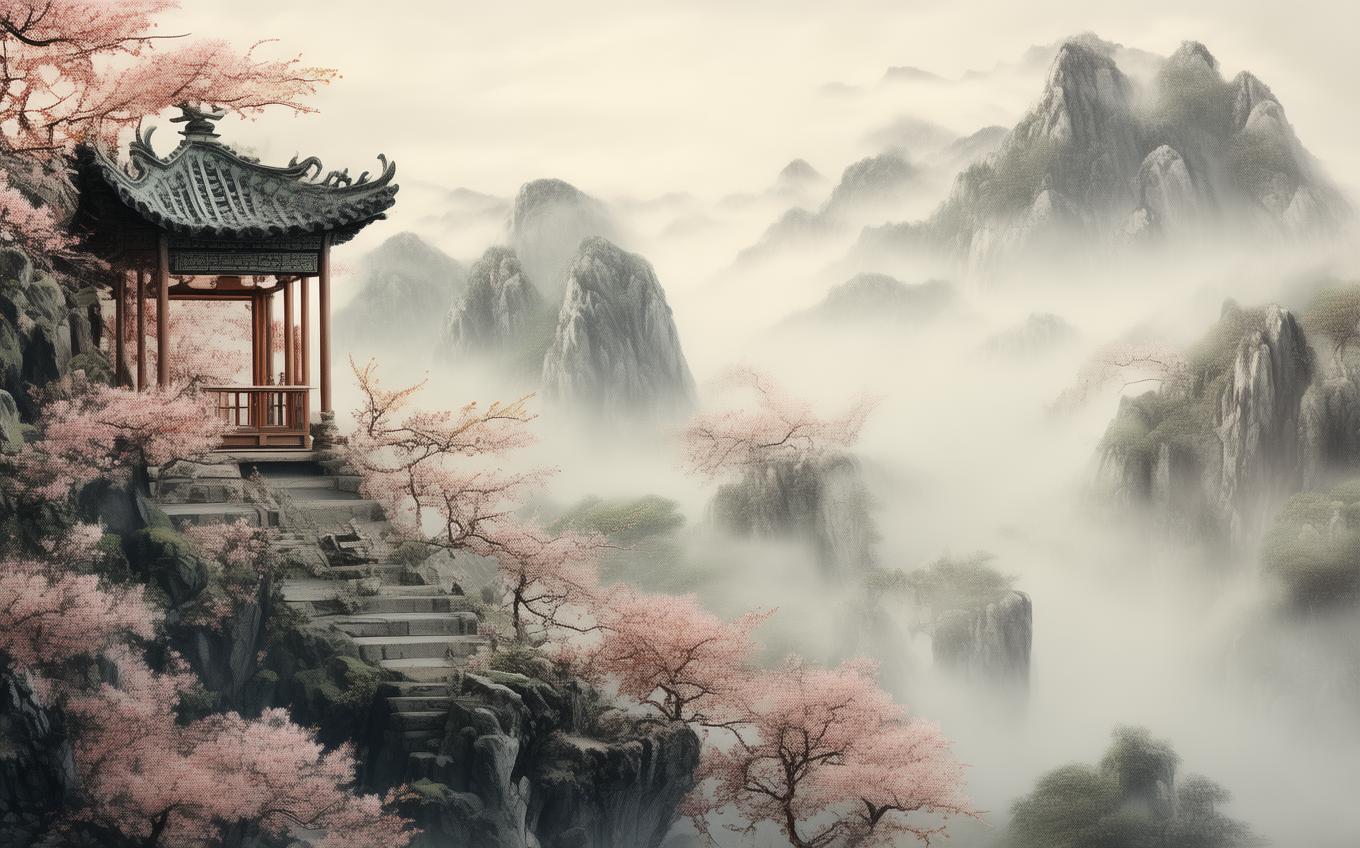
垂杨艳杏,丝软霞轻,绣出芳郊明媚。
Chuí yáng yàn xìng, sī ruǎn xiá qīng, xiù chū fāng jiāo míng mèi.
Drooping willows and brilliant apricot blossoms, soft as silk and light as rosy clouds, embroider the fragrant outskirts with brightness and beauty.
处处踏青斗草,人人眷红偎翠。
Chù chù tà qīng dòu cǎo, rén rén juàn hóng wēi cuì.
Everywhere people go spring-walking and play grass games; everyone lingers among reds and leans close to greens.
奈少年、自有新愁旧恨,消遣无计。
Nài shào nián, zì yǒu xīn chóu jiù hèn, xiāo qiǎn wú jì.
But alas, this young man has his own new sorrows and old regrets, with no way to dispel them.
帝里。
Dì lǐ.
In the imperial capital.
风光当此际。
Fēng guāng dāng cǐ jì.
At just this moment, the scenery is at its finest.
正好恁携佳丽。
Zhèng hǎo nèn xié jiā lì.
It would be perfect to bring along a beautiful companion.
阻归程迢递。
Zǔ guī chéng tiáo dì.
Yet the road home is blocked and stretches far away.
奈好景难留,旧欢顿弃。
Nài hǎo jǐng nán liú, jiù huān dùn qì.
Sadly, beautiful moments cannot be kept, and past joys have suddenly been cast aside.
早是伤春情绪,那堪困人天气。
Zǎo shì shāng chūn qíng xù, nǎ kān kùn rén tiān qì.
Already I am filled with spring sorrow; how can I bear this weather that entangles the heart?
但赢得、独立高原,断魂一饷凝睇。
Dàn yíng dé, dú lì gāo yuán, duàn hún yī shǎng níng dì.
All I gain is standing alone on the high plain, gazing fixedly for a while, my soul broken with longing.
Line-by-Line Analysis
-
“煦景朝升,烟光昼敛,疏雨夜来新霁。”
The poem opens with a beautifully cinematic image of spring. The word 煦 (xù) suggests gentle warmth, especially the comforting warmth of the sun. The night rain has just stopped, leaving the air fresh and luminous. In Chinese poetry, rain followed by clear skies often creates a mood of renewal. Yet this brightness will soon contrast sharply with the speaker’s inner sadness. -
“垂杨艳杏,丝软霞轻,绣出芳郊明媚。”
Liu Yong turns the landscape into a piece of embroidery. The willows hang down like soft silk threads; apricot blossoms glow like rosy clouds. The verb 绣 (xiù), “to embroider,” is important: nature is not merely growing but artistically creating a spring scene. This reflects the Song dynasty love of refined visual detail. -
“处处踏青斗草,人人眷红偎翠。”
The poem moves from landscape to human activity. 踏青 (tà qīng) means a spring outing, when people walk in the countryside to enjoy fresh greenery. 斗草 (dòu cǎo) was a traditional game involving grasses and flowers, often associated with young people and women during spring festivals.
The phrase 红 (hóng) and 翠 (cuì) literally mean “red” and “green,” referring to flowers and leaves, but they can also suggest beautiful women in colorful clothing. The world is full of pleasure, youth, and companionship. -
“奈少年、自有新愁旧恨,消遣无计。”
Here the emotional turn appears. 奈 (nài) means “alas” or “what can one do?” The speaker is young, yet already burdened by new sorrows and old regrets. This is a very Liu Yong moment: public festivity intensifies private loneliness. The happier the world appears, the more isolated the speaker feels. -
“帝里。”
This short line means “the imperial capital,” likely referring to a prosperous urban center such as Bianjing, the Northern Song capital. The abruptness of this phrase creates a pause, almost like a sigh. The speaker is surrounded by the most splendid scenery and social life, yet he remains emotionally displaced. -
“风光当此际。”
The scenery is at its peak. Spring, in Chinese poetry, often symbolizes youth, beauty, and love. But spring is also temporary. Its very beauty reminds the poet that time passes quickly and cannot be held. -
“正好恁携佳丽。”
The speaker imagines how perfect this moment would be if he could share it with a beloved woman. The word 佳丽 (jiā lì) means a beautiful lady. In classical Chinese poetry, beauty is often not only physical but emotional: the beloved represents intimacy, memory, and a lost world of happiness. -
“阻归程迢递。”
The imagined joy is immediately blocked. The phrase suggests distance, delay, and separation. 迢递 (tiáo dì) means long and far-reaching. The speaker cannot return, either to his hometown, to his beloved, or to a lost emotional state. In Song cí poetry, the road is often a symbol of longing and helplessness. -
“奈好景难留,旧欢顿弃。”
This line expresses one of the central insights of the poem: beautiful scenes cannot last, and former pleasures may disappear suddenly. The word 顿 (dùn) means “suddenly” or “all at once,” giving the line emotional sharpness. Happiness is fragile; memory remains, but the actual joy is gone. -
“早是伤春情绪,那堪困人天气。”
伤春 (shāng chūn), “grieving over spring,” is a major motif in Chinese literature. It does not simply mean disliking spring. Rather, spring’s beauty awakens awareness of transience: flowers bloom, youth passes, lovers separate. The weather is described as 困人 (kùn rén), meaning it traps, wearies, or overwhelms a person. The outer climate becomes an emotional climate. -
“但赢得、独立高原,断魂一饷凝睇。”
The conclusion is quiet but devastating. The speaker stands alone on a high plain, gazing into the distance. 断魂 (duàn hún) literally means “soul-broken,” a strong expression for grief and longing. 凝睇 (níng dì) means to gaze fixedly. Nothing is resolved. The poem ends with stillness: one lonely figure looking outward, while inwardly consumed by memory.
Themes and Symbolism
-
Spring Beauty and Human Sorrow
The poem’s greatest emotional power comes from contrast. The world is bright, fragrant, and full of people enjoying spring, but the speaker feels sorrow. This contrast reflects a common Chinese poetic idea: nature does not simply mirror emotion; sometimes it intensifies emotion by opposing it. -
Transience
Spring is beautiful precisely because it is brief. The line “好景难留” (hǎo jǐng nán liú), “beautiful scenes are hard to keep,” expresses a universal truth: good times pass quickly. This theme is central to Chinese poetry, especially in works about love and separation. -
Separation and Longing
The poem suggests that the speaker is separated from someone he loves. The long road home and the memory of “old joys” imply emotional distance as well as physical distance. Longing in Chinese poetry often appears through images of roads, distant gazes, and solitary standing. -
Public Festivity vs. Private Loneliness
Everyone else seems to be enjoying spring outings, games, flowers, and companionship. The speaker, however, is alone. This creates a subtle urban melancholy: even in a crowded, beautiful capital, a person may feel deeply isolated. -
Nature as Embroidery
The image of the countryside being “embroidered” by willows and blossoms reflects a refined aesthetic. Nature is presented as delicate, crafted, and almost feminine. This symbol also connects the landscape to the world of love, beauty, and memory.
Cultural Context
-
The Song Dynasty and Cí Poetry
The Song dynasty was a golden age of cí (词) poetry. Unlike earlier forms that were often associated with courtly or scholarly expression, cí developed from popular songs and was closely connected to music, entertainment districts, and urban culture. Liu Yong was especially important because he embraced this musical, emotional, and sometimes romantic style. -
Liu Yong’s Distinctive Voice
Liu Yong often wrote about travelers, courtesans, lovers, and men separated from home. His poems are famous for their emotional sincerity and flowing rhythm. While some elite critics in his time considered his style too popular or sensual, later generations admired his ability to express human longing with unusual directness. -
Spring Outings in Chinese Culture
The poem refers to 踏青 (tà qīng), the custom of going outdoors in spring to enjoy the new greenery. Such outings were associated with youth, romance, festivals, and social pleasure. By mentioning this custom, Liu Yong places the speaker inside a lively cultural scene—but also emphasizes his inability to participate fully in that happiness. -
“Grieving Spring” as a Literary Tradition
In Chinese literature, spring often carries double meanings. It represents life, renewal, and desire, but also impermanence. Flowers bloom only to fall. Youth shines only to fade. Love is precious because it may be lost. The tradition of 伤春 (shāng chūn) captures this bittersweet awareness. -
Chinese Values and Emotional Restraint
Although the speaker is deeply sorrowful, the poem does not describe a dramatic outburst. Instead, grief appears through scenery, distance, and a final silent gaze. This reflects a classical Chinese aesthetic: strong emotion is often expressed indirectly, through images and atmosphere rather than explicit confession.
Conclusion
- 《内家娇·煦景朝升》 is a beautiful example of Liu Yong’s lyrical art. It begins with a radiant spring morning and ends with a solitary figure gazing into the distance, heartbroken by memory and separation.
- The poem’s enduring appeal lies in its emotional contrast: the brighter the spring landscape becomes, the deeper the speaker’s loneliness feels. This tension between outer beauty and inner sorrow is one of the great strengths of classical Chinese poetry.
- For modern readers, the poem remains deeply relatable. It reminds us that beautiful places and joyful seasons do not always erase sadness. Sometimes they make us feel more sharply what we have lost, whom we miss, and what cannot be recovered.

Comments (0)
No comments yet. Be the first to comment!