Introduction
陈叔达 (Chén Shūdá, 572–635) was a prominent scholar-official and poet of the early Tang Dynasty. Born into the Chen imperial clan of the Southern Dynasties, he served under the Sui Dynasty before becoming a trusted minister and literary figure at the court of Emperor Taizong of Tang. His life bridged a turbulent period of Chinese history—the reunification of the empire under the Sui, its rapid collapse, and the consolidation of the glorious Tang Dynasty.
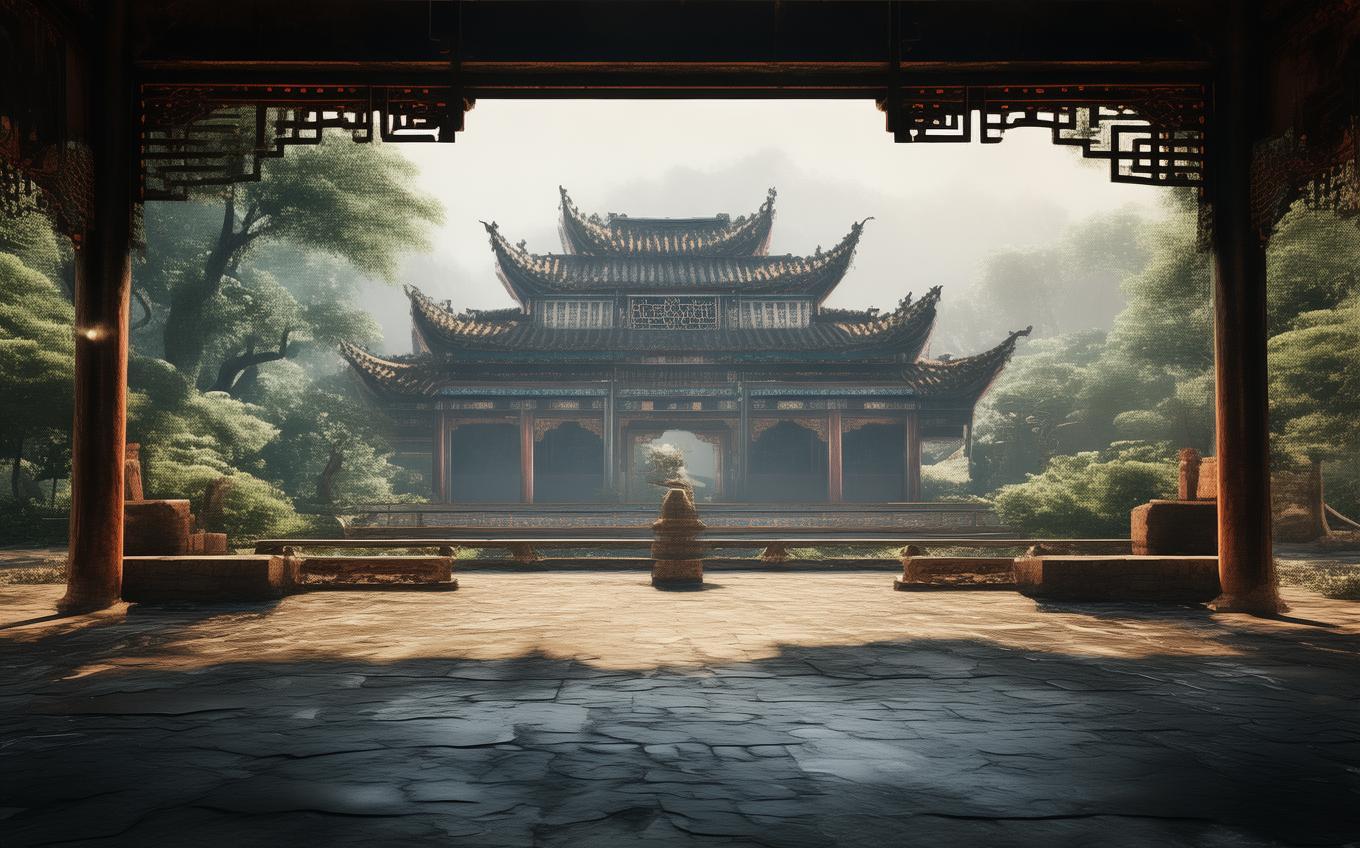
This poem, 州城西园入斋祠社 (Zhōuchéng Xīyuán Rù Zhāi Cí Shè), which may be translated as "Entering the Purification Hall at the Western Garden of the Prefectural City to Offer Sacrifice to the God of the Earth," is a rare and valuable example of Tang Dynasty ritual poetry. It belongs to the genre of jishen (祭神) or sacrificial verse—poems composed for state religious ceremonies. While much Tang poetry celebrates nature, friendship, wine, and the sorrows of parting, this poem opens a window into the solemn, formal world of official ritual, where the poet acts as a mediator between the human realm and the divine.
The poem is significant not only for its literary craft but also for its documentation of ancient Chinese state religion—specifically the sheji (社稷) cult, the worship of the gods of soil and grain that was central to imperial legitimacy and agricultural prosperity.
The Poem: Full Text and Translation
升坛预洁祀
Shēng tán yù jié sì
Ascending the altar, I prepare for the pure sacrifice;
诘早肃分司
Jié zǎo sù fēn sī
At early dawn, with reverence, the officials take their assigned places.
达气风霜积
Dá qì fēng shuāng jī
The penetrating air is thick with wind and frost;
登光日色迟
Dēng guāng rì sè chí
The climbing light of the sun is slow to appear.
农教先八政
Nóng jiào xiān bā zhèng
The teaching of agriculture precedes the Eight Administrations;
阳和秩四时
Yáng hé zhì sì shí
The harmony of yang orders the four seasons.
祈年服垂冕
Qí nián fú chuí miǎn
Praying for the harvest, I wear the hanging ceremonial crown;
告币动褰帷
Gào bì dòng qiān wéi
Announcing the offerings of silk, I stir the lifted curtain.
瘗地尊余奠
Yì dì zūn yú diàn
Burying offerings in the earth, I honor the remaining libations;
人天庶有资
Rén tiān shù yǒu zī
May humanity and Heaven both have their sustenance.
椒兰卒清酌
Jiāo lán zú qīng zhuó
With pepper and orchid, I finish the pure libation;
簠簋彻香萁
Fǔ guǐ chè xiāng qí
The ritual vessels are cleared of their fragrant grain.
折俎分归胙
Zhé zǔ fēn guī zuò
The carved meat from the offering stand is divided as blessed food to take home;
充庭降受厘
Chōng tíng jiàng shòu lí
The courtyard fills as blessings descend and are received.
方凭知礼节
Fāng píng zhī lǐ jié
Only through this do we understand the measure of ritual propriety;
况奉化雍熙
Kuàng fèng huà yōng xī
How much more, then, do we serve the transformation of harmonious peace.
Line-by-Line Analysis
Lines 1–2: The Opening Ritual
升坛预洁祀,诘早肃分司。
The poem opens with a scene of preparation. The speaker ascends a raised earthen altar (tán), the sacred platform where communication with the divine takes place. The word 洁 (jié, "pure" or "clean") is crucial—ritual purity was the first requirement for any sacrificial ceremony in ancient China. Before approaching the gods, the officiant had to be ritually cleansed through fasting, bathing, and the wearing of special garments.
The second line introduces the time—诘早 (jié zǎo), the early morning hours before dawn—and the solemn assembly of officials, each taking their designated position (分司 fēn sī). This reflects the highly bureaucratic nature of Chinese state ritual, where every participant had a precise role, mirroring the hierarchical order of the imperial government itself.
Lines 3–4: The Natural Setting
达气风霜积,登光日色迟。
Here the poet turns to the natural environment. The air is 达 (dá, "penetrating" or "pervasive"), filled with accumulated wind and frost. This suggests a late autumn or early winter ceremony—the time of year when the harvest was complete and the earth needed to be thanked and propitiated for the coming year.
The image of the sun's light being 迟 (chí, "slow" or "late") is particularly evocative. The ceremony begins before dawn, and the sun seems reluctant to rise, as if the heavens themselves are pausing to witness the sacred rites. The cold, frosty atmosphere contributes to the solemn, austere mood of the poem.
Lines 5–6: Agricultural and Cosmic Order
农教先八政,阳和秩四时。
These lines introduce the philosophical framework behind the ritual. The 八政 (bā zhèng, "Eight Administrations") refers to a concept from the ancient text Shangshu (尚书, "Book of Documents"), one of the Five Classics. In the "Great Plan" (洪范) chapter, the Eight Administrations are listed as: food, commodities, sacrifices, public works, education, justice, hospitality, and military affairs. Significantly, food (agriculture) is listed first—hence the poem states that "the teaching of agriculture precedes the Eight Administrations."
The second line invokes 阳和 (yáng hé), the harmonious yang force, which regulates the four seasons. This reflects the Chinese cosmological view that human ritual action must align with cosmic principles. The sacrifice to the earth god is not merely a superstitious act but a participation in the cosmic order.
Lines 7–8: The Ritual Vestments and Offerings
祈年服垂冕,告币动褰帷。
The speaker now describes the ceremonial attire—the 垂冕 (chuí miǎn), the formal crown with hanging beads worn by rulers and high officials during sacrifices. The phrase 祈年 (qí nián, "praying for the harvest year") is significant; it echoes the ancient qinian rituals performed by the Zhou Dynasty kings to ensure agricultural fertility.
The 币 (bì) refers to the silk offerings presented to the spirits. In ancient Chinese ritual, silk was one of the most precious offerings, symbolizing purity and value. The 褰帷 (qiān wéi) is the lifted curtain of the ritual hall or shrine, suggesting the moment of unveiling the sacred space or revealing the offerings to the deity.
Lines 9–10: Burying the Offerings
瘗地尊余奠,人天庶有资。
The verb 瘗 (yì) means "to bury" or "to inter." In ancient Chinese earth worship, offerings were often buried in the ground as a way of delivering them to the earth deity. This practice, known as yimai (瘗埋), was distinct from other forms of sacrifice where offerings were burned (for heavenly deities) or thrown into rivers (for water spirits).
The line 人天庶有资 expresses the fundamental purpose of the ritual: to ensure that both humanity and Heaven have what they need. This reflects the Chinese concept of reciprocity between the human and divine realms—humans offer to the gods, and the gods in turn provide for human needs.
Lines 11–12: The Ritual Vessels
椒兰卒清酌,簠簋彻香萁。
椒兰 (jiāo lán) refers to pepper and orchid, both aromatic plants used to flavor ritual wine. The use of aromatic herbs in sacrificial wine was an ancient practice, believed to please the spirits with their fragrance. The 清酌 (qīng zhuó) is the clear, pure wine used in libations.
簠簋 (fǔ guǐ) are specific types of ritual vessels—fu being a rectangular vessel for grain and gui being a round one. The mention of these specific vessels demonstrates the poet's deep familiarity with ritual implements. The 香萁 (xiāng qí) refers to the fragrant grain stalks or grain offerings placed in these vessels.
Lines 13–14: The Distribution of Blessings
折俎分归胙,充庭降受厘。
After the sacrifice, the meat from the offering stand (俎 zǔ) is divided and distributed. This practice, known as 归胙 (guī zuò), was an essential part of Chinese sacrificial ritual. The blessed meat was believed to carry the spiritual power of the sacrifice, and sharing it created a bond between the participants and the deity.
The 厘 (lí) refers to the blessings or good fortune that descend from the spirits. The image of the courtyard filling with people receiving these blessings creates a sense of communal participation and shared benefit.
Lines 15–16: The Moral Conclusion
方凭知礼节,况奉化雍熙。
The poem concludes with a moral reflection. The speaker states that through such rituals, people come to understand 礼节 (lǐ jié), the proper measure of ritual and social conduct. This reflects the Confucian view that ritual is not merely about appeasing spirits but about cultivating virtue in the participants.
The final line invokes 雍熙 (yōng xī), a phrase meaning "harmonious and prosperous peace." This was the ideal state of governance in Chinese political philosophy—a time when the ruler's virtue aligned with cosmic order, and all things flourished. The poem thus connects the agricultural sacrifice to the broader goal of social and political harmony.
Themes and Symbolism
The Theme of Ritual as Cosmic Participation
The central theme of this poem is the belief that human ritual action participates in and maintains the cosmic order. The sacrifice to the earth god is not merely a petition for good harvests but a reenactment of the fundamental relationship between humanity, nature, and the divine. The poem's careful attention to ritual details—the altar, the vestments, the vessels, the offerings—reflects the Chinese conviction that proper form is essential to spiritual efficacy.
The Symbolism of Earth and Agriculture
The earth god (社 shè) was one of the most important deities in ancient Chinese religion. The character 社 combines the radical for "spirit" (礻) with the character for "earth" (土), literally meaning "spirit of the earth." The worship of the earth god was intimately connected to agriculture, as the earth was seen as the source of all fertility and sustenance.
The poem's emphasis on agriculture as the first of the Eight Administrations symbolizes the fundamental importance of food production in Chinese civilization. The ritual is ultimately about ensuring the material basis of human society.
The Symbolism of Purity
The repeated references to purity—洁祀 (pure sacrifice), 清酌 (clear wine)—symbolize the spiritual preparation required for communion with the divine. In Chinese ritual theory, purity was both physical and moral; the officiant had to be clean in body and pure in intention.
The Symbolism of Light and Dawn
The poem's setting at dawn symbolizes new beginnings and hope. The slow-rising sun represents the gradual manifestation of divine blessing. The cold frost and wind symbolize the austerity of the ritual, testing the devotion of the participants.
Cultural Context
The Sheji Cult in Chinese State Religion
The worship of the earth god (社 shè) and the grain god (稷 jì) was central to Chinese state religion from the earliest dynasties. The term 社稷 (shèjì) became a metonym for the state itself, as the altars of soil and grain represented the legitimacy and prosperity of the ruling house.
Every level of government—from the imperial court to the prefectural city to the village—maintained altars to the earth god. The ceremony described in this poem takes place at the prefectural level (州城 zhōuchéng), suggesting that the poet was serving as a prefectural official at the time.
The Ritual Calendar
The poem's references to frost and wind suggest that the ceremony took place in late autumn or early winter. In the traditional Chinese calendar, the earth god was worshipped at various times throughout the year, but the most important ceremonies occurred in spring (to petition for a good harvest) and autumn (to give thanks for the harvest).
Confucian Ritual Philosophy
The poem reflects the Confucian view of ritual (礼 lǐ) as the foundation of social order. Confucius taught that ritual was not merely about external form but about cultivating inner virtue. The poem's conclusion—that through ritual people come to understand proper conduct—echoes this teaching.
The Early Tang Context
陈叔达 served during the reign of Emperor Taizong (r. 626–649), a period known as the "Reign of Zhenguan" (贞观之治), often considered a golden age of Chinese history. Emperor Taizong was deeply interested in ritual reform and commissioned scholars to compile comprehensive ritual codes. This poem may reflect the renewed emphasis on proper ritual practice during this period.
Conclusion
州城西园入斋祠社 is a remarkable document of Tang Dynasty ritual life. While it may lack the emotional intensity of the great Tang poems of friendship and parting, it possesses a quiet dignity and solemn beauty all its own. The poem's careful attention to ritual detail—the early morning preparations, the frost-laden air, the ceremonial vestments, the aromatic wine, the blessed meat—creates a vivid picture of a world where human action was understood to have cosmic significance.
For modern readers, the poem offers a window into a worldview that may seem distant but remains compelling: the belief that human beings are not separate from nature but deeply embedded in its rhythms and cycles. The ritual described in this poem was an expression of gratitude to the earth that sustained human life—a sentiment that resonates even today, in an age of environmental crisis and disconnection from the sources of our food.
The poem also reminds us of the importance of ritual in human life. In a world that often values spontaneity over form, the poem's insistence on proper procedure—the pure sacrifice, the assigned positions, the specific vessels—speaks to the human need for structure, meaning, and connection to something larger than ourselves.
As we read 陈叔达's solemn verses, we are invited to imagine ourselves standing in that frosty courtyard before dawn, watching the sun slowly rise over the altar, and feeling, if only for a moment, the profound harmony between heaven, earth, and humanity that the ancient Chinese sought to maintain through their sacred rites.
Sources and Verification
- Verified text and attribution: 陈叔达, “州城西园入斋祠社” (Tang dynasty).
- Primary dataset: Chinese Poetry open corpus.
- Source record:
79dff142-77e3-45b2-8760-27629772a923.
The Chinese source text and attribution are supplied from the verified record above. The English translation and commentary are educational explanations.
Comments (0)
No comments yet. Be the first to comment!