Introduction
令狐德棻 (Líng Hú Dé Fēn, 583–666 CE) was a prominent historian and literary figure of the early Tang Dynasty. He is best known for his role in compiling the Book of Zhou (《周书》), one of the official dynastic histories of China, and for his contributions to the imperial library under Emperor Taizong. A scholar-official of the highest order, 令狐德棻 was deeply embedded in the intellectual and cultural life of the Tang court.
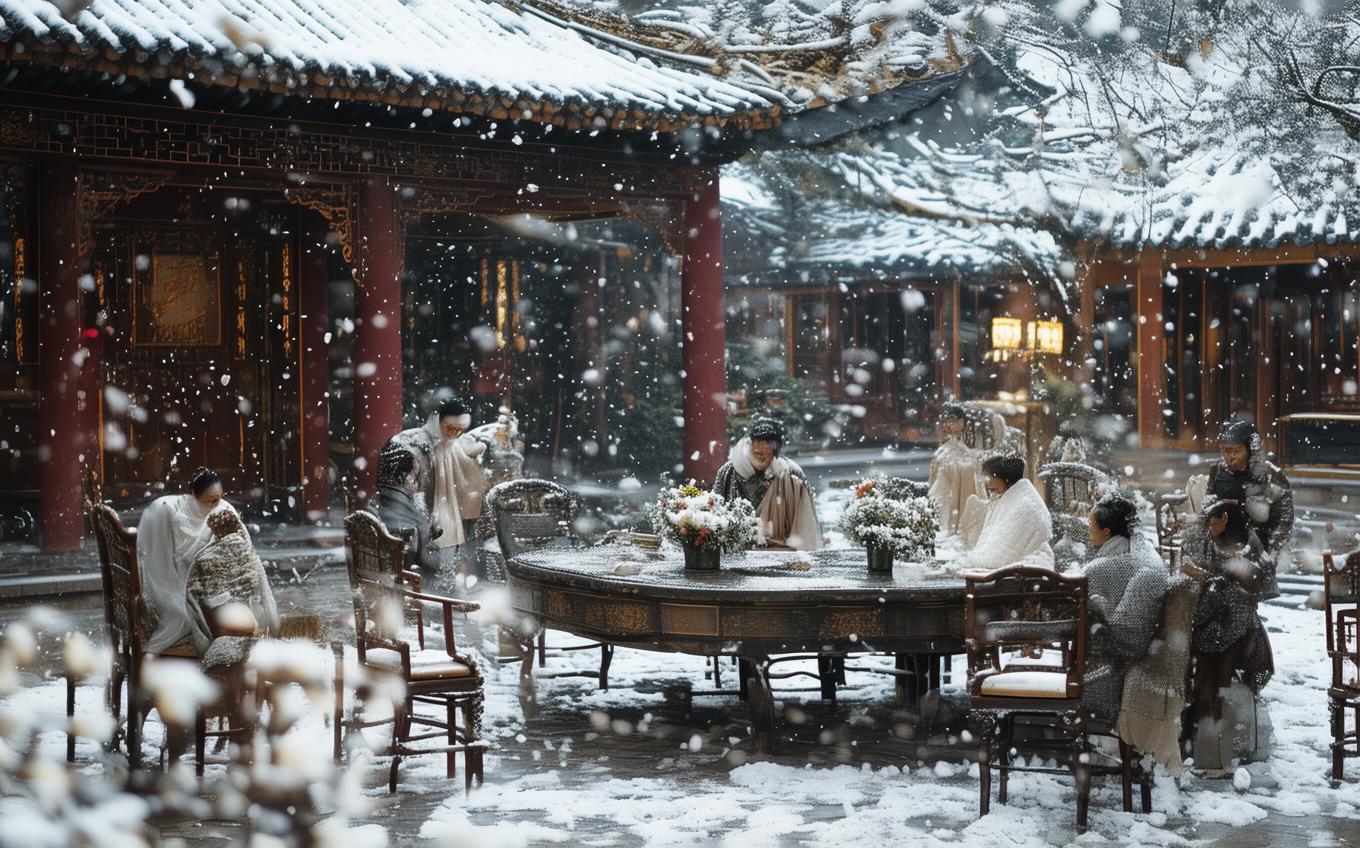
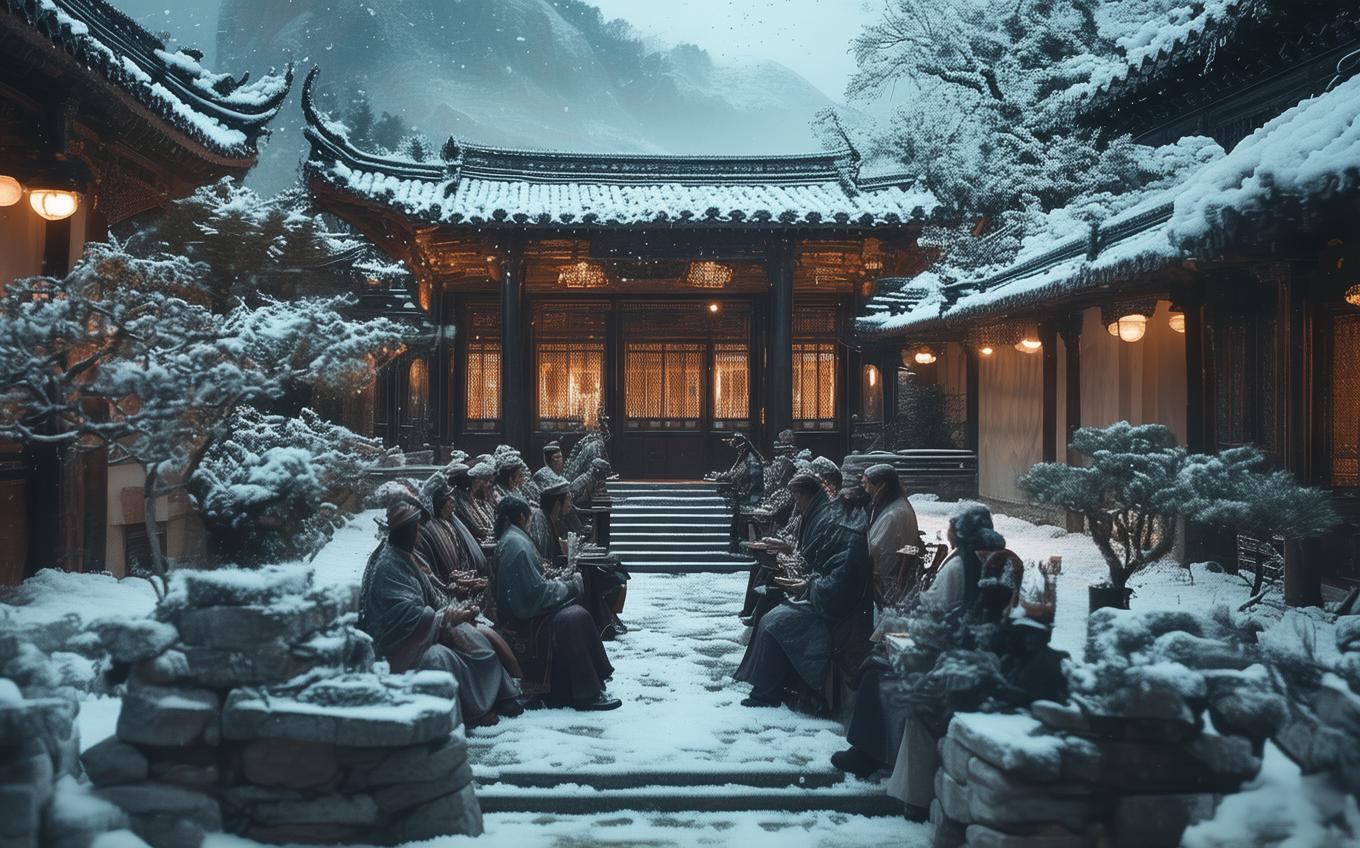
The poem presented here, 冬日宴于庶子宅各赋一字得趣 ("On a Winter Day, Banqueting at the Residence of the Junior Mentor, Each Composing a Poem on an Assigned Character; I Received 'Delight'"), belongs to a distinctive tradition of Chinese literary culture: the poetry gathering. At such gatherings, literati would come together to drink, converse, and compose verse on assigned themes or rhyme characters. The title tells us that each guest was given a single character as their poetic theme, and 令狐德棻 was assigned the character 趣 (qù), meaning "delight," "charm," or "interest." This poem, therefore, is not merely a winter scene but a meditation on the very nature of refined pleasure and the joy found in cultured companionship.
The significance of this poem lies in its embodiment of the Tang literati ideal: the fusion of natural appreciation, literary artistry, and social harmony. It captures a moment of cultivated leisure that would become a defining image of Tang cultural sophistication.
The Poem: Full Text and Translation
高门聊命赏,群英于此遇。
Gāo mén liáo mìng shǎng, qún yīng yú cǐ yù.
At the lofty gate, we casually call for appreciation; a gathering of talents meets here.
放旷山水情,留连文酒趣。
Fàng kuàng shān shuǐ qíng, liú lián wén jiǔ qù.
Unrestrained and expansive feelings for mountains and waters; lingering over the delight of literature and wine.
夕烟起林兰,霜枝殒庭树。
Xī yān qǐ lín lán, shuāng zhī yǔn tíng shù.
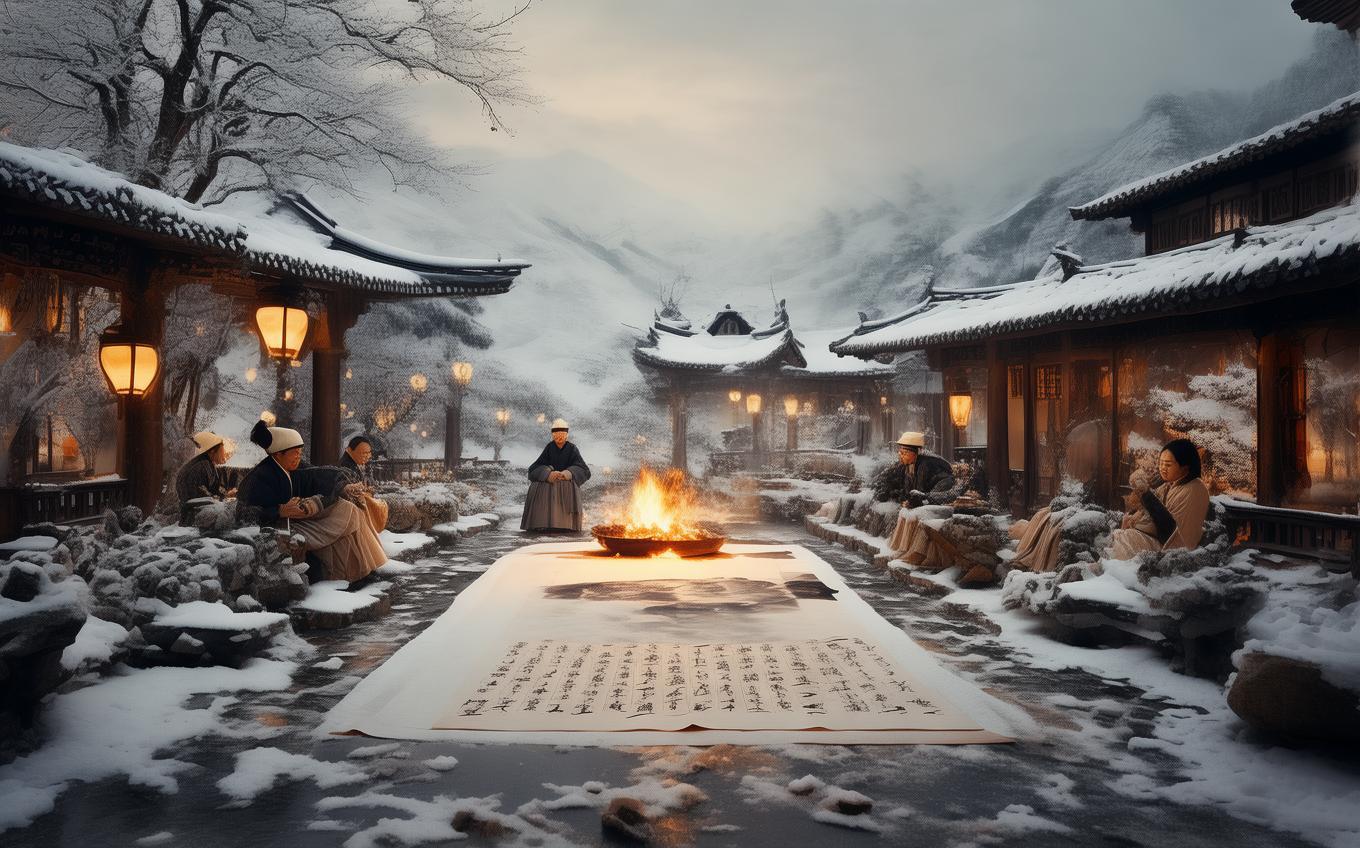
Evening mist rises from the orchids in the grove; frost-covered branches shed their leaves from the courtyard trees.
落景虽已倾,归轩幸能驻。
Luò jǐng suī yǐ qīng, guī xuān xìng néng zhù.
Though the setting sun has already declined, fortunately the returning carriage can still linger.
Line-by-Line Analysis
Line 1: 高门聊命赏,群英于此遇
The poem opens with a scene of aristocratic elegance. 高门 (gāo mén), "lofty gate" or "high gate," is a metonym for a noble household—the grand residence of the 庶子 (Shùzǐ), a high-ranking court official who served as a mentor to the crown prince. The word 聊 (liáo) is particularly charming; it means "casually," "idly," or "for the moment," suggesting an atmosphere of ease rather than formality. 命赏 (mìng shǎng) implies calling for or initiating an appreciation of beauty—perhaps of the garden, the season, or the company itself.
The second half of the line, 群英于此遇 (qún yīng yú cǐ yù), "a gathering of talents meets here," establishes the social dimension. 群英 literally means "a flock of heroes" or "a gathering of blossoms"—the word 英 can mean both "flower" and "outstanding person," creating a subtle parallel between natural beauty and human excellence. The host's home becomes a meeting place for the finest minds of the court.
Line 2: 放旷山水情,留连文酒趣
This couplet forms the philosophical heart of the poem. 放旷 (fàng kuàng) describes a state of being unrestrained, broad-minded, and free from worldly cares—a key concept in Chinese literati culture, closely associated with the Daoist ideal of 逍遥 (xiāo yáo), "free and easy wandering." 山水情 (shān shuǐ qíng) refers to one's emotional connection to mountains and waters, the traditional objects of Chinese landscape appreciation. The phrase suggests that these gathered scholars share a profound love of nature, even while seated indoors at a winter banquet.
留连 (liú lián) means "to linger," "to be reluctant to leave," or "to be captivated by." 文酒趣 (wén jiǔ qù) combines 文 (literature), 酒 (wine), and 趣 (delight/interest)—the very character assigned to the poet. This line celebrates the pleasures of refined companionship: composing poetry, drinking wine, and savoring the moment. The word 趣 is central here; it is not mere pleasure but a cultivated appreciation of what is interesting, charming, and aesthetically rewarding.
Line 3: 夕烟起林兰,霜枝殒庭树
With this couplet, the poet shifts from the interior world of the banquet to the exterior world of the winter landscape. 夕烟 (xī yān), "evening mist" or "evening smoke," rises from the 林兰 (lín lán), the orchids in the grove. Orchids (兰, lán) hold profound symbolic weight in Chinese culture, representing refinement, virtue, and moral purity—they were associated with the poet Qu Yuan and with Confucian ideals of the gentleman. That orchids appear in a winter poem is significant; they suggest that beauty and virtue persist even in the harshest season.
霜枝 (shuāng zhī), "frost-covered branches," 殒 (yǔn), "to perish" or "to fall," and 庭树 (tíng shù), "courtyard trees," paint a picture of winter's austerity. The verb 殒 is particularly strong—it carries connotations of death and loss. The leaves are not merely falling; they are perishing in the frost. This line introduces a note of melancholy into the poem, a reminder of mortality and the passage of time.
Line 4: 落景虽已倾,归轩幸能驻
The final couplet addresses the inevitable end of the gathering. 落景 (luò jǐng), "the setting sun" or "the declining light," is a common metaphor for the passage of time and the approach of endings. 虽已倾 (suī yǐ qīng), "though already inclined" or "though already tilted," acknowledges that the day is nearly done. The sun is literally tilting toward the horizon.
Yet the poem ends not with sorrow but with gratitude. 归轩 (guī xuān), "the returning carriage," refers to the vehicle that will take the guests home. 幸能驻 (xìng néng zhù), "fortunately can still linger" or "happily can still pause," expresses the poet's relief and joy that the moment can be extended just a little longer. The word 幸 (xìng) carries a sense of fortunate blessing, of something precious granted beyond expectation. The poet does not lament the ending but cherishes the extra time he has been given.
Themes and Symbolism
The Delight of Cultivated Companionship (趣)
The central theme of this poem, as dictated by the assigned character 趣, is the nature of refined pleasure. The poem suggests that true delight is not found in extravagant display but in the harmonious combination of good company, beautiful surroundings, literary creativity, and wine. The 趣 of the title is a distinctly Chinese aesthetic concept—it implies not just enjoyment but an appreciation of what is interesting, subtle, and worthy of attention.
Nature as Mirror and Companion
The poem weaves together the natural world and the human world. The mountains and waters (山水) of line 2 are not physically present at the banquet, yet they are present in the hearts and minds of the guests. The winter landscape of line 3—the mist, the orchids, the frost, the falling leaves—serves as both a backdrop and a mirror for human emotions. The orchids symbolize enduring virtue, while the frost-bitten branches remind us of impermanence.
The Transience of Beauty
Like much classical Chinese poetry, this poem is suffused with an awareness of time's passage. The setting sun, the falling leaves, the evening mist—all point to the inevitability of endings. Yet the poem's response to this transience is not despair but appreciation. The very brevity of the moment makes it precious.
Cultural Context
The Tang Dynasty Poetry Gathering
The Tang Dynasty (618–907 CE) is often called the "Golden Age" of Chinese poetry, and the poetry gathering was one of its defining social institutions. Literati would gather at one another's homes, often on festival days or seasonal occasions, to drink, compose verse, and evaluate one another's work. These gatherings were not merely social events; they were arenas for intellectual display, artistic creation, and the cultivation of friendship.
The practice of 分韵 (fēn yùn), "dividing rhymes," or 赋得 (fù dé), "composing on an assigned topic," was common at such gatherings. Each participant would receive a character or rhyme word and would compose a poem incorporating that element. This practice tested a poet's skill and creativity, as they had to work within constraints while still producing something beautiful and meaningful.
The Scholar-Official Ideal
令狐德棻 embodied the ideal of the Tang scholar-official: learned in the classics, skilled in poetry, and active in government service. The poem reflects this ideal in its seamless blending of social grace, literary skill, and philosophical depth. The guests at this banquet are not merely enjoying themselves; they are participating in a cultural practice that defines their identity as members of the cultivated elite.
Daoist and Confucian Influences
The poem draws on both Daoist and Confucian traditions. The 放旷 (fàng kuàng) attitude of line 2 echoes Daoist ideals of freedom and spontaneity, while the emphasis on 群英 (qún yīng) and the social harmony of the gathering reflects Confucian values of community and proper relationships. The orchids (兰) carry Confucian associations of moral virtue, while the overall appreciation of nature aligns with Daoist aesthetics. This synthesis of traditions is characteristic of Tang literati culture.
Conclusion
令狐德棻's "冬日宴于庶子宅各赋一字得趣" is a gem of Tang Dynasty occasional poetry. Within just eight lines, it captures the essence of a cultural moment: the gathering of talented friends on a winter evening, the pleasures of wine and verse, the beauty of the natural world, and the bittersweet awareness of time's passage. The poem's assigned character, 趣, becomes not just a constraint but a lens through which the poet views the entire scene—finding delight in companionship, in art, in nature, and in the simple fact of being alive to experience it all.
For modern readers, this poem offers a window into a world where poetry was not a solitary pursuit but a social art, where the appreciation of beauty was a shared endeavor, and where the awareness of transience deepened rather than diminished the joy of the present moment. The poet's final word, 驻 (zhù), "to linger," is an invitation to us as well: to pause, to appreciate, and to savor the fleeting delights of our own lives.
The enduring appeal of this poem lies in its gentle wisdom. It does not shout or declaim; it simply observes, appreciates, and gives thanks. In a world that often moves too quickly, 令狐德棻's winter banquet reminds us of the value of slowing down, gathering with friends, and finding 趣—delight—in the ordinary miracles of existence.
Sources and Verification
- Verified text and attribution: 令狐德棻, “冬日宴于庶子宅各赋一字得趣” (Tang dynasty).
- Primary dataset: Chinese Poetry open corpus.
- Source record:
9d7fd022-1305-438f-9189-c263d7a9e7c9.
The Chinese source text and attribution are supplied from the verified record above. The English translation and commentary are educational explanations.
Comments (0)
No comments yet. Be the first to comment!